

Billions of Indians believe they need not worry about vitamin D and sunlight, but the reality is the opposite. The Indian Council of Medical Research data shows roughly 70–90% of Indians are Vitamin D deficient. For better clarity, you should delve into the urban causes of vitamin D deficiency.
This sounds like a paradox, doesn’t it? Most of the year, you complain about too much sun and heat, and yet vitamin D deficiency in urban areas shoots up. Urban residents face this nutritional deficit risk more than the rural population in India. That’s why you need a suitable vitamin D deficiency supplement like VitSupp’s Vitamin D3+K2.
So, how do urban lifestyle factors for vitamin D deficiency come into the picture? Those hectic workplace schedules practically keep you away from sunlight, and the long trips in air-conditioned vehicles add to it. Sunscreen and protective attire protect the skin from UV rays, but they can make you vitamin D-deficient.
To fight back, you need more than just any Vitamin D supplement. This blog shows the roots of vitamin D deficiency in urban areas, the health impact, and solutions. It also explains why using VitSupp’s Vitamin D supplement is your best solution in such cases.
What Vitamin D Deficiency Can Lead to?
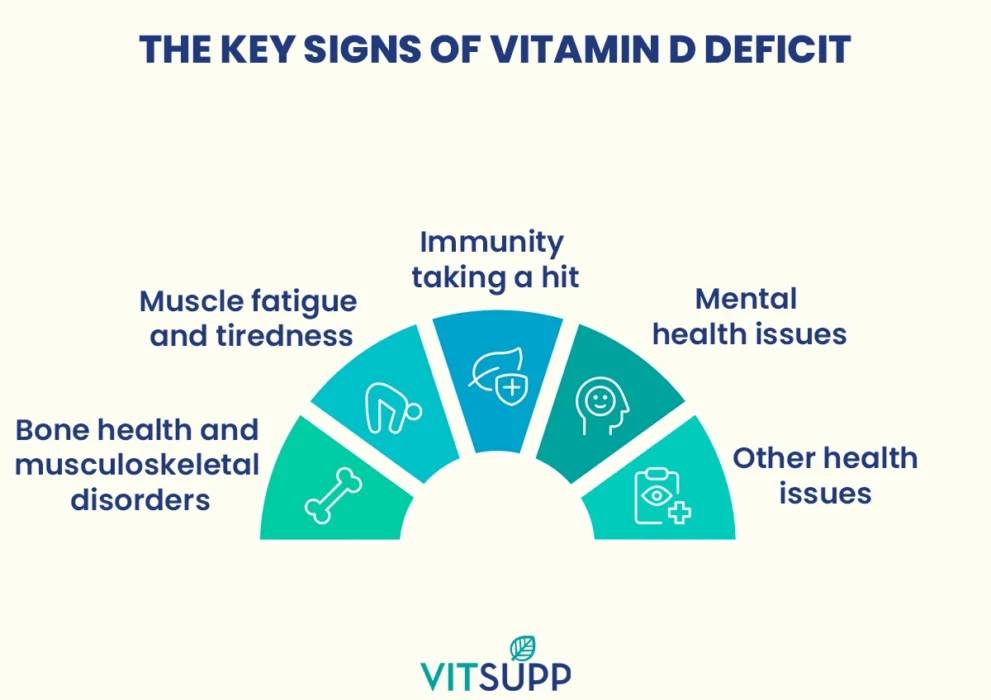
Vitamin D is more than just a micronutrient; it is responsible for several major physiological functions in your body. When you do not get it in the right amounts, for urban lifestyles and other factors, it can cause several health issues:
1. Bone Health and Musculoskeletal Issues
It helps your body absorb vital minerals like calcium and phosphorus, which are a must for bone formation and mineralization. Without enough vitamin D, your intestine absorbs only about 10–15% of dietary calcium, leading to the risk of bone disorders like osteoporosis.
2. Muscle Fatigue, Weakness
Low vitamin D levels in your body will lead to muscle weakness, and you will feel soreness after intense activities, too. Older individuals fare worse in this area.
3. Immune System Functions Hit
Vitamin D intake is a must for strong immunity. Vitamin D deficiency in urban India often makes people develop infections easily due to compromised immunity levels. You will experience the seasonal infections and flu affecting you more.
4. Mental and Neurological Health Issues
The vitamin D deficiency symptoms in adults are not limited to physical health. Vitamin D receptors are present in your brain, and a deficiency directly affects their function, according to key research. When you are low on Vitamin D, you may feel low and depressed frequently, with small things affecting your mood.
5. Other Health woes
Sometimes, you may experience a vitamin D shortfall showing up in less-pronounced ways, too. The hair fall may actually not be related to your water quality or hair care products; the aggravation is due to low vitamin D levels. It is also responsible for relatively slow wound healing.
The urban causes of vitamin D deficiency will be there, so how do you cope with the challenges? Trying to get enough sun exposure and dietary changes may not be enough. Choose the effective vitamin D deficiency supplementby VitSupp, containingthe right mix ofVegan vitamin D3 and K2, and enjoy better bone health, immunity, and overall well-being.
How do Urban Lifestyle Factors Lead to Vitamin D Deficiency?
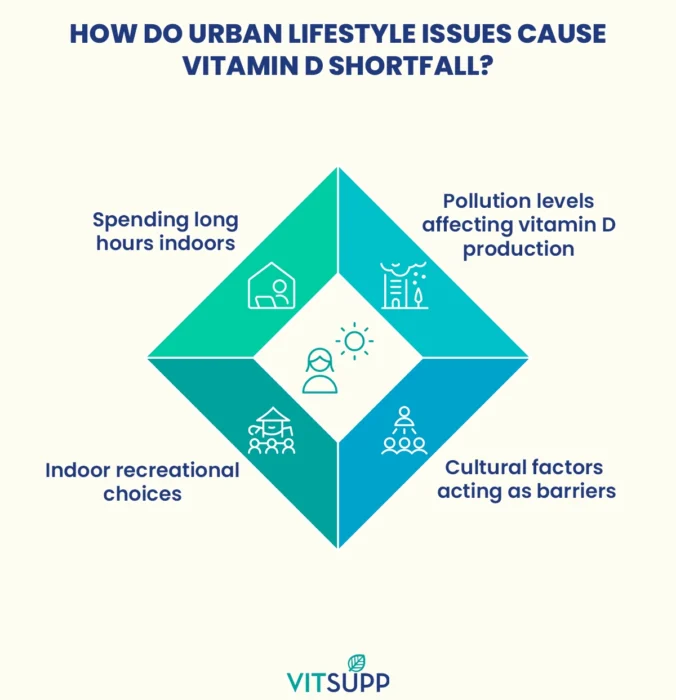
The urban causes of vitamin D deficiency are too big to overlook. Despite the abundance of sunlight, you cannot escape the numerous limitations of urban life. A key ICRIER study finding indicates that every 1 in 5 persons in major cities like Vadodara and Delhi cope with Vitamin D deficiency.
Let’s look into how living in a city limits your scope for adequate vitamin D intake:
1. Indoor Living and Prolonged Working Hours
People have become accustomed to spending most of their time, especially after the lockdown. The number of people working remotely has gone up. The growth of digital technology and the wider availability of e-commerce services have reduced the need to go out. Don’t you prefer the convenience of quick delivery apps for groceries rather than visiting your neighbourhood market in person? These lead to vitamin D deficiency problems.
2. Pollution Limiting Vitamin D Intake
The rising pollution levels in Indian cities need little introduction. The air pollution not only hurts your lungs but also brings down vitamin D synthesis on the skin. In cities like Delhi and Kolkata, for example, the pollution levels breach safe limits regularly, obscuring UVB radiation. A Lancet Planetary Health study shows fine particulate matter like PM 2.5 can reduce UVB radiation by up to 60% in polluted urban regions. This is another factor triggering vitamin D deficiency in India.
3. Cultural Norms as Barriers
Sometimes, specific cultural norms prevent urban dwellers, especially women, from receiving adequate amounts of vitamin D and sunlight. You will seewomen in conservative households spending most of their time indoors or wearing full-body attire, practices that limit sunlight exposure. They are more prone to developing Vitamin D Deficiency.
4. Indoor Entertainment and Recreation
There are other urban causes of vitamin D deficiency, including a growing preference for seeking entertainment indoors. With the OTT services gaining popularity and high-speed internet becoming available, a majority of urban people have reduced going out even for recreational needs. This is a big reason for vitamin D deficiency in India.
The Hidden Causes of Vitamin D Deficiency in Cities
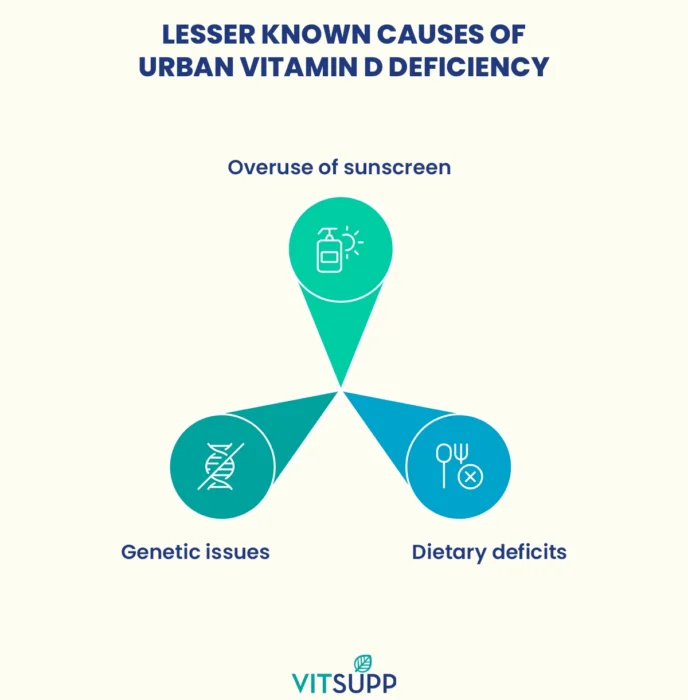
Sometimes, factors that are usually overlooked can cause a vitamin D shortfall. The effect is more pronounced on urban people, who do not get enough sunlight exposure for vitamin D synthesis anyway. These are:
1. Skincare Routine as a Deterrent
Have you noticed how sunscreen usage has gone up in urban users, in both genders? Growing awareness about skin cancer and sunscreen use has led to this. Overusing sunscreen products blocks UVB rays, thereby reducing vitamin D synthesis. To protect your skin from UV rays, you deprive the skin of a key vitamin.
2. Dietary Habits Aggravate the Issue
Apart from the urban causes of vitamin D deficiency, think of the dietary factors too. Those relying mostly on plant-based food and dairy products struggle to get adequate amounts of Vitamin D through food. Not everyone manages to get foods like fatty fish, egg yolks, andfortified cereals, rich in Vitamin D, in their meals. For them, consuming VitSupp vitamin D capsules can be very useful to resolve the shortfall.
3. Genetic Factors
Certain genetic factors also contribute to vitamin D deficiency in urban environments. Key studies have indicated that people with darker skin tones usually produce less vitamin D when exposed to sunlight than others. This happens because their skin has a higher concentration of melanin, which resists UVB rays.
You cannot overcome these apparently overlooked factors causing vitamin D deficiency in urban areas. But you can certainly step up your defense against Vitamin D deficit by using a quality vitamin D3 supplement, 100% vegetarian capsules without any gelatin, fillers, or unnecessary additives. The inclusion of vitamin K2 leads to optimal calcium absorption and utilization.
How Does Vitamin D Deficiency Affect Your Health and Well-Being?
Vitamin D, also referred to as the sunshine vitamin, is a prerequisite for calcium absorption in your body. However, don’t think you need this vitamin just for stronger bones and healthy teeth. In fact, Vitamin D has a deep impact on your overall well-being, including aspects like physical health, mood, and immunity.
1. Bone and Joint Health
What’s the major function of vitamin D in your body? It is to regulate calcium levels, a must for healthy bones and teeth. When you continue to have a vitamin D deficiency, it leads to bone softening, a condition called osteomalacia. In the long run, that leads to osteoporosis.
Postmenopausal women and the elderly in urban regions become particularly vulnerable to these conditions. Women above 50 face a higher risk of osteoporosis due to lower estrogen levels and urban lifestyle factors for vitamin D deficiency. For them, regular supplementation of vitamin D and calcium can be useful.
2. Compromised Immunity
Without adequate intake of Vitamin D, your immunity will go down. It regulates the immune system and helps fight infections. Low consumption of vitamin D exposes you to a higher risk of developing respiratory infections and chronic illnesses. It also increases the risk of developing autoimmune disorders like rheumatoid arthritis and multiple sclerosis.
You cannot escape the urban lifestyle factors for vitamin D deficiency, including pollution, limited sunlight exposure, and dietary deficiency of vitamin D. What you can do is step up your immune defense by using a suitable, balanced vitamin D deficiency supplement. Try a balanced Vitamin D3 + K2 supplement, available in a GMP-certified formulation.
3. Effect on Mental Health
Vitamin D has a direct impact on your brain function and mental health. Its deficit is linked to depression, anxiety, and seasonal affective disorder. The last one is common in winter months, when sunlight is naturally scarce.
Why do you think this happens? Vitamin D regulates serotonin production, a neurotransmitter responsible for regulating your mood and emotions. Vitamin D shortfall leads to low serotonin levels, and the result is sadness, irritability, and lack of motivation. According to ScienceDirect, vitamin D is useful in battling depression and mental stress. Start using a quality Vitamin D3+K2 supplement- a formulation developed after 9 years of intensive research for better mental health.
What can you do to Combat Urban Vitamin D Deficiency?

The urban causes of vitamin D deficiency will be there, but you can surely adopt remedial measures. Apart from taking a suitable and effective Vitamin D3 and K2 supplement, you can adopt some proactive additional measures.
1. Smart Sun Exposure Tactics
So, you find it tough to get enough sunlight because of your hectic work schedule and multitasking? If you can’t get sunlight outside, try to get it at home. Wake up a little early and spend some minutes on the balcony, terrace, or rooftop. 10-15 minutes of sunlight on your face, arms, and legs is good to get started with. It would be a good idea to develop a balcony or terrace garden, so you have a solid reason to spend time there and get sunlight.
2. Modify your Diet
To cope with urban lifestyle factors for vitamin D deficiency, make some smart modifications to your diet. Try to include food naturally enriched with vitamin D in your meals. These include foods like Fatty fish(salmon, mackerel), egg yolks, and plant-based milk.
If you adhere to a vegan or vegetarian diet for religious and cultural reasons, getting enough vitamin D through food will be tough. Then the logical choice is to use Vitamin D3 + K2 capsules, a sure-fire way to increase your vitamin D intake without any risks.
3. Lifestyle Adjustments that Work
Try to increase the outdoor activities to get more vitamin D and sunlight. Going for a walk in the morning at a nearby park or taking your dog for a morning stroll can be effective here. Even at the workplace, you can try spending some time during the lunch break outdoors to make up for the sunlight exposure deficit.
Why Choose VitSupp’s Vitamin D3 and K2 Supplement?
In a market flooded with hundreds of Vitamin D supplements, choosing the right one can be tough, more so when you cope with urban pollution and vitamin D deficiency. VitSupp offers a unique supplement that mixes Vitamin D3 with K2 in the right ratio for optimal health benefits. From efficacy to safety and reliability, it ticks all the boxes.
Let’s have a detailed look at the reasons why our vitamin D capsulesare better than competitors’ offerings:
| Feature | VitSupp’s Vitamin D3 + K2 Offering | Regular/OTC Vitamin D3 Supplements |
|---|---|---|
| Vitamin Type | D3 + K2 (MK-7) Cholecalciferol) sourced from lichen | Usually D3 (sometimes D2) |
| Absorption | Comes with MCT oil for better absorption | Standard absorption (no added carriers) |
| Added Nutrients | Vitamin K2 for better calcium usage | No K2 (just D3) |
| Formulation | Vegetarian, No gelatin | Often contains gelatin or animal extracts |
| Purity | No fillers, gluten-free | May contain fillers or artificial additives |
| Health Benefits | Supports bones, immunity, and heart health | Primarily for bone health |
| Testing | Third-party tested, GMP certified | Quality varies by brand and may lack testing |
| Sustainability | Eco-friendly packaging | Varies by brand |
Optimizing Vitamin D isn’t just about sunlight or supplements. Understanding Vitamin K is equally important for long-term health.
Read our complete guide to Vitamin K
Conclusion
The urban causes of vitamin D deficiency notwithstanding, you can adopt effective strategies to overcome the challenges. Begin by modifying your diet and including vitamin D-rich foods. Try to spend more time outdoors in different ways to get more sunlight exposure.
If cultural norms and the hectic pace of life limit your time in the sun, using an effective Vitamin D supplement remains the best option. The key thing here is choosing the right and safe vitamin D supplement. VitSupp’s Vitamin D3+K2 supplement fits the bill perfectly- thanks to its breakthrough research-based formulation, and MCT oil base for faster, better absorption.
As for safety, it comes with the assurance of FSSAI and GMP certification. The formulation is free of any artificial ingredients, allergens, and fillers. Choose this versatile vitamin D deficiency supplement to get multiple health benefits, including better immunity, stronger joints and bones, and a mental health boost.
FAQs
1. Is sunlight not enough to prevent vitamin D deficiency in urban lifestyles?
People in urban regions of India typically get access to enough sunlight, yet tests reveal vitamin D deficiency symptoms in adults. This looks like a paradox, but on closer analysis, you can understand the urban causes of vitamin D deficiency. Most urban residents do not get enough sunlight due to lifestyle factors and hectic schedules. Even when they get enough sunlight, it may not result in proper vitamin D synthesis. This is owing to the high level of air pollution. Also, those with a dark complexion may not get enough sun exposure for their skin type for vitamin D production. That is why they need a powerful Vitamin D supplement like the offering from VitSupp.
2. How does an urban lifestyle contribute to vitamin D deficiency?
The urban lifestyle factors for vitamin D deficiency are too big to overlook. In cities, most people have become habituated to spending the maximum time indoors. This is partly because of the high pollution levels outside, and the trend has shot up after the pandemic. This, coupled with the effects of dugout technology evolution, led to a sunlight exposure shortfall. Like most urban people, you may prefer the convenience of ordering groceries online, sitting in the comfort of your home, over going out to the nearby market. Those into remote jobs also feel less like going out, and that limits their sources of vitamin D.
3. How does indoor lifestyle affect vitamin D levels?
Most urban residents have become comfortable with an indoor lifestyle these days. They spend long hours inside offices, air-conditioned cars, and their homes. This lowers their scope for getting vitamin D through sunlight. The comforts associated with an indoor life, like getting things delivered at the doorstep at their will, make them less inclined to go out. When the natural source of getting vitamin D is reduced, the other option is through foods. But you may not always get enough vitamin D through foods. Those sticking to a vegan diet may fare worse here. This is how an indoor lifestyle reduces your vitamin D level steadily, leading to health woes.
4. Can screen time and a sedentary lifestyle cause vitamin D deficiency?
Yes, when you get addicted to a sedentary lifestyle and spend the maximum time staring at screens, it leads to a vitamin D shortfall. As you spend less time outdoors, that limits the skin’s exposure to ultraviolet B rays. This is what your skin needs to generate vitamin D. Both adults and kids spend a lot of time watching TV shows, mobile content, and playing online games. This adds to the sedentary time, and less scope to get vitamin D from sunlight. That is when you start experiencing the symptoms of vitamin D deficiency, including mood swings.
5. How do high-rise buildings reduce effective sun exposure?
In urban environments, high-rise buildings and dense construction reduce your scope of getting enough sun exposure. This is one of the hidden urban causes of vitamin D deficiency. These tall buildings, often located in close proximity, create a shading effect. As you get lower access to direct sunlight, your skin struggles to produce the required amount of vitamin D naturally. This structural shading, combined with long time spent indoors, is the sure-fire recipe to develop vitamin D deficiency. That is why urban residents living in or near such tall buildings should start using suitable vitamin D supplements. For them, VitSupp’s Vegan Vitamin D3 + K2 supplement is the right solution.
6. How does air pollution affect vitamin D absorption?
Air pollution is strongly linked to reduced vitamin D generation.When you live in an urban region, you get enough access to sunlight. Yet your body cannot naturally produce the desired amount of vitamin D. Why? The answer is the rising levels of air pollution in cities. The fine airborne particles and pollutants scatter and absorb UVB rays. So, your skin does not eventually receive the required amount of UV rays for vitamin D synthesis. Also, high pollution levels make you stay most of the time indoors, reducing access to both vitamin D and sunlight.
7. Does sunscreen block vitamin D absorption from sunlight?
While using sunscreen products can lower UVB radiation exposure, it does not stop it from reaching your skin. While sunscreen filters UVB rays, which are necessary for synthesizing Vitamin D, not all users apply enough sunscreen to completely block synthesis. If you apply excessive sunscreen on your skin, that may hamper vitamin D generation. Inadequate and improper sunscreen application means their skin can still process some amount of vitamin D from sunlight. It is less of a problem compared to the urban causes of vitamin D deficiency.
8. When should vitamin D supplements be considered for city dwellers?
Urban residents often struggle to maintain adequate vitamin D levels. They find it hard to escape the urban lifestyle factors for vitamin D deficiency. A lot of them living with hectic schedules and never-ending chores can’t just get enough sunlight, a prerequisite for vitamin D synthesis in the skin. One downside of urban lifestyle factors is that you get addicted to them for convenience. While you know staying indoors limits your sunlight exposure, you don’t want to give up the benefits of online shopping and leading a sedentary life. So, you can start taking a vitamin D deficiency supplement when you work most of the day, live in a polluted urban region, or wear sun-protective clothing regularly.
9. Why is vitamin D deficiency common in polluted urban areas?
A polluted urban environment is among the major urban causes of vitamin D deficiency. The high air pollution ensures there are too many fine airborne particles like PM2.5, ozone, and other pollutants. These particles, often unseen to your eyes, scatter and absorb UVB rays, according to Research Gate data. So, your body receives a reduced amount of UVB rays required for vitamin D synthesis. In cities that experience high smog and consistently poor air quality, enough outdoor time does not translate into sufficient vitamin D production. In such settings, using effective supplementation like Vitamin D3 + K2 will help you fulfill the nutritional shortfall.
10. What is the best time for sunlight to get vitamin D in India?
The ideal time for vitamin D synthesis in India is the time when UVB radiation is strongest. This is generally the time between 10:00 AM and 3:00 PM. However, you should be careful not to damage your skin from excessive, continuous exposure to sunlight. Aim for a time span of 10-30 minutes to let sunlight get absorbed by your body. However, keep in mind that even with enough sunlight access, your body may not generate enough vitamin D. The hidden urban causes of vitamin D deficiency, like shading of tall buildings and high pollution levels, come into play.