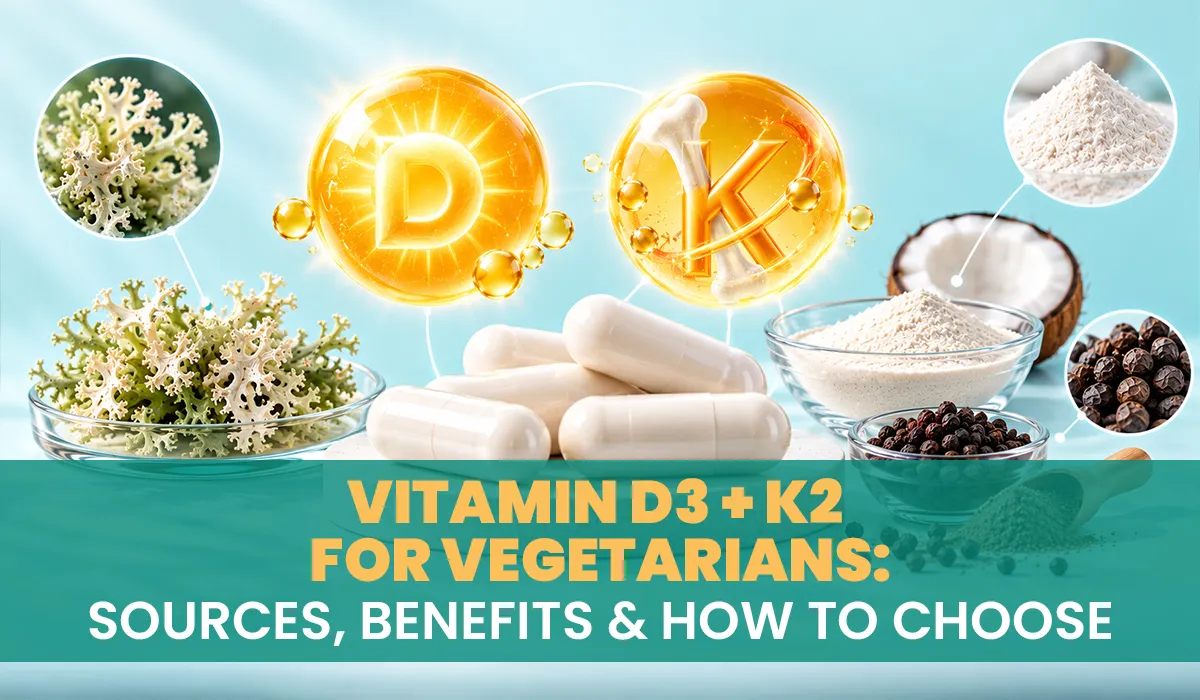
Following a vegetarian or plant-based lifestyle can provide many nutritional benefits when it includes a variety of foods. However, some nutrients may require extra attention, especially Vitamin D3 and Vitamin K2.
For individuals looking for a Vegetarian Vitamin D3 K2 supplement for bone health, understanding how these nutrients work together can help support better nutrition choices. These two fat-soluble vitamins play different roles in maintaining bone health. Vitamin D supports calcium absorption, while vitamin K is required for the activation of proteins involved in normal bone metabolism. Vitamin D3 helps the body absorb calcium, while Vitamin K2 supports normal calcium regulation.
For vegetarians and vegans, dietary sources of Vitamin D3 can be limited. Vitamin K2 is also found in a more limited range of foods than Vitamin K1. Factors such as indoor lifestyles, limited sunlight exposure, and food choices can also influence vitamin levels.
Understanding where these nutrients come from and how vegetarian-friendly supplements fit into a balanced lifestyle can help you make informed choices for long-term bone health.
Why Vegetarians May Struggle to Get Enough Vitamin D3 and K2
A well-planned vegetarian diet can provide many essential nutrients. However, some vitamins are naturally found in fewer plant-based foods, making it important to pay attention to potential gaps.
Limited Food Sources of Vitamin D3
Vitamin D exists in different forms, with Vitamin D3 (cholecalciferol) being one of the commonly used forms in supplements. Traditionally, many sources of Vitamin D3 come from animal-based foods.
Common sources include:
- Fatty fish
- Egg yolks
- Dairy products fortified with Vitamin D
- Certain fortified foods
For vegetarians who consume eggs or dairy, these foods may contribute some Vitamin D intake. However, the amount of vitamin D provided can vary depending on the food source and portion size.
For those following a vegan or strictly plant-based diet, finding a direct source of Vitamin D3 can be more difficult. This is why some people look for vegan vitamin D3 supplement options made from lichen, a plant-friendly source used in certain supplements.
You can also learn more about vitamin D-rich foods and natural sources of vitamin D to understand dietary options.
Understanding Vitamin K2 in a Vegetarian Diet
Vitamin K is another important nutrient involved in bone health. While Vitamin K1 is found in many green leafy vegetables, Vitamin K2 is found in fewer foods.
Some sources of Vitamin K2 include:
- Fermented foods such as natto
- Certain dairy products
- Egg yolks
- Animal-derived foods
For many vegetarians, especially those who consume limited dairy or fermented foods, the dietary intake of Vitamin K2 may be lower.
This has increased interest in K2 supplements among people following vegetarian and vegan lifestyles.
Vegetarian-friendly Vitamin K2 supplements often use MK-7, a form of Vitamin K2 commonly chosen because it stays in the body longer compared with some other forms.
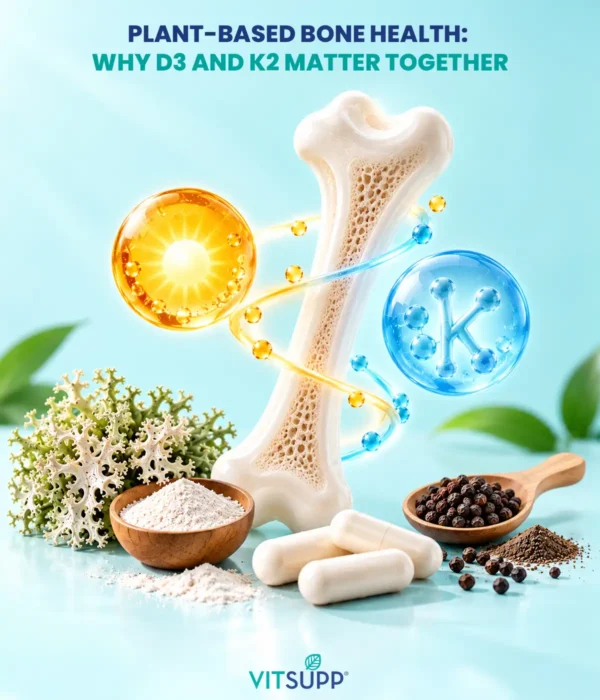
Plant-Based Bone Health: Why D3 and K2 Matter Together
Bone health depends on several factors, including calcium intake, physical activity, protein intake, and adequate levels of key nutrients.
- Vitamin D3 and Vitamin K2 have different roles but work together in supporting normal bone maintenance.
- Calcium is essential for maintaining healthy bones and teeth. Without enough Vitamin D, the body may not effectively use the calcium available through food.
- Vitamin K2 is involved in the normal regulation of calcium in the body. It supports proteins that help maintain healthy bones.
- For people following a plant-based lifestyle, getting enough Vitamin K2 from food can sometimes be challenging due to limited vegetarian sources.
This is where D3 + K2 for plant-based lifestyle nutrition strategies may become relevant for people looking to support their daily nutrient intake.
Why Vitamin D Levels Can Be Low in Vegetarians
Vitamin D is unique because the body can produce it when skin is exposed to sunlight. However, several lifestyle factors can affect Vitamin D production.
These include:
- Spending most time indoors
- Limited sun exposure
- Using sunscreen regularly
- Living in areas with less sunlight during certain seasons
- Covering most skin while outdoors
Even people who consume Vitamin D-containing foods may not always maintain adequate Vitamin D levels.
Low Vitamin D intake or reduced Vitamin D status can affect normal body functions, including calcium absorption and bone maintenance.
You can explore more about vitamin D deficiency symptoms and signs of low Vitamin D to better understand common concerns.
Vitamin D3 Foods Vegetarian Indian: What Options Are Available?
For Indian vegetarians, dietary Vitamin D sources can be limited.
Some vegetarian-friendly options include:
| Food Source | Vitamin D Contribution |
|---|---|
| Fortified dairy products | May provide Vitamin D depending on fortification |
| Fortified cereals | May contain added Vitamin D |
| UV-exposed mushrooms | Can provide Vitamin D2 |
| Egg yolks (for ovo-vegetarians) | Contain small amounts of Vitamin D |
However, the amount of vitamin D from food can vary significantly.
Vitamin D2 from mushrooms and Vitamin D3 from supplements are different forms. While both can contribute to Vitamin D intake, many vegetarian consumers choose lichen-derived Vitamin D3 supplements as a plant-friendly option.
How to Increase Vitamin D3 in a Vegetarian Diet
Improving Vitamin D intake is usually about combining different lifestyle habits.
1. Include Vitamin D Sources
Choose foods that contain Vitamin D or are fortified with Vitamin D where available.
Examples include:
- Fortified dairy products
- Fortified foods
- UV-exposed mushrooms
- Eggs for vegetarians who include them
2. Maintain Healthy Sun Exposure Habits
Sunlight is one natural source of Vitamin D. However, the amount produced depends on factors such as location, skin exposure, season, and lifestyle.
Sun exposure alone may not always provide enough Vitamin D for everyone.
3. Consider Vegetarian-Friendly Supplements
Some individuals choose supplements when diet and lifestyle alone may not provide their desired Vitamin D intake.
A Vegetarian Vitamin D3 K2 supplement for bone health combines vegetarian-friendly Vitamin D3 with Vitamin K2 to support daily bone health needs.
Choosing the Right Vegetarian Vitamin D3 + K2 Supplement
When selecting a supplement, it is important to look beyond just the ingredient name. The source, form, and quality of ingredients can make a difference when choosing a product that matches your dietary preferences.
Check the Source
Look for clear information about the source of Vitamin D3 and Vitamin K2.
For plant-based users, vegan Vitamin D3 derived from lichen and vegetarian-friendly Vitamin K2 options can be suitable choices.
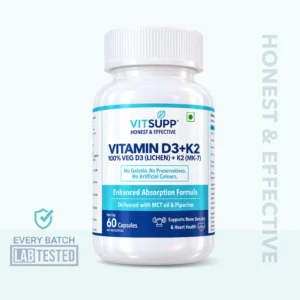
- VitSupp’s Vitamin D3 + K2 formula uses branded ingredients, Vitashine® Vitamin D3 and Bioessence® Vitamin K2 MK-7.
- Vitashine® Vitamin D3 is a vegan Vitamin D3 ingredient derived from lichen, offering a non-animal source of Vitamin D3.
- Bioessence® Vitamin K2 MK-7 is included as a high-quality Vitamin K2 ingredient, helping provide a consistent source of Vitamin K2 as part of daily nutritional support.
What Makes VitSupp D3 + K2 Different?
| Feature | Generic D3 Supplements | VitSupp D3 + K2 |
|---|---|---|
| Vitamin D3 Source | Source may vary depending on the formulation | Uses Vitashine® vegan Vitamin D3 derived from lichen |
| Vitamin K2 Source | Form and ingredient quality may vary | Uses Bioessence® Vitamin K2 MK-7 |
| Formula | May contain Vitamin D3 alone | Combines Vitamin D3 and Vitamin K2 together |
| Dietary Preference | Suitability depends on ingredient sources | Designed for vegetarian-friendly supplementation |
| Ingredient Quality | Depends on manufacturer and formulation | Uses branded ingredients with transparent sourcing |
Understand the Vitamin Forms
Different forms of vitamins can have different characteristics.
Common forms include:
- Vitamin D3 (cholecalciferol)
- Vitamin D2 (ergocalciferol)
- Vitamin K2 MK-7
Understanding the label helps you choose a product that matches your dietary preferences.
Vegetarian Bone Health Beyond Supplements
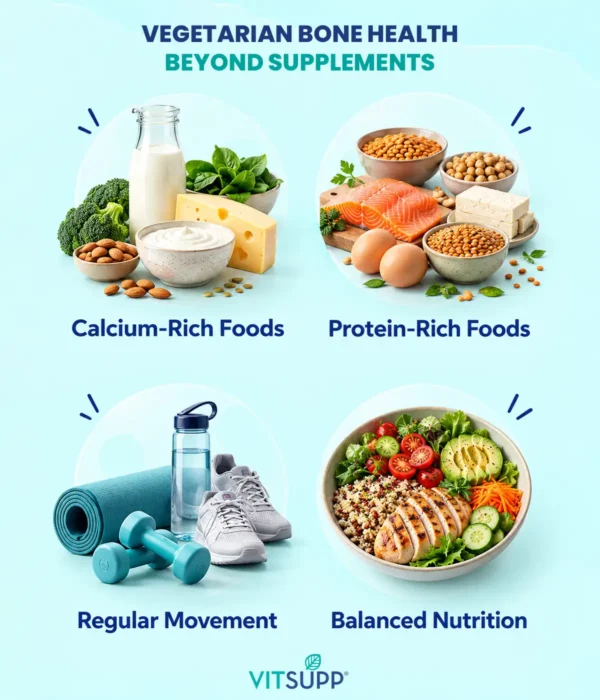
Supplements are only one part of maintaining healthy bones.
A balanced plant-based lifestyle should also include:
Calcium-Rich Foods
Vegetarian calcium sources include:
- Dairy products
- Fortified plant milks
- Tofu prepared with calcium
- Leafy greens
- Sesame seeds
Protein-Rich Foods
Protein supports overall nutrition and can be included through:
- Lentils
- Beans
- Soy products
- Nuts and seeds
Regular Movement
Weight-bearing activities such as walking, strength training, and other exercises support an active lifestyle.
Balanced Nutrition
A varied vegetarian diet that includes different food groups can help provide a wide range of nutrients.
How VitSupp Supports Vegetarian Bone Health
For people seeking vegetarian-friendly nutritional support, VitSupp offers a Vitamin D3 + K2 supplement designed for plant-conscious lifestyles.
VitSupp combines Vitashine vegan Vitamin D3 derived from lichen with Bioessence® Vitamin K2 MK-7 in a vegetarian-friendly formula. These branded ingredients provide a carefully selected combination for individuals looking to support their daily Vitamin D and K2 intake.
Choosing the right supplement is about matching your dietary preferences with your nutritional needs. A balanced diet, healthy habits, and informed supplementation can work together to support everyday wellness.
Conclusion: Supporting Bone Health with a Vegetarian-Friendly Approach
A plant-based lifestyle can provide a wide range of nutrients, but some vitamins, including Vitamin D3 and Vitamin K2, may require extra attention due to limited food sources. Since these nutrients play important roles in calcium absorption and maintaining healthy bones and teeth, understanding your dietary intake can help you make informed choices.
A balanced vegetarian diet, regular movement, adequate calcium and protein intake, and healthy lifestyle habits all contribute to overall bone health. For those who may have difficulty meeting their Vitamin D3 and K2 needs through food alone, vegetarian-friendly supplements can be a convenient option to support daily nutritional intake.
VitSupp’s Vegetarian Vitamin D3 K2 supplement for bone health combines lichen-derived Vitamin D3 with Vitamin K2 MK-7 in a vegetarian-friendly formula, designed for individuals looking for plant-conscious nutrition support. Choosing the right supplement alongside a balanced lifestyle can help you stay consistent with your bone health routine.
FAQs
Why is it difficult for vegetarians to get enough Vitamin D3 from food?
Many dietary sources of Vitamin D3 come from animal-based foods such as fatty fish, egg yolks, and some dairy products. Vegetarians who avoid these foods may have fewer food options that provide Vitamin D3. Sunlight exposure and fortified foods can contribute to Vitamin D intake, but individual Vitamin D levels can vary based on lifestyle, diet, and sun exposure.
What are the common sources of Vitamin D3, and why are they limited for vegetarians?
Common sources of Vitamin D3 include fatty fish, egg yolks, dairy products, and fortified foods. Since many of these sources are animal-derived, vegetarians may find it challenging to get consistent amounts of Vitamin D3 through diet alone. Plant-based diets may rely more on fortified foods, sunlight exposure, or vegetarian-friendly Vitamin D3 supplements.
Can vegetarians get enough Vitamin K2 from plant-based foods?
Vitamin K2 is found in limited food sources. Some fermented foods, such as natto, contain Vitamin K2, while certain dairy products and egg yolks may provide small amounts for some vegetarians. Since plant-based sources of Vitamin K2 are limited, some people choose vegetarian or vegan K2 supplements to support their nutritional intake.
Why are Vitamin D3 and K2 important for bone health in vegetarians?
Vitamin D3 and K2 play different roles in maintaining bone health. Vitamin D3 helps the body absorb calcium from food, Vitamin K is required for the activation of vitamin K-dependent proteins involved in normal bone metabolism. Together, these nutrients support the maintenance of healthy bones and teeth as part of a balanced lifestyle.
How does a lack of Vitamin D3 affect calcium absorption in vegetarians?
Vitamin D helps the body absorb calcium from the diet. If Vitamin D levels are low, calcium absorption may be affected, which can impact the body’s ability to maintain normal bone health. Maintaining adequate Vitamin D intake through diet, sunlight, or supplements can help support calcium utilisation.
What problems can occur if vegetarians don’t get enough Vitamin K2?
Vitamin K2 is involved in normal bone metabolism and calcium regulation. A diet that provides limited Vitamin K2 may make it harder to meet nutritional needs for this vitamin. Including Vitamin K2-rich foods where possible or considering vegetarian-friendly K2 supplements can help support a balanced nutrition plan.
Is sunlight alone enough for vegetarians to maintain healthy Vitamin D levels?
Sunlight can help the body produce Vitamin D, but the amount produced depends on factors such as location, season, skin exposure, and lifestyle habits. For some people, sunlight alone may not provide enough Vitamin D, making diet and supplementation considerations important.
Why do many vegetarians choose Vitamin D3 + K2 supplements?
Many vegetarians choose Vitamin D3 + K2 supplements because food sources of these nutrients can be limited. Supplements offer a convenient way to include vegetarian-friendly forms of Vitamin D3 and K2 as part of a balanced approach to nutrition and bone health.
Are plant-based or vegetarian D3 + K2 supplements effective for bone health?
Vegetarian D3 + K2 supplements can help provide these nutrients in a convenient format when dietary sources are limited. Their role is to support nutritional intake as part of a healthy lifestyle that includes a balanced diet, regular activity, and other bone-supporting habits.
How can supplementation help vegetarians maintain strong bones and overall health?
Supplementation can help vegetarians meet their Vitamin D3 and K2 intake when these nutrients are difficult to obtain consistently from food alone. Combined with calcium-rich foods, adequate protein intake, exercise, and healthy lifestyle choices, supplements can be part of a broader bone health strategy.