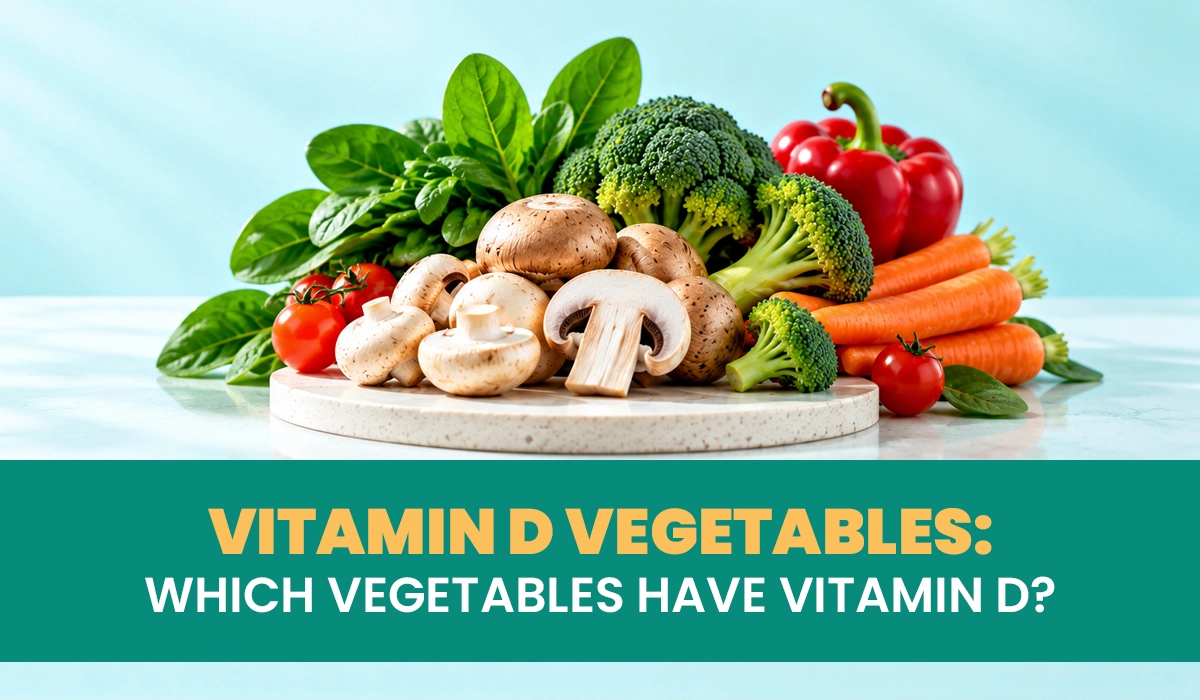
A plate of palak, a bowl of mixed vegetables, and fresh fruit can add variety to your meals. But do these foods provide vitamin D?
Most vegetables contain little to no vitamin D. Mushrooms are the main part in the vegetable category, especially when it comes to sunlight or ultraviolet light. They are fungi rather than vegetables, but we commonly buy and cook them alongside vegetables.
This distinction matters when you see a vitamin D fruits-and-vegetables list. A food can provide several useful nutrients without supplying meaningful vitamin D.
For vegetarians, the practical approach is to understand which foods actually contribute, check fortified products and consider individual guidance when food intake may be insufficient.
Do Green Leafy Vegetables Have Vitamin D?
Leafy greens should remain part of a varied diet, but you shouldn’t rely on them as a source of vitamin D.
For example, USDA’s food composition data lists raw spinach as containing 0 mcg of vitamin D per 100 g. Its other nutrients do not make it a vitamin D-rich vegetable.
The confusion often comes from grouping all bone-related nutrients. Vitamin D helps the body absorb calcium, but a calcium-containing food doesn’t automatically contain vitamin D.
Think of each nutrient as a separate entry on a food’s nutritional profile. The presence of one does not confirm the presence of another.
So, keep leafy greens in your meals. Just avoid counting a serving of spinach as a meaningful contribution to your vitamin D intake.
Why Mushrooms Are Different?
Mushrooms contain ergosterol, a compound that can convert to vitamin D2 when exposed to UV light. This gives them a feature that ordinary vegetables lack.
USDA research on mushroom composition found differences in vitamin D content across mushroom types, including commercially UV-treated mushrooms. Because exposure and growing conditions matter, all mushrooms should not be assigned the same value.
UV Exposure Matters More Than Appearance
Two similar-looking packs of button mushrooms may contain different amounts of vitamin D.
One may have received controlled UV treatment, while the other may have been grown and handled with limited light exposure. Their colour, size or freshness cannot tell you how much vitamin D they provide.
Look for:
- A statement identifying UV treatment or vitamin D enrichment.
- A declared vitamin D amount.
- The serving size used for that declaration.
- Storage instructions and the best-before date.
If the pack provides no vitamin D information, avoid assuming it supplies a particular amount.
Mushrooms Provide Vitamin D2
This process mainly produces vitamin D2. Vitamin D3 is another form found in some foods and supplements.
Both can contribute to vitamin D status. This distinction does not mean mushroom-derived D2 has no nutritional value, or that everyone needs to choose the same supplement form. Vegetarians who prefer D3 can look for D3 sourced from lichen, a non-animal source.
A Practical Vitamin D Vegetables List
Instead of creating a long list of supposedly vitamin D-rich vegetables, it is more useful to separate genuine sources from foods you shouldn’t rely on.
| Food or Category | What to Know |
| UV-exposed mushrooms | Can provide meaningful vitamin D2; check the declared amount |
| Mushrooms without declared UV treatment | Content varies; do not assume a high amount |
| Spinach and other leafy greens | Do not rely on them for meaningful vitamin D |
| Ordinary fruits and vegetables | Include them for dietary variety, rather than treating them as dependable vitamin D sources |
| Fortified plant drinks | Can contribute when vitamin D is added; check the label |
The key is the product’s actual nutrient information. A label saying vegetarian describes dietary suitability; it doesn’t indicate vitamin D content.
Are Sun-Dried Mushrooms Higher in Vitamin D?
Sunlight exposure can increase vitamin D2 in mushrooms, but “dried” and “sun-exposed” aren’t interchangeable. Mushrooms dried using equipment without relevant UV exposure may not undergo the same increase. Results also depend on the species, exposure conditions and processing method.
A study comparing sunlight and commercial UV treatment examined how these treatments affected button mushrooms. It supports the importance of light exposure, rather than assuming that every dried mushroom product has a similar nutritional profile.
For everyday shopping, a declared vitamin D amount is more useful than a general sun-dried claim. Home sunlight exposure also cannot give you a verified dose. Avoid treating a fixed number of minutes outdoors as a guarantee that mushrooms will meet your daily requirement.
Does Cooking Affect Vitamin D in Mushrooms?
Cooking can reduce vitamin D content, but it doesn’t necessarily remove it all.
A 2023 study of commonly consumed mushrooms found that vitamin D2 remained after boiling, stir-frying and grilling. The amount retained varied, and the researchers also found substantial differences between mushroom species.
This means a raw-food nutrient value should not automatically be treated as the exact amount in a cooked serving.
You can include edible mushrooms in dishes such as:
- Mushroom and pea sabzi.
- Mushroom pulao.
- Stir-fried mushrooms with vegetables.
- Mushroom soup.
- A mushroom filling for wraps.
These are meal ideas, not guaranteed vitamin D servings. For a more predictable contribution, choose a product with declared vitamin D information and follow its preparation instructions.
Cooking ordinary vegetables also doesn’t create vitamin D that wasn’t there to begin with.
Fortified Foods: Other Options for Vegetarians
Mushrooms are only one part of the picture. Vitamin D-fortified foods offer another way to increase intake.
Fortified Milk and Edible Oil
In India, FSSAI identifies milk and edible oil as foods fortified with vitamins A and D.
Read the product’s nutritional information. For fortified oil, FSSAI advises checking the label and the +F logo.
Use fortified oil within your usual cooking quantity. Increasing oil consumption just to get more vitamin D isn’t practical.
Fortified Plant Drinks and Breakfast Cereals
Some plant drinks and breakfast cereals contain added vitamin D. Others do not.
The NIH’s vitamin D food guidance identifies these fortified categories and recommends checking the nutrition label. Products available in India may differ from the examples described in international guidance.
Compare the amount per serving, rather than relying on the front of the pack. A cereal portion eaten with a fortified drink may contribute differently from the cereal alone.
Also, fortification is nutrient-specific. A product fortified with iron or vitamin B12 does not automatically contain added vitamin D.
How to Read Vitamin D Amounts on Food Labels
Vitamin D may be listed in micrograms, written as mcg or µg, or international units, written as IU.
The conversion is 1 mcg = 40 IU. Therefore, 10 mcg equals 400 IU of vitamin D. This explains the units; it is not a recommendation for your personal intake.
Next, check whether the amount is shown:
- Per 100 g or 100 ml.
- Per serving.
- Per prepared portion.
For example, if a drink declares 1 mcg per 100 ml, a 200 ml portion supplies 2 mcg, or 80 IU. Use your actual portion when comparing products. A larger number on a label may simply refer to a larger serving.
Can Vegetarians Get Enough Vitamin D From Vegetables Alone?
Ordinary vegetables alone are generally not dependable sources for meeting vitamin D needs. A vegetarian eating pattern may need to include UV-exposed mushrooms, fortified foods, and other sources.
Sun exposure can contribute because the skin produces vitamin D, but the amount varies. Age, skin pigmentation and exposure conditions influence production. Sunlight through a window does not support vitamin D production in the skin.
Living in a sunny location does not confirm adequate vitamin D status. Nor should you abandon sun protection to increase vitamin D production.
If you are concerned about your intake or status, a healthcare professional can assess whether testing or supplementation is appropriate. Routine testing is not automatically necessary for everyone.
Where Does VitSupp Vitamin D3 + K2 Fit?
When supplementation is appropriate, it complements a varied diet.
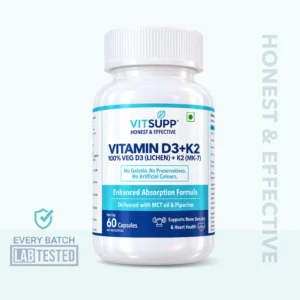
VitSupp Vitamin D3 + K2 lists 600 IU of Vitashine® lichen-derived vitamin D3 and 45 mcg of BioEssence® vitamin K2 as MK-7 per capsule, with a vegetarian HPMC capsule shell.
These are formulation facts, not a promise that the product will meet every individual’s vitamin D needs. Review the current pack and follow its directions, with professional advice where appropriate.
Conclusion
The useful answer to “which vegetables have vitamin D?” is shorter than many online lists suggest. UV-exposed mushrooms stand out in the vegetable aisle, while leafy greens should be valued for their other nutrients.
Check mushroom labels, identify genuinely fortified foods and calculate the contribution of your usual portions. This gives you a clearer starting point than assuming that a vegetable-rich diet automatically provides enough vitamin D.
Frequently Asked Questions
1. Which Vegetables Have Vitamin D?
Most vegetables contain little to no vitamin D. Mushrooms are the main exception in the vegetable aisle, although they are technically fungi. UV-exposed mushrooms can provide more vitamin D than mushrooms grown with limited light exposure. Check the label for the declared amount rather than assuming all mushrooms provide the same amount.
2. Do Green Leafy Vegetables Have Vitamin D?
Don’t rely on green leafy vegetables as meaningful vitamin D sources. They add other nutrients to a varied diet. Still, their nutritional value does not automatically include vitamin D. Continue including leafy greens in your meals, but look separately at mushrooms and foods fortified with vitamin D.
3. Does Spinach Contain Vitamin D?
USDA food composition data lists raw spinach as containing 0 mcg of vitamin D per 100 g. Spinach provides other nutrients, but eating more of it isn’t a reliable way to increase vitamin D intake. Include it for dietary variety rather than treating it as a vitamin D-rich vegetable.
4. Which Vegetable Has the Most Vitamin D?
There is no reliable ranking of ordinary vegetables as vitamin D sources. Among mushrooms, the amount depends on the variety, growing conditions and UV exposure. USDA mushroom research shows that these differences matter. A product’s declared vitamin D content is more useful than choosing by mushroom name alone.
5. Why Do Mushrooms Contain Vitamin D?
Mushrooms contain ergosterol, which UV exposure can convert into vitamin D2. Research on UV-treated mushrooms explains why sunlight or controlled UV treatment can increase their vitamin D content. The amount produced varies, so a mushroom’s appearance does not reveal how much vitamin D it contains.
6. Are Sun-Dried or UV-Exposed Mushrooms Higher in Vitamin D?
They can contain more vitamin D2 with suitable UV exposure. However, drying alone doesn’t guarantee an increase: mushrooms dried without appropriate light exposure may not have the same content. Look for a vitamin D declaration or confirmed UV treatment rather than relying only on the words “dried” or “sun-dried.”
7. Can Vegetarians Get Enough Vitamin D From Vegetables Alone?
Ordinary vegetables alone are generally not dependable sources for meeting vitamin D needs. UV-exposed mushrooms and suitable fortified foods can contribute to intake. Whether they provide enough depends on how much you consume and your individual circumstances. A healthcare professional can advise whether supplementation is appropriate.
8. Does Cooking Vegetables Affect Their Vitamin D Content?
Cooking can reduce vitamin D in mushrooms, although it does not necessarily remove all of it. A study examining household cooking methods found that vitamin D2 remained after boiling, stir-frying and grilling. Retention varied, so raw-food values may not match a cooked serving. Cooking ordinary vegetables does not make them meaningful vitamin D sources.
9. What Should Vegetarians Eat to Get More Vitamin D?
Consider UV-exposed mushrooms and products with declared vitamin D fortification, such as suitable milk, plant drinks and breakfast cereals. In India, fortified milk and edible oil are additional options. Check each label because not every product is fortified, and calculate its contribution using your usual serving size.
10. How Does VitSupp Vitamin D3 + K2 Help if Vegetables Don’t Provide Enough Vitamin D?
VitSupp Vitamin D3 + K2 provides 600 IU of Vitashine® lichen-derived vitamin D3 and 45 mcg of BioEssence® vitamin K2 as MK-7 per vegetarian HPMC capsule. It can complement dietary intake when supplementation is appropriate. Follow the current pack directions and seek individual advice if you already take supplements or medicines.