When choosing a supplement, most people focus on what is written on the front of the bottle.
They check the nutrient name, dosage, ingredients, and brand reputation. But there is another important detail that often goes unnoticed:
What is the capsule made of?
The capsule shell is the outer layer that holds the supplement ingredients together.
Today, supplements are available in different formats, including gelatin capsules and vegetarian capsules. Understanding the difference between HPMC Capsules vs Gelatin Capsules can help consumers choose a supplement that matches their lifestyle and preferences.
For many consumers, the main difference comes down to one simple factor:
Gelatin capsules are animal-derived, while HPMC capsules are plant-based alternatives.
Why the Capsule Material Matters More Than Most People Realise
Most people carefully read the active ingredients in a supplement but rarely think about the capsule that delivers them.
At VitSupp, we believe every part of a supplement deserves the same attention – from the nutrient form and supporting cofactors to the capsule shell itself.
While the capsule does not determine whether a supplement is effective, it is an important part of the overall formulation and should align with the product’s intended purpose and the consumer’s dietary preferences.
That’s why we believe consumers should understand not only what is inside the capsule, but also what the capsule is made of before making an informed choice.
What Are Capsules and Why Are They Used in Supplements?
A Capsule Is More Than Just a Container
Many people assume the capsule is simply a protective shell. While it certainly helps contain and protect the ingredients, it also forms part of the overall supplement experience.
For some consumers, choosing a vegetarian or vegan capsule is important for dietary, ethical, or religious reasons. Others simply appreciate knowing exactly what every component of their supplement is made from.
A thoughtfully designed supplement considers every component – not just the active ingredients listed on the label.
Capsules are a common format for delivering vitamins, minerals, and other nutritional ingredients conveniently.
A supplement capsule generally contains:
- Active ingredients: the nutrients, vitamins, minerals, or botanical extracts that provide the intended nutritional value.
- Supporting ingredients: additional components that help maintain stability, consistency, or delivery.
- Capsule shell: the outer layer that surrounds and protects the contents.
The capsule shell itself can be made from different materials, and the choice of material can affect whether the supplement suits certain dietary preferences.
Understanding Different Types of Capsules
Capsules are not all made the same way. They differ in their structure, materials, and the types of ingredients they are designed to contain.
The most common types of capsules include:
- Hard capsules
- Soft gelatin capsules
- vegan capsules
1. Hard Capsules: Commonly Used for Powder-Based Supplements
Hard capsules are among the most widely used capsule formats for vitamins and mineral supplements.
They usually consist of two parts:
- A capsule body
- A capsule cap
The active ingredients, usually in powder form, are filled inside before the capsule is sealed.
Hard capsules are commonly used for:
- Vitamins
- Minerals
- Herbal extracts
- Powder-based nutritional supplements
Because they are designed primarily for powders, they are commonly found in many daily wellness supplements.
2. Soft Gel Capsules: Designed for Oil-Based Ingredients
Soft gel capsules differ from hard capsules in that they are flexible and designed to contain liquids or oils.
They are commonly used for supplements containing:
- Omega-3 fatty acids
- Fat-soluble vitamins
- Oil-based nutrient formulations
Soft gelatin capsules usually require gelatin because the capsule shell needs flexibility and elasticity. Since some nutrients, such as Vitamin D, are fat-soluble, manufacturers may use oil-based delivery systems to support formulation stability and nutrient delivery.
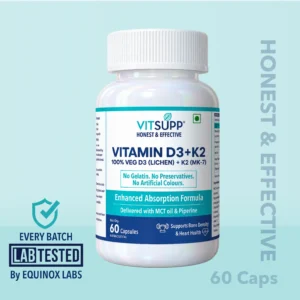
For example, VitSupp’s Vitamin D3 + K2 formulation uses MCT oil as part of its absorption-focused approach, helping deliver fat-soluble nutrients in an oil-based format.
3. Vegetarian Capsules: A Plant-Based Alternative
As consumer preferences have evolved, vegan capsule options have become increasingly common. These capsules are designed using plant-derived materials instead of animal-derived gelatin.
The most commonly used vegan capsule material is:
Hydroxypropyl Methylcellulose (HPMC).
HPMC capsules provide an alternative for consumers who prefer supplements that align with vegetarian or vegan lifestyles.
Gelatin Capsules vs HPMC Capsules: Key Differences and Why Consumers Choose Vegetarian Capsules
What Are Capsules Made Of?
The capsule shell is usually made from different materials depending on the formulation requirements and consumer preferences.
The most common capsule materials include:
- Gelatin
- HPMC (Hydroxypropyl Methylcellulose)
- Other plant-based capsule materials such as pullulan
Among these options, gelatin and HPMC capsules are the most commonly discussed choices for supplements.
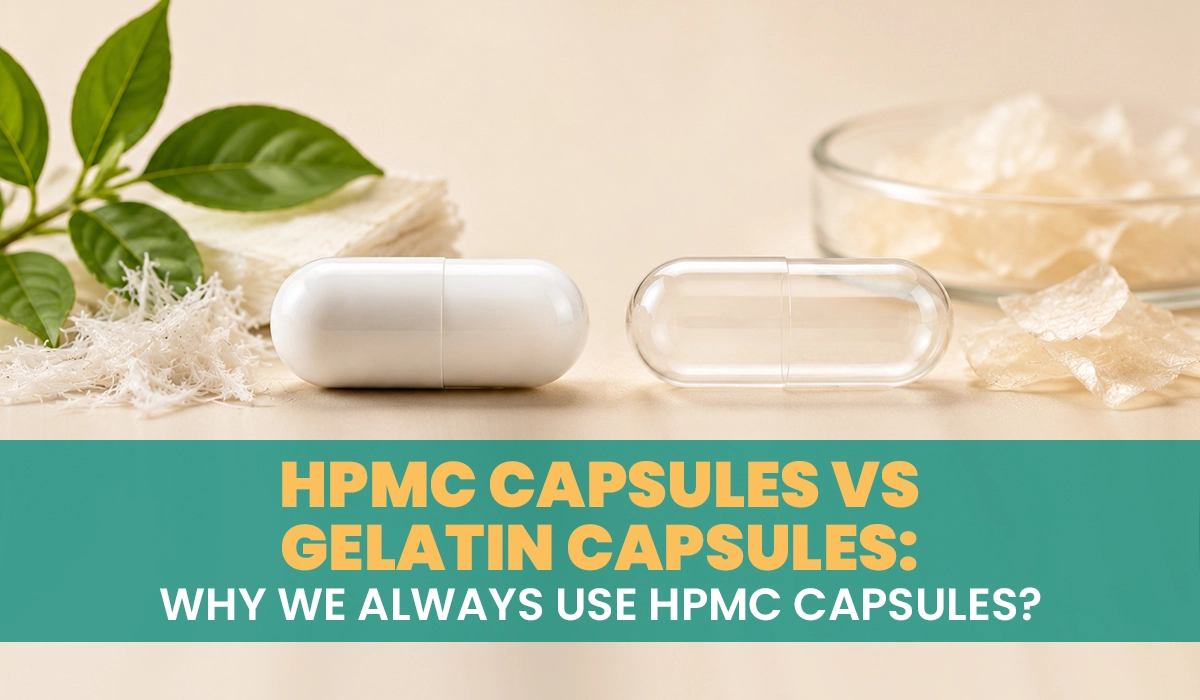
The key difference between them is their source:
- Gelatin capsules are animal-derived.
- HPMC capsules are plant-based.
This difference is often the most important consideration for consumers when choosing between the two.
Understanding Gelatin Capsules
Gelatin capsules are made using gelatin, a protein obtained from collagen.
Gelatin is generally sourced from animal materials, including:
- Bovine sources
- Porcine sources
- Fish sources
Because gelatin has been used for many years in pharmaceutical and supplement manufacturing, it remains one of the most common capsule materials.
Why Are Gelatin Capsules Commonly Used?
Gelatin capsules have been popular for several reasons.
- Established Manufacturing Process: Gelatin has been used in capsule manufacturing for many years, making it a well-established material with extensive industry experience.
- Good Capsule Strength: Gelatin forms durable capsule shells that can protect ingredients and maintain their structure during handling and storage.
- Wide Availability: Because gelatin capsule production is highly established, it remains a common choice across pharmaceutical and supplement industries.
What Are Vegetarian Capsules?
Vegetarian capsules are designed as plant-based alternatives to traditional gelatin capsules. They are commonly used by people who prefer supplements that align with vegan, or clean-label preferences.
The most widely used material for vegetarian capsules is HPMC (Hydroxypropyl Methylcellulose).
Are HPMC Capsules Safe?
One of the most common questions consumers ask is:Are HPMC capsules safe?
HPMC has been widely used in pharmaceutical, food, and supplement applications. However, capsule material is only one factor when evaluating supplement quality.
A trustworthy supplement should also consider:
- Ingredient quality
- Nutrient forms
- Dosage accuracy
- Manufacturing standards
- Quality testing
A plant-based capsule alone does not define supplement quality. The complete formulation and the standards behind it matter equally.
Capsule Material Is Only One Part of Supplement Quality
Consumers sometimes assume that using an HPMC capsule automatically makes a supplement superior. In reality, capsule material is only one factor among many.
A high-quality supplement should also consider:
- The form of the nutrient used
- Whether supporting cofactors have been included
- Appropriate dosage levels
- Manufacturing quality
- Ingredient purity
- Batch testing and quality control
At VitSupp, we believe every formulation decision should be evidence-informed. The capsule shell is one of those decisions – but never the only one.
HPMC Capsules vs Gelatin Capsules: Key Differences
Understanding the difference between HPMC capsules vs gelatin capsules can make choosing supplements easier.
| Feature | Gelatin Capsules | HPMC Capsules |
| Source | Animal-derived gelatin | Cellulose-derived material |
| Suitable for vegetarians | Generally not preferred | Yes |
| Suitable for vegans | No | Yes |
| Common applications | Hard & soft capsules | Primarily hard capsules |
| Consumer preference | Traditional capsule option | Plant-based alternative |
| Suitable for clean-label products | Depends on formulation | Commonly preferred |
For most consumers, the decision comes down to personal dietary preferences.
Gelatin vs HPMC Capsules: Which One Should You Choose?
There is no single capsule material that is right for everyone. The better choice depends on your dietary preferences and personal requirements.
Gelatin Capsules May Suit:
Consumers who:
- Do not have dietary restrictions
- Prefer traditional capsule formats
- Are comfortable with animal-derived materials
HPMC Capsules May Suit:
Consumers who:
- Follow vegetarian or vegan lifestyles
- Prefer plant-based products
- Want greater transparency about ingredient sourcing
The most important thing is choosing a supplement that fits your needs and preferences.
Choosing a Supplement Involves More Than the Capsule
Whether a supplement uses HPMC or gelatin, the capsule material should never be the only factor influencing your decision.
Before purchasing a supplement, consider asking:
✓ What form of the nutrient has been used?
✓ Is the dosage appropriate?
✓ Have important supporting ingredients been included?
✓ Is the formulation transparent?
✓ Does the manufacturer clearly disclose what goes into the product?
Consumers who ask these questions are far more likely to choose supplements designed with quality rather than marketing in mind.
Why Do Consumers Prefer HPMC Vegetarian Capsules?
The growing interest in HPMC capsules is mainly driven by changing consumer preferences.
Many people now consider not only what ingredients are included in a supplement, but also the source of those ingredients.
Vegetarian capsules are often preferred because they offer:
A Plant-Based Choice
Consumers looking for plant-based supplements may prefer HPMC capsules because they avoid animal-derived gelatin.
Dietary Compatibility
Vegetarian capsules can suit people following vegetarian or vegan lifestyles.
A Simple Ingredient Choice
For many buyers, choosing a vegetarian capsule is simply about selecting a supplement that matches their personal values and dietary choices.
Why VitSupp Uses Vegan HPMC Capsules
For its Vitamin D3 + K2 supplement, VitSupp chooses vegan HPMC capsules instead of gelatin capsules.
This choice supports:
- Plant-based capsule preference
- Vegetarian suitability
- Transparent ingredient sourcing
The formulation also avoids:
- Gelatin
- Artificial colours
- Preservatives
The choice is simple: provide a vegetarian capsule option for consumers who prefer plant-based supplements while maintaining a clean, transparent formulation.
At VitSupp, every formulation decision is made with one objective – to create supplements that are thoughtfully designed, transparent, and aligned with consumer needs.
For our Vitamin D3 + K2 supplement, we chose vegetarian HPMC capsules because they complement the overall philosophy behind the formulation.
Our formulation combines:
- Vegan Vitamin D3 sourced from lichen
- Vitamin K2 (MK-7)
- MCT oil to support fat-soluble nutrient delivery
- Vegetarian HPMC capsules
The result is a formulation that avoids gelatin, artificial colours, and preservatives while remaining suitable for vegetarians and vegans.
We believe quality is built through hundreds of small decisions – not one big marketing claim. The capsule shell is one of those decisions.
Conclusion: Every Part of a Supplement Matters
Choosing a supplement should involve more than comparing nutrient names or dosage numbers. Every aspect of a formulation – from the ingredient form and supporting cofactors to the capsule shell – contributes to the overall design of the product.
When comparing HPMC capsules vs gelatin capsules, the primary difference lies in their source. Gelatin capsules are derived from animal collagen, whereas HPMC capsules are made from plant-derived cellulose, making them suitable for vegetarian and vegan lifestyles.
While capsule material alone does not determine supplement quality, it reflects the attention given to the overall formulation. A thoughtfully designed supplement considers every component rather than focusing on a single feature.
That philosophy guides every product we develop at VitSupp.
We believe consumers deserve supplements that are transparent, carefully formulated, and built on sound nutritional science – not marketing trends.
Because when every detail matters, better formulation leads to better supplementation.
Explore VitSupp’s Thoughtfully Designed Formulations
At VitSupp, we believe choosing a supplement shouldn’t be confusing.
Our formulations are designed using carefully selected ingredient forms, appropriate supporting cofactors, and clean-label ingredients to help consumers make informed nutritional choices.
Explore our science-backed formulations and learn why every ingredient—and every formulation decision – matters.
Frequently Asked Questions
Are HPMC capsules safe for daily use?
Yes, HPMC capsules are widely used in pharmaceutical, food, and supplement applications. They are made from hydroxypropyl methylcellulose, a cellulose-derived material, and are commonly used as a plant-based alternative to gelatin capsules. However, overall supplement quality depends on more than just the capsule material, including ingredient quality, dosage, and manufacturing standards.
Do HPMC capsules affect nutrient absorption?
HPMC capsules are designed to deliver supplement ingredients in a convenient form. The capsule material itself does not determine the nutritional value of a supplement. Factors such as the nutrient form, formulation, and ingredients used alongside the active nutrients play a more important role in how a supplement is designed.
Do HPMC capsules dissolve at the same rate as gelatin capsules?
HPMC and gelatin capsules have different compositions, so their dissolution characteristics can vary depending on factors such as formulation, moisture conditions, and manufacturing process. Both capsule types are designed to release their contents effectively when used in suitable supplement formulations.
Can HPMC capsules be opened and mixed with food or drinks?
In some cases, HPMC capsules can be opened and mixed with food or beverages, but this depends on the specific supplement formulation. Some ingredients may have specific usage instructions, so it is best to check the product label or follow the manufacturer’s guidance before opening a capsule.
Do HPMC capsules contain common allergens?
HPMC capsules are generally made from cellulose-derived materials and do not typically contain common allergens such as gelatin. However, consumers should always check the complete ingredient list of the supplement, as other ingredients in the formulation may vary between products.
Can HPMC capsules be taken by people with dietary restrictions?
Yes, HPMC capsules are commonly preferred by consumers following vegetarian or vegan lifestyles because they are plant-based alternatives to gelatin capsules. They may also suit people who prefer supplements without animal-derived capsule materials. Consumers with specific dietary restrictions should always review the full ingredient list.
Do HPMC capsules have a shelf-life advantage over gelatin capsules?
HPMC and gelatin capsules have different properties, and their stability can depend on factors such as storage conditions, formulation, and packaging. HPMC capsules are often chosen for certain formulations because of their plant-based nature and suitability for different supplement applications, but shelf life depends on the complete product formulation.
Can HPMC capsules be used for probiotics and enzymes?
Yes, HPMC capsules can be used for a variety of supplement formulations, including products containing probiotics and enzymes. However, the suitability of any capsule depends on the stability requirements of the specific ingredients and the formulation design.
Why are premium supplement brands increasingly switching to HPMC capsules?
Many supplement brands are choosing HPMC capsules because consumers are increasingly looking for plant-based and vegetarian supplement options. HPMC capsules provide an alternative to animal-derived gelatin capsules and can help brands offer products that align with changing dietary preferences.
Are HPMC capsules suitable for people with sensitive stomachs?
HPMC capsules are generally considered a suitable capsule option for many consumers. However, sensitivity can depend on the complete supplement formulation, including the active ingredients and other components inside the capsule. People with specific sensitivities should review the full ingredient list before choosing a supplement.