
Have you been using a magnesium supplement after being diagnosed deficient in the mineral? It can be annoying to find that things are not changing, even after weeks of usage. The label says” high magnesium content”, so what can be the issue?
Most magnesium supplement users don’t realize that, more than the percentage of the mineral in a supplement, the variant used matters more. A supplement with high levels of magnesium oxide will not offer you more benefit than another with the bioavailable form like magnesium bisglycinate.
When you take supplements with magnesium forms that your body can’t absorb well, you may find magnesium deficiency symptoms, including fatigue, muscle cramps, headaches, and sleep disturbances, persisting.
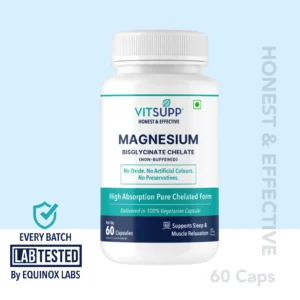
To improve your body’s magnesium absorption capability, consider using a clean-label, bioavailable product like VitSupp Magnesium Bisglycinate Chelate. A single-ingredient magnesium supplement without any unnecessary additives or fillers, it supports magnesium absorption while being gentle on your gut.
In this blog, we will look into the different forms of magnesium, the basics of absorption of magnesium in the human body, and why VitSupp’s offering is a viable solution to deal with magnesium deficiency.
Why Do People Develop Magnesium Deficiency?
Magnesium deficiency is a global health issue, but certain types of users tend to be more affected than others. Urban Indians often cope with a magnesium deficit, as reported by TOI.
Let’s have a look at the core reasons for magnesium shortfall in the adult population:
- Improper diet – When your meals exclude magnesium-rich foods, it can occur. It is common for people to rely mostly on processed and junk foods.
- Specific disorders – People coping with specific Gastrointestinal conditions, like Crohn’s disease, celiac disease, experience poor magnesium absorption, adding to the deficit.
- Drinking – Those who drink alcohol heavily find it hard to absorb and retain magnesium easily.
- Aging – As you age, your body’s natural ability to absorb and utilize this mineral goes down.
- Hypercalcemia – Excessive levels of calcium in the blood may disrupt magnesium balance.
Using a magnesium supplement can help you address a deficiency, but you must understand which magnesium is best absorbed by the body. A supplement like VitSupp Magnesium Bisglycinate Chelate, containing a bioavailable form, helps improve magnesium absorption.
Why Does Your Body Need Magnesium?
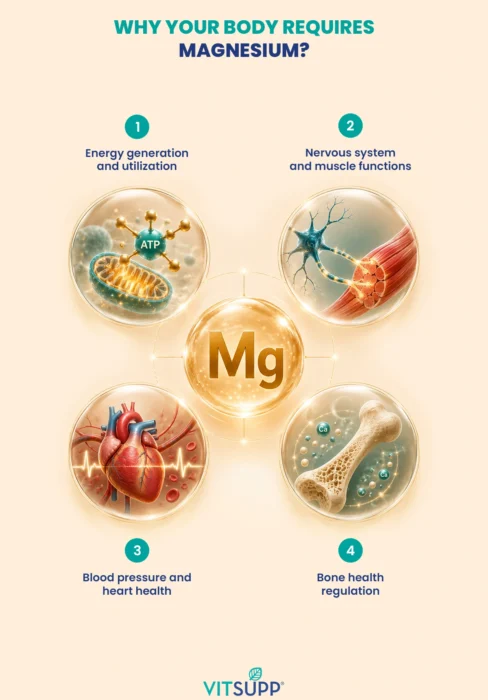
Magnesium is not a “single-purpose” nutrient. A key mineral, it performs a wide range of physiological processes in your body. Studies show it is involved in over 300 enzymatic reactions that affect everything from energy generation in the cells to muscle contractions and nervous system functioning.
Let’s have a close look at the major roles of Magnesium in the body:
1. Energy Generation and Usage – Magnesium helps activate adenosine triphosphate (ATP), the molecule that provides energy to cells. Without enough magnesium absorption, your body struggles to generate and use energy.
2. Muscle and Nervous System Functioning – Magnesium also plays a key role in muscle and nerve function. It supports communication between nerves and muscles, and its deficit may contribute to muscle cramps and weakness. It also supports the parasympathetic nervous system, the system responsible for relaxation and recovery.
3. Blood Pressure Regulation and Heart Health – Research has shown that adequate magnesium levels can help regulate blood pressure, improve insulin sensitivity, and support heart health.
4. Bone Health and Mineral Balance – A significant portion of the body’s magnesium stays in the bones, where it supports structural strength and mineral balance. It supports calcium metabolism and aids vitamin D in the process.
Why Absorption Matters?
If your body cannot absorb and retain Magnesium properly, it won’t be able to perform several physiological functions. This may contribute to health issues, and you may experience specific symptoms.
- Chronic fatigue – Your cells struggle to produce and use energy without enough magnesium intake.
- Muscle cramps and weakness – Poor magnesium levels can affect nerve-muscle communication.
- Headaches and migraines – Magnesium deficiency can impair blood flow and neurotransmitter balance, which may contribute to headaches.
- Sleep issues – Low magnesium levels may affect the nervous system’s ability to relax and recover.
- Mood changes and anxiety – The mineral plays a key role in regulating stress hormones, and so its shortage can add to mood swings.
Magnesium Bisglycinate vs. Magnesium Oxide
You must understand what type of magnesium to take before using any supplement.
Several common magnesium supplement products contain forms like Magnesium oxide, with poor absorption rates and a strong laxative effect. Using such supplements will not help you get the desired health benefits or address mineral deficits.
Magnesium bisglycinate works differently. In this form, magnesium is chelated, which protects it through the digestive process. Your intestinal cells can absorb it far more efficiently. You should choose supplements containing bioavailable forms like magnesium bisglycinate for better outcomes.
VitsUpp offers you a clean, non-buffered formulation backed by FSSAI, without unnecessary additives or confusing variants.
Types of Magnesium Supplements: Why the Form Matters?
There are different types of magnesium supplements, and they contain different forms of magnesium. You must remember that the chemical form of magnesium significantly affects absorption, tolerability, and effectiveness.
Magnesium bound to another molecule, like an amino acid, in a compound form, gets easily absorbed by the human body. Otherwise, the mineral just passes through the digestive system with minimal absorption and benefits.
Let’s have a look at the common and different forms of magnesium:
Magnesium Oxide
Magnesium oxide is one of the widely used forms, found in many supplements. While the form contains a high elemental magnesium content, it is known for poor gut absorption rates. It brings short-term relief of constipation, and beyond the laxative effect, the benefits are hard to obtain.
Magnesium Citrate
Magnesium citrate is more bioavailable than oxide, and you will find it used in both supplements and digestive health products. It is useful as a laxative, but individuals sensitive to digestive discomfort do not find it suitable.
Magnesium Malate
Magnesium malate combines magnesium with malic acid. The latter compound plays a key role in cellular energy production. It is useful when you want to address fatigue and muscle cramps aggravated by magnesium deficiency.
Magnesium Bisglycinate
Magnesium bisglycinate is one of the most bioavailable and gut-friendly forms of magnesium. In this form, magnesium is bound to two glycine molecules. It does not produce strong laxative effects. Since glycine itself has calming properties, magnesium bisglycinate is ideal for dealing with stress, sleep, and nervous system support.
Magnesium Sulfate
Popular as Epsom salt, it is commonly used in baths for muscle relaxation and therapeutic benefits. Oral surgery is not commonplace.
Choosing the Right Form Makes a Difference
The effectiveness of magnesium supplementation depends not only on the dose but also on its absorption in the human body. Lower-quality forms may theoretically contain more elemental magnesium. However, proper absorption is the key. Quality formulations often use bioavailable forms like magnesium bisglycinate, which is equivalent to high absorption magnesium.
Go for a supplement with a research-backed formulation like VitSupp that offers: vegan magnesium bisglycinate capsules, free of allergens, animal extracts, additives, or soy, for desired health benefits.
| Magnesium Form | Key Characteristics | Common Benefits | Absorption Level |
|---|---|---|---|
| Magnesium Oxide | High elemental form of magnesium, but poorly absorbed | Often used for short-term relief from constipation | Low |
| Magnesium Citrate | Magnesium is bound with citric acid | Supports digestion and occasional constipation relief | Moderate |
| Magnesium Malate | Magnesium, combined with malic acid, is involved in cellular energy production | May support energy production and muscle function | Moderate |
| Magnesium Bisglycinate (Glycinate) | Magnesium chelated with the amino acid glycine; gentle on the stomach | Supports sleep, nervous system function, and muscle relaxation | High |
| Magnesium Sulfate | Known as Epsom salt, it is commonly used in baths or medical settings | Used for muscle relaxation and therapeutic baths | Low (oral use uncommon) |
Why Magnesium Bisglycinate Scores over Other Forms for Supplementation?

Once you understand the importance of magnesium for health, your focus should be on how to improve magnesium absorption. The performance of magnesium supplements will vary based on how well the body absorbs them. Some forms of magnesium contain large amounts of the mineral but are poorly absorbed. This is where magnesium bisglycinate stands out.
It is a chelated form of magnesium in which the mineral is bound to the amino acid glycine. Chelation helps protect the magnesium molecule as it passes through the digestive system. Then your body can absorb it more efficiently.
Now, let’s look at the key benefits of magnesium bisglycinate:
1. Better Absorption
A big issue with using magnesium supplementation is intestinal absorption. Products with poor bioavailable forms of magnesium do not get absorbed well. Magnesium bisglycinate improves absorption as the glycine molecules help transport magnesium across intestinal walls. It is less likely to react with other dietary minerals. So your body can utilize more of the minerals you consume.
2. Gentle on the Guts
Unlike Magnesium oxide, which has a strong laxative effect, Magnesium Bisglycinate does not add to digestive discomfort. It is especially useful for people with digestive health conditions.
3. Support Nerves and Sleeping Process
The glycine component of magnesium bisglycinate assists in nervous system regulation, making it calm. Studies reveal its assistive effects on sleep quality and relaxation. Those dealing with sleeping issues should look for supplements containing this form of magnesium.
4. Anxiety and Stress Handling
Magnesium in it helps regulate the HPA axis for stress response and stress hormone secretion. Glycine helps calm the nervous system. Together, they help manage stress and anxiety symptoms and the edgy feeling.
5. Heart Health Support
Magnesium helps keep your blood vessels relaxed and plays a role in thwarting arterial calcification. Glycine helps protect the endothelium (arterial lining). The compound contributes to better circulation and heart health.
The right magnesium form can make a difference. See how magnesium supports sleep, stress balance, and muscle recovery.
What Makes VitSupp Magnesium Bisglycinate Unique and Effective?

Many magnesium supplements may look similar on the surface, but a closer analysis reveals key differences in form, formulation quality, and brand philosophy. Developed with a clear focus on simplicity and efficacy, VitSupp’s magnesium bisglycinate offers high bioavailability. When you take these capsules, your body receives magnesium in a form it can actually use.
Let’s look at the major factors that set it apart from competing magnesium supplements:
- Highly Bioavailable – You get magnesium bisglycinate, a chelated form, and the structure improves absorption and stability during digestion.
- Gut-friendly form – This supplement is oxide-free and light on your stomach. You will not experience strong laxative effects or digestive upset after using it.
- Clean formulation – With VitSupp, you get a clean-label formulation without unnecessary additives, fillers, or gelatin.
- Quality Assurance – This is a magnesium supplement with the assurance of FSSAI and GMP. You get a vegetarian HPMC capsule shell for desired efficacy.
- Versatile Usage – It suits a wide range of users, including vegans with a magnesium deficiency, athletes seeking muscle recovery, and adults seeking preservative-free magnesium supplements.
- Simplicity – All you need to do is consume two capsules per day with meals. There is only one product, freeing you from the hassles of comparing several variants.
So, you get a balanced magnesium supplement with a study-backed formulation, a safer form, delivered in a suitable carrier form, targeting wide user groups.
Did you know that different magnesium forms can affect digestion differently? Explore the connection between magnesium, digestive comfort, and overall gut health in our comprehensive guide.
Conclusion
Magnesium plays key roles in keeping you healthy and fit by silently contributing to several physiological processes. From supporting the nervous system and muscle functions to streamlining energy production and bone health, your body needs this key mineral in each step. Yet modern diets, lifestyle stress, and reduced nutrient density in foods may affect your daily magnesium intake, and that may add to health issues.
Addressing magnesium levels through diet and appropriate supplementation can help. However, you must be aware of what type of magnesium to take for proper magnesium absorption. Typical magnesium supplements often contain oxide that limits absorption and may add to digestive discomfort.
It is time you embrace a non-buffered, single-ingredient magnesium supplement like VitSupp Magnesium Bisglycinate Chelate, which helps you address magnesium deficit, without complications. Suitable for vegans, this bioavailable, GMP-certified supplement is sold in a single clean-label form and is suitable for a wide range of users.
As awareness about nutrient deficiencies keeps growing, choosing suitable supplementation has become crucial. When you know about different types of magnesium and what they do, comparing available supplements and choosing the right one becomes easier.
Absorption matters—but so does intake. Learn why magnesium deficiency is becoming increasingly common today.
FAQs
1. What type of magnesium is better absorbed by the body?
Magnesium bisglycinate is the form that helps increase magnesium absorption. In this chelated form, magnesium is bound to the amino acid glycine. This combination helps improve absorption, and the mineral reaches the bloodstream easily. Unlike other types of magnesium, including magnesium oxide, which has poor bioavailability and adds to digestive issues, bisglycinate is gut-friendly. Your intestinal cells absorb it easily. That is why it suits people seeking high absorption magnesium and those who want to avoid digestive upset.
2. Which magnesium is best for sleep and anxiety?
Before increasing magnesium intake to handle anxiety and sleep better, learn what type of magnesium to take. Magnesium bisglycinate helps you cope with sleeping woes and anxiety. It is highly bioavailable, and the body absorbs it easily. It won’t irritate your gut. Magnesium helps regulate neurotransmitters in your brain, and these help induce relaxation, thereby soothing the nervous system. The inclusion of glycine, an amino acid with calming effects, may help lower anxiety and improve sleep quality. Magnesium bisglycinate supplements can be beneficial, but research data indicate that using Magnesium L-threonate can also be useful here.
3. Can magnesium citrate help with headaches?
Magnesium citrate is the ideal type of magnesium for migraines and headaches. A prerequisite for neurotransmitter functioning and blood circulation, its intake can help lower the frequency and intensity of headaches. Magnesium citrate has a moderate absorption rate, but it may not be effective for everyone experiencing headaches. However, using Magnesium bisglycinate can help with a high absorption rate, and glycine’s soothing effects on nerves. It is unlikely to upset the stomach, too.
4. Which magnesium is best for brain fog?
Magnesium L-threonate is considered ideal for dealing with brain fog. This form can cross the blood-brain barrier easily. So it can support cognitive functions in your brain. Its use may help improve memory, focus, and mental clarity. However, using magnesium bisglycinate can also help, for its high absorption rate and overall calming effect. Both forms may help in lowering the stress and anxiety levels that affect cognitive functions.
5. What are the main types of magnesium found in supplements?
There are different types of magnesium supplements, and these offerings include different forms of magnesium. The most common types are:
- Magnesium oxide – Widely used in supplements due to its high magnesium content, it has a low absorption rate and a strong laxative effect.
- Magnesium citrate – It has a better absorption rate than oxide and is used mostly for digestive and constipation relief needs.
- Magnesium glycinate – A form known for its high bioavailability and digestive gentleness, this form is good for long-term usage.
- Magnesium L-threonate – It has the ability to transcend the blood-brain barrier, and so can help improve cognitive functions.
Each type serves specific needs, and you should focus on absorption to get the desired benefits.
6. What types of magnesium are commonly used for deficiency?
To deal with a magnesium deficit, using certain types of magnesium makes sense.
- Magnesium glycinate is highly absorbable and easy on the gut, making it better for long-term use.
- Magnesium citrate also scores well for absorption and is easily digestible. However, when taken in high doses, it may create a laxative effect.
- Common in many supplements, Magnesium oxide contains a high amount of elemental magnesium. However, its low magnesium absorption rate and its strong laxative properties affect its efficiency.
For desired absorption, use supplements with magnesium bisglycinate, especially those that contain no fillers and have a clean formulation.
7. How do food-based and supplemental types of magnesium compare?
Your body needs magnesium from different food sources. Food-based magnesium is easy to consume as it comes with other nutrients that help improve absorption. Foods like leafy greens, nuts, seeds, and legumes are magnesium-rich. However, your body absorbs magnesium from food moderately, and factors like dietary limitations and digestive conditions may further limit the intake process. That is why people use magnesium supplements. Such supplements help your body absorb higher doses of magnesium in a more concentrated form. However, those with bioavailable forms like magnesium bisglycinate may offer a better experience here.
8. Which type of magnesium is best absorbed by the body?
The best-absorbed form of magnesium is magnesium bisglycinate. This chelated form offers magnesium bound to the amino acid glycine. This compound can pass through the digestive system more efficiently, helping improve absorption. Unlike magnesium oxide, which has low absorption rates and can add to digestive discomfort, bisglycinate is gut-friendly. Your body can utilize this form better. It is ideal for long-term usage, too.
9. Which form of magnesium has the highest bioavailability?
The form of magnesium offering higher bioavailability than others is magnesium bisglycinate. This is a chelated form that binds magnesium to the amino acid glycine. The resultant compound is easy to absorb, and the body can utilize it thereafter. It is more bioavailable than other forms of magnesium, like oxide and citrate. Magnesium bisglycinate is also gentler on the digestive tract.
10. Which type of magnesium is best for brain function and clarity?
For better brain function and clarity, using certain types of magnesium, like Magnesium L-threonate, can be useful. This specific form succeeds in crossing the blood-brain barrier. Then it helps improve your cognitive functions. Research suggests that using magnesium L-threonate can be useful for memory retention, learning skills, and reducing the effect of brain fog by increasing magnesium levels in the brain. While magnesium bisglycinate is ideal for improving overall physiological functions, L-threonate supports brain health functions.