After coping with issues like persistent fatigue, irritability, and recurring infections, you go for a diagnosis. The doctor points out a vitamin D deficiency and suggests supplementation. It is pretty commonplace, as PubMed data indicates over 70% of Indians suffer from vitamin D shortfall, including those living in urban and sunlit regions.
What if you do not get the desired results even after taking Vitamin D supplements? What’s going wrong there? The underlying factor is the lack of the right approach to tackling the vitamin D deficit. Not many people understand that Vitamin D alone often isn’t enough to tackle the root causes of deficiency. They are unaware of the importance of following a multi-nutrient approach for vitamin D deficiency.
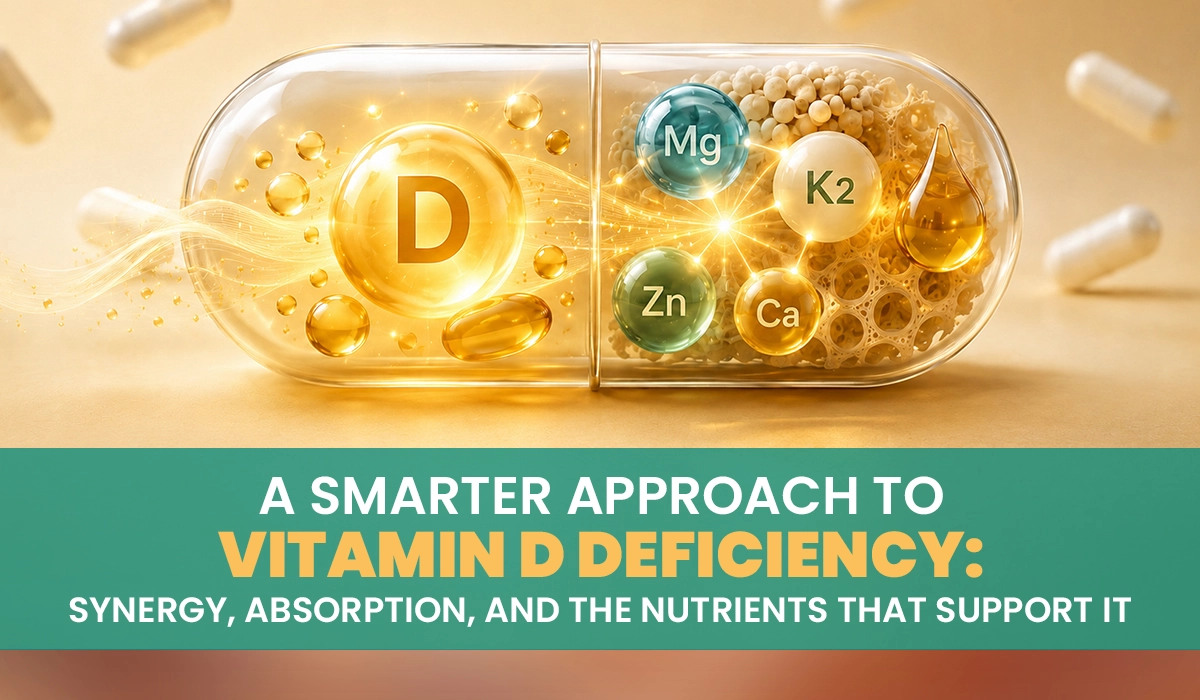
Think of it like trying to bake a cake with a single ingredient. Even if you use top-quality flour, without ingredients like butter and sugar, the cake will taste bland. The synergy between nutrients is crucial here. To work properly in your body, vitamin D needs some essential cofactors. Without these, your body will struggle to absorb and properly use the vitamin, even with supplementation.
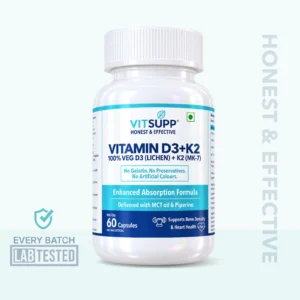
What you should be looking for is a supplement promising vitamin D3 and vitamin K2 synergy. This is where VitSupp steps in. This unique clean-label supplement, featuring Vegan Vitamin D3, K2 MK-7, and MCT oil, supports bone health and immune function.
Why Is Vitamin D Deficiency Rising in Urban Populations?
Vitamin D deficiency is becoming an urban health hazard, as studies show.
- In most Indian cities, people spend most of their time indoors, for various reasons. The rise of hybrid and remote work systems has made this commonplace.
- Even during commuting, many urban residents are deprived of sunlight exposure and vitamin D absorption. The rise of the metro network and air-conditioned vehicles is accelerating it.
- Our cities have high pollution levels, with smog often preventing Vitamin D absorption from UVB rays, and forcing people to stay indoors.
- A majority of urban residents use sunscreen to safeguard their skin. It helps reduce sunburn but thwarts UVB rays, making it tough for the body to produce Vitamin D.
Why Taking Vitamin D3 Alone Is Often Not Enough?
Vitamin D3 alone is often not enough to support your health, especially bone health, immune function, and overall well-being. You need a multi-nutrient approach for tackling vitamin D deficiency.
Here are some important nutrients you should also look at:
Vitamin K2
It is another key nutrient that supports your body to utilize Vitamin D. Vitamin D intake supports calcium absorption, and Vitamin K2 ensures that this calcium is redirected to the bones. Without enough Vitamin K2, calcium can accumulate in soft tissues, adding to potential health problems, including vascular calcification. Study findings indicate Vitamin K2 works synergistically with Vitamin D3 to support bone mineral density and helps lower the risk of osteoporosis.
Why Taking Vitamin D3 Alone Is Often Not Enough? Check the full article: https://www.vitsupp.com/blog/vitamin-d3-alone-mistake/
What are the Reasons for Poor Vitamin D Absorption?
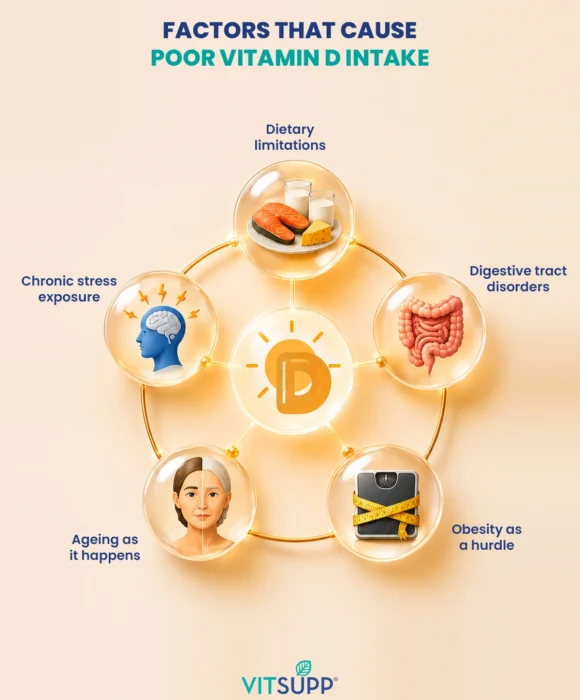
Even when you start using vitamin D supplementation, the absorption may be inadequate. Let’s have a detailed look at what may be the cause:
1. Gut Health Conditions
Without a healthy digestive system, your vitamin D absorption will be affected. Individuals coping with digestive disorders and conditions like Crohn’s disease, celiac disease, chronic pancreatitis, and IBS face difficulties here. This is supported by Harvard Medical School data. Even when they consume vitamin D-rich foods and supplements, the gut cannot absorb the vitamin in the desired amount.
2. Obesity Serving as a Barrier
A Nature study finding reveals the link between Vitamin D absorption and obesity. In obese people, Vitamin D gets stored in fat cells, and this can lower its bioavailability. Their larger body volume dilutes Vitamin D, and that can lower serum levels compared to slimmer users.
Even with similar Vitamin D intake, the results can be varied. Even after weight loss, these people do not experience a significant increase in vitamin D levels.
3. Natural Aging
As you grow older, your body’s capacity to produce Vitamin D from sunlight goes down. In elderly adults above 60, this is more pronounced. Besides, elderly people in Indian cities tend to spend more time indoors to avoid pollution. This further reduces sunlight exposure and adds to the risk of vitamin D deficiency. Some of them may develop digestive conditions, which affect the body’s capacity to absorb nutrients from food.
They may benefit from using a suitable vitamin D supplement. VitSupp’s gut-friendly, vegan Vitamin D3+K2 supplement, offered in MCT oil base, fits the bill.
4. Chronic Stress Levels
Urban lifestyle exposes you to stress in so many ways. This can affect your body’s capacity to absorb and use vitamin D. Stress affects the HPA axis, which plays a role in increasing the generation of cortisol, the stress hormone. High cortisol levels may affect vitamin D absorption and metabolism. Exposure to chronic stress can contribute to hormonal imbalance and add to vitamin D deficiency.
5. Poor Dietary Choices
In several Indian cities, residents find it tough to adhere to a healthy diet for several reasons. The constant multitasking, juggling job and domestic chores, and easy access to junk, ready-to-eat food make it tough to stick to a healthy diet. Not all of them eat enough fortified foods, fatty fish, and other vitamin D-rich foods regularly. Those following a vegetarian and vegan diet fare worse here.
Vitamin D works optimally when it gets the supply of nutrients like Vitamin K2. So, people not getting these nutrients through food may face vitamin D metabolism and absorption issues, too. Taking a clean-label supplement offering vitamin D and vitamin K2 synergy, like VitSupp, can help such people reach their health goals better.
What are the Reasons for Poor Vitamin D Absorption? Explore “The Science of Better Absorption: How Carrier Oils and Dosage Impact Vitamin D Levels”.
Why Adopt a Multi-Nutrient Approach?
You will need a multi-nutrient approach for vitamin D deficiency because nutritional synergy supports your health goals better. Vitamin D3 plays a major role in performing many physiological functions in your body. However, without proper intake of nutrients like Vitamin K2, Vitamin D metabolism remains incomplete.
When taken together, in the right amount, vitamin D synergy nutrients help enhance mutual effectiveness. Such a holistic and integrated approach works better to manage Vitamin D shortfall.
Why is VitSupp the Smarter Solution to Deal with Vitamin D Deficiency in Adults?
Because of the synergistic relationship between Vitamin D and co-nutrients, adopting a multi-nutrient approach works for those coping with Vitamin D shortfall. A regular supplement containing only Vitamin D3 will not be adequate for their needs. A balanced supplement with a multi-nutrient vitamin D formulais what they need.
That is where VitSupp stands out, with its research-backed formula containing 600 IU Vegan Vitamin D3 and 45 µg K2 MK-7 for easy absorption and synergistic effects.
Let’s look at the key reasons to choose it for vitamin D supplementation.
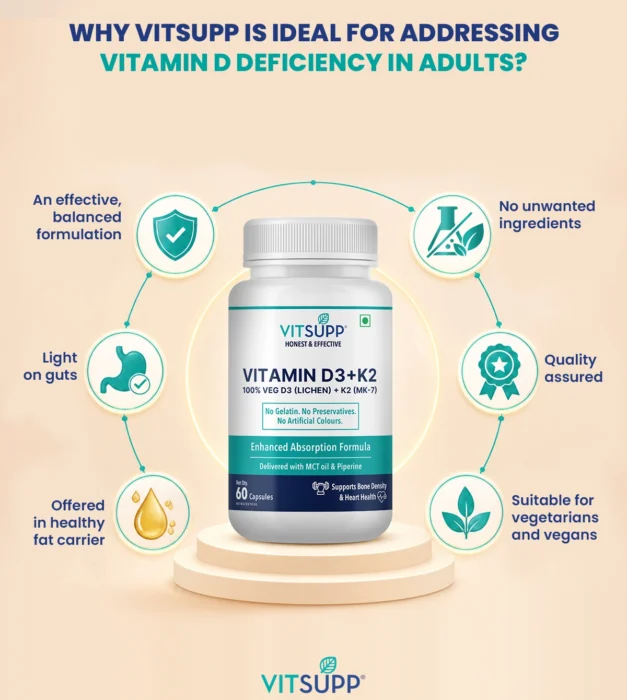
A Balanced and Effective Formulation
Several Vitamin D supplements on the market provide Vitamin D3 alone, which may not support physiological processes well, due to the absence of essential co-nutrients. VitSupp’s study-backed Vitamin D3 + K2 formulation supports the synergy between the nutrients, beneficial for maintaining bone mineral density and reducing the risk of osteoporosis. You get premium quality Vegan Vitamin D3 and K2 MK-7 for easy absorption.
No Unnecessary Ingredients
You need a Vitamin D supplement with the right ingredients, without unnecessary fillers or stuff that can cause side effects. Here you get a minimalist, science-backed approach to supplementation without unwanted fillers, allergens, and artificial colors. There is no gelatin or soy either.
The Assurance of Quality
Before buying a Vitamin D3 supplement, you should learn about the quality of manufacturing. The bioavailable vitamin D3 and K2 supplement comes with the certification of GMP and FSSAI, giving you peace of mind. Every batch is tested for purity and potency.
Ideal for Vegetarians and Vegans
A considerable percentage of adults coping with vitamin D shortfall adhere to vegetarian and vegan diets. They need vitamin D supplementation without any trace of animal ingredients. A truly vegan formulation, without any hint of lanolin or other animal ingredients, fits their needs well.
Offered in an Ideal Carrier Base
Supplements offered without the right carrier base may not offer users the desired health benefits. Supplements offered as dry tablets or in a weak oil base affect the absorption of vitamin D. Premium-quality MCT oil base results in better absorption of the nutrients.
Easy on Guts
The formulation has no harsh ingredients, and it is gentle on the gut. This makes it suited for people weary of side effects after taking nutritional supplements, too.
What are the Lifestyle Changes that Improve Vitamin D Absorption and Metabolism?
While vitamin D supplementation is useful to address the deficiency, you should make certain lifestyle and dietary changes to augment the effects. These are:
1. Trying to Get Sun exposure
Your skin naturally generates vitamin D when exposed to sunlight. So, try to get around 30 minutes of exposure a few times a week. Spending time on the terrace or the rooftop in the morning can be useful.
2. Making Dietary Changes
Try to include foods containing a good amount of vitamin D, like fatty fish, fortified dairy, and egg yolks. Vegetarians can eat tofu, fortified milk, and yogurt. Also, try to include foods high in Magnesium and Vitamin K2, since these are nutrients that improve vitamin D utilization.
3. Working Out
Studies have found that indulging in endurance exercise can help increase serum 25(OH)D levels in people who are vitamin D-deficient. It enhances vitamin D receptor activity in your body. So, working out in the sun can be helpful.
4. Maintaining Gut health
When your gut health is good, it can absorb nutrients like Vitamin D better from foods. You should include probiotic and fiber-rich foods in your diet.
Conclusion
Vitamin D deficiency is a complex issue, and urban lifestyle factors like indoor work culture, limited sun exposure, and other factors contribute to it, apart from dietary habits. While Vitamin D supplementation can help, choosing the right option is crucial. You must adopt a multi-nutrient approach for vitamin D deficiency, and choose a supplement with Vitamin K2, delivered in premium MCT oil.
A holistic approach, including regular sun exposure, a balanced diet, and effective stress management, can help you manage a vitamin D shortfall.
VitSupp offers a carefully crafted formula containing Vitamin D3 and K2, delivered in a capsule and MCT oil base. This multi-nutrient vitamin D formula is tested for safety and suited for vegan users, too.
Try this unique Vitamin D supplement to manage the deficiency and support your bones, immunity, and long-term heart health.
FAQs
1. Why is vitamin D deficiency common in urban populations?
Vitamin D deficiency is very common in urban populations, primarily due to lifestyle and environmental factors. Urban residents spend a good amount of time indoors at work, in transit, or at home. A significant number of people have switched to hybrid and remote work modes, which makes it hard to get adequate sun exposure. This limits the exposure to UVB rays, a prerequisite for Vitamin D synthesis in skin. Moreover, in many Indian cities, factors like dense architecture and high pollution levels further limit UVB ray exposure. So, despite sunlight exposure, they may not get adequate vitamin D naturally.
2. How do lifestyle factors like diet and stress affect vitamin D absorption?
Lifestyle factors like stress and diet affect how the body can absorb Vitamin D. Not every urban resident follows a diet rich in Vitamin D- containing foods. This can also be due to their cultural preferences, sometimes. Those adhering to primarily vegetarian diets tend to fare worse in this regard. When you juggle time to wrap your professional and domestic chores, relying on fast and ready-to-eat foods seems the easy way out. Those dealing with chronic stress and elevated cortisol levels may face difficulties in vitamin D absorption, too.
3. Why doesn’t taking vitamin D3 alone always work for city dwellers?
Taking Vitamin D3 by itself doesn’t always produce expected health benefits. This is because your body needs co-nutrients like vitamin K2 to use it efficiently. Vitamin D3 undergoes a two-step conversion in the liver and then in the kidneys. Then it converts into the form that regulates calcium absorption and other functions. So, low K2 intake may affect the vitamin D metabolism in the body. Urban dwellers often do not adhere to a nutrient-rich diet. When they do not get adequate co-nutrients, taking Vitamin D alone, through food or supplements, may not produce expected results.
4. What nutrients help vitamin D absorption in people with poor gut health?
Poor gut health can impair nutrient absorption, including Vitamin D. Issues like inflammation, microbiome imbalance, or digestive disorders affect vitamin fat-soluble nutrient uptake. People with poor gut health can take the following nutrients to support Vitamin D absorption and metabolism. Vitamin K2 works with Vitamin D to deposit calcium into bones and teeth, not soft tissues. Taking healthy fats improves absorption because Vitamin D is fat-soluble. Deficiency of these co-nutrients can affect vitamin D absorption and metabolism.
5. How can sedentary urban lifestyles contribute to deficiency?
A sedentary lifestyle, which many urban people have become accustomed to, can raise the risk of developing Vitamin D deficiency. City dwellers often spend long hours indoors, both for professional reasons and also because of other factors. The urban transit also reduces the scope for sunlight exposure, a source of natural vitamin D generation. High-rise buildings and air pollution in urban environments also block UVB light, further reducing the intake. Sedentary habits are also linked to obesity, which can affect vitamin D metabolism in the body. These combined urban lifestyle factors make the deficiency far more common in urban populations.
6. Can a multi-nutrient approach prevent long-term health risks better than D3 alone?
Yes, evidence supports that a multi-nutrient approach is more useful in supporting health needs than using Vitamin D3 alone. Vitamin D increases calcium absorption, but without the presence of adequate magnesium, it cannot be fully activated. Magnesium deficiency has been linked to inadequate Vitamin D metabolism. Similarly, Vitamin D3 needs vitamin K2 to redirect calcium to bones and away from soft tissues. Taking a supplement with a multi-nutrient vitamin D formula helps manage multiple steps in bone and calcium metabolism, improving bone strength and heart health.
7. Are there signs that vitamin D isn’t being absorbed properly?
Yes, when your body does not get an adequate amount of vitamin D through foods and sunlight, subtle signs show up. Commonplace signs of inadequate vitamin D intake are persistent fatigue, muscle weakness or aches, and bone discomfort. People deficient in vitamin D do not usually experience much improvement even after enough rest. But these are often mistaken for general tiredness or lifestyle strain. Vitamin D deficiency also affects calcium absorption, adding to brittle bones. Some victims may also experience mood changes, weakness, and slow recovery from illness. Since these signs may be caused by other issues, going for a proper vitamin D test is recommended.
8. What role does diet play in enhancing vitamin D effectiveness?
Your diet plays a major role in making vitamin D more effective. It affects both absorption and utilization. Since vitamin D is a fat-soluble vitamin, your body can absorb it better when you intake enough healthy fats. So, eating foods like avocado, nuts, olive oil, and eggs helps improve absorption. If you are taking vitamin D supplementation, choose one that contains carrier oils like MCT oil, as it serves the purpose well. Also, your diet should contain foods that offer co-nutrients like vitamin K2 and magnesium, as these work in sync with vitamin D inside the body.
9. Can multi-nutrient vitamin D supplements fit into a busy urban lifestyle?
Yes, those living in urban regions and experiencing vitamin D deficiency can take supplements with a multi-nutrient vitamin D formula. In cities, most adults spend long hours indoors, for work and other reasons. This limits their scope of sunlight exposure and vitamin D generation. Also, owing to the hectic pace of urban life and endless multitasking, they are not always able to include nutrient-rich foods in their diets. This means they do not often get adequate vitamins and co-nutrients from foods alone. Taking a multi-nutrient vitamin D supplement containing Vitamin K2 and quality carrier oil can be useful for them.
10. How often should urban adults take a multi-nutrient vitamin D supplement for optimal results?
For most adults in cities who get limited sun exposure, using daily multi-nutrient vitamin D supplementation is considered optimal. The exact requirements will vary from one user to another, but a dose of 800–2,000 IU is considered decent. Regular daily intake helps maintain stable serum 25(OH)D levels, which support stable calcium absorption and immune function. For people coping with severe deficiency, doctors may recommend higher weekly doses initially. For better health outcomes, urban adults should combine a multi-nutrient vitamin D formula with a diet rich in vitamins and related co-nutrients.