
You can eat eggs every morning, drink milk with breakfast, and still fall short of your daily vitamin D needs. That surprises many people, especially when they assume a reasonably varied diet will cover all their nutritional requirements.
Vitamin D is a little different. Few foods contain much of it naturally, and the amount in a serving can vary quite a bit. A portion of oily fish, for instance, may provide several times more vitamin D than an egg. Milk can help too, provided it has been fortified.
So, which vitamin D foods are worth including in your diet, and how much do they actually give you?
In this article, you’ll learn which foods provide vitamin D, how much they contain, and how to assess your daily intake.
How Much Vitamin D Do You Need Each Day?
The most important function of Vitamin D is to help your body absorb calcium, which is needed for healthy bones. It also supports normal muscle and immune function.
According to the US National Institutes of Health, below is the chart that shows the amount of vitamin D you need each day:
| Age group | Daily reference amount |
|---|---|
| Infants up to 12 months | 400 IU (10 mcg) |
| Children aged 1–18 | 600 IU (15 mcg) |
| Adults aged 19–70 | 600 IU (15 mcg) |
| Adults over 70 | 800 IU (20 mcg) |
IU stands for international units. Vitamin D labels may use IU or micrograms (mcg), so here’s the conversion to remember: 1 mcg equals 40 IU.
Which Foods Are High in Vitamin D?
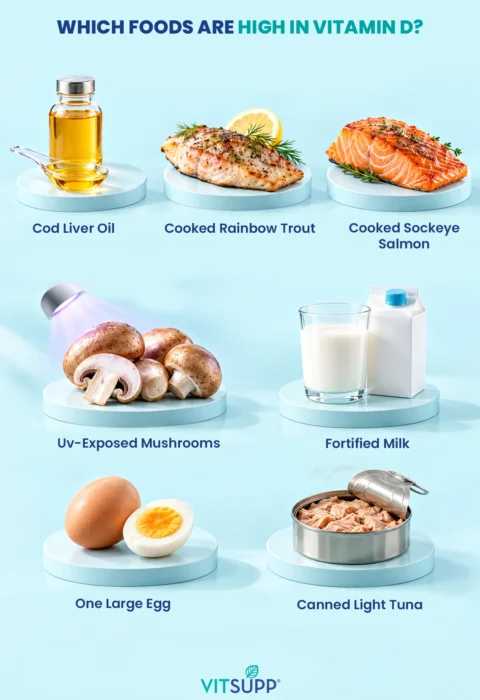
Here is a table showing common sources using reference figures from the US National Institutes of Health. Treat them as estimates. Fish species, growing conditions, cooking methods, and product formulations all affect the final amount of vitamin D you get.
| Food | Serving | Approx. vitamin D |
| Cod liver oil | 1 tablespoon | 1,360 IU (34 mcg) |
| Cooked rainbow trout | 85 g | 645 IU (16.2 mcg) |
| Cooked sockeye salmon | 85 g | 570 IU (14.2 mcg) |
| UV-exposed mushrooms | ½ cup | 366 IU (9.2 mcg) |
| Fortified milk | 1 cup | 120 IU (3 mcg) |
| One large egg | 1 egg | 44 IU (1.1 mcg) |
| Canned light tuna | 85 g | 40 IU (1 mcg) |
Fatty fish
If you eat fish, this is one of the easiest places to start. Salmon and trout are rich sources of vitamin D, and some oily fish commonly eaten in India, including sardines and mackerel, can contribute too.
The exact amount depends on the species, so the figure for salmon shouldn’t be applied to every local fish. Still, a serving of oily fish can provide far more vitamin D than an egg. Wide varieties also contain omega-3 fatty acids, which play a role in normal heart and brain function.
Egg yolks
Eggs are probably the most convenient source of vitamin D. They are widely available and easy to fit into everyday meals. Most of their vitamin D is found in the yolk.
One large egg provides around 44 IU in the NIH reference table. Two eggs would supply roughly 88 IU, or about 15% of the 600 IU daily reference amount for most adults. That’s a useful contribution, but eggs alone are unlikely to cover your needs.
The amount can vary with the hen’s diet and how it was raised. If eggs are your main source, it’s worth remembering that the numbers are estimates rather than a guarantee for every egg.
Mushrooms
Mushrooms are worth a closer look if you don’t eat animal products. When exposed to ultraviolet light, they can produce vitamin D2. Ordinary mushrooms may contain much less, however, so the growing conditions matter.
Look for packaging that identifies the mushrooms as UV-treated or states their vitamin D content. Without that information, you can’t assume a serving will provide the amounts listed for UV-exposed varieties.
Fortified foods
Some foods have vitamin D added during manufacturing. Depending on the brand, vitamin D-fortified foods may include milk, plant-based drinks, breakfast cereals, as well as edible oils. In India, FSSAI standards cover the fortification of milk and edible vegetable oils with vitamin D.
Check the nutrition panel before counting a product towards your daily intake. Not all milk or cooking oil is fortified, and the amount added varies.
The same goes for orange juice. Some products have vitamin D added; ordinary orange juice isn’t a dependable source. A label that lists vitamin D tells you much more than the name of the food.
Cod liver oil
Cod liver oil contains a concentrated amount of vitamin D. The NIH reference table lists around 1,360 IU in one tablespoon, although the amount in a particular product may differ.
It also contains vitamin A. Taking large amounts can therefore cause problems, particularly if you already use supplements containing vitamin A. You must check the label and speak with your healthcare professional before using cod liver oil regularly.
Can your usual Indian diet provide enough vitamin D?
Whether your diet provides enough vitamin D depends on the foods you eat and their serving sizes. Since relatively few foods contain substantial amounts, meeting your needs through diet alone can be difficult. Rice, wheat, lentils, and most fruits contain little or no vitamin D naturally.
Unless a product has been fortified, these everyday staples won’t contribute much.
This can be a challenge for vegetarians and anyone who rarely eats fish. Eggs may help, as can fortified foods, but the quantities matter. Two eggs, for example, provide around 88 IU using the reference figures above. That’s well below the 600 IU daily amount recommended for most adults in the US guidance.
When choosing vitamin D foods in India, you need to focus on sources that provide good amounts of the nutrient. Most common fruits, including oranges, bananas, and apples, contain very little vitamin D unless it has been added during processing.
Sunlight is another source. Your skin makes vitamin D after exposure to UVB rays, but the amount produced varies with skin pigmentation, age, clothing, season, and other factors. Deliberately spending long periods in the sun without protection isn’t a sensible way to manage a possible deficiency.
Can You Get Enough Vitamin D On A Vegetarian Diet?
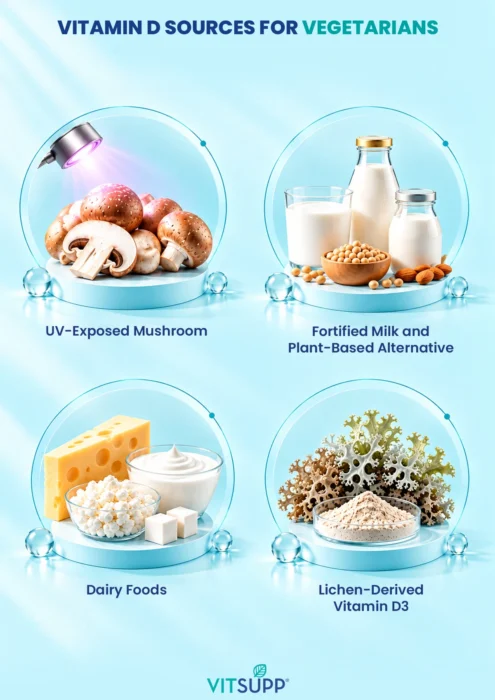
If you maintain a vegetarian diet, getting enough vitamin D from food can be challenging. UV-exposed mushrooms can provide vitamin D, while fortified milk and plant-based alternatives may contribute too. Make sure to check food labels, as vitamin D content varies.
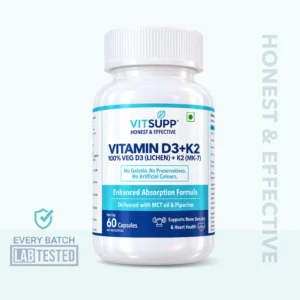
In the same way, for those who prefer a vegetarian supplement, the source matters as well. VitSupp Vitamin D3 + K2 uses Vitashine® vitamin D3 derived from lichen. Lichen is a vegan-friendly source of Vitamin D3. Each of these capsules provides 600 IU of vitamin D3, alongside vitamin K2.
Food choices and supplements can help you meet your needs, but if you suspect a deficiency, speak with a healthcare professional about testing and appropriate supplementation.
Which Foods Can Help Increase Your Vitamin D Intake?
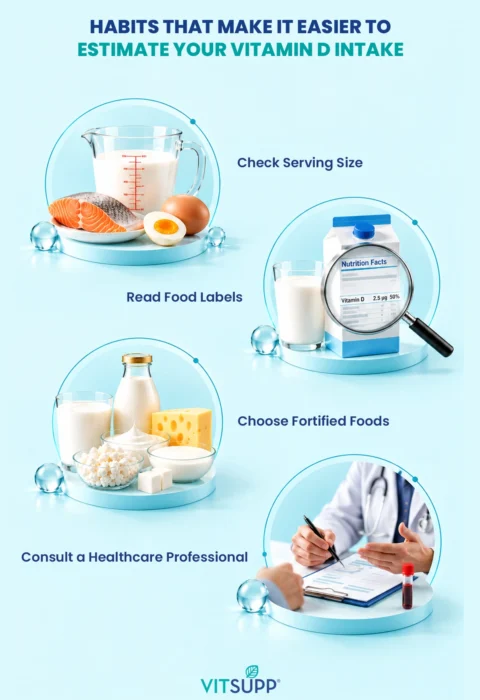
Start with your usual meals. If you eat oily fish, include it regularly. Eggs can add a little more, and fortified milk or other labelled products may help fill some of the gap.
A few habits make it easier to estimate your intake:
- Check the serving size on fortified food labels. The figure per 100 ml may be quite different from the amount in your glass.
- Look for the stated vitamin D content rather than assuming a product is fortified.
- If you follow a vegetarian diet, pay particular attention to fortified foods and UV-treated mushrooms.
- If you suspect a deficiency, ask a healthcare professional whether a blood test is appropriate.
Sometimes, food and sunlight won’t provide enough vitamin D for an individual’s needs. A healthcare professional may recommend vitamin D supplementation after considering your diet, health, and, where appropriate, blood test results.
Supplements commonly contain vitamin D2 (ergocalciferol) or vitamin D3 (cholecalciferol). Both can raise vitamin D levels, although D3 tends to raise them more effectively in many circumstances. Since vitamin D is fat-soluble, taking it with a meal containing some fat may help absorption.
The Key Takeaway
To conclude, it is evident that you need to begin by choosing vitamin D-rich foods, but keep in mind that the amount in each serving makes a difference. Fatty fish can supply substantial quantities, while eggs and fortified products usually contribute less. Most fruits and common grains aren’t reliable sources unless vitamin D has been added.
You must check food labels, pay attention to serving sizes, and consider what your usual meals actually provide. If you think you may be deficient, speak with a healthcare professional rather than trying to correct it through diet alone.
Frequently asked questions
1. What Foods Contain Vitamin D?
Fatty fish such as salmon, trout and mackerel are among the richest natural sources. Egg yolks provide smaller amounts, while UV-exposed mushrooms can supply vitamin D2. Fortified milk, plant-based drinks and cereals may contribute too, depending on the product. Check the label for the amount per serving. If your diet contains few of these foods, you may need to discuss other ways of meeting your vitamin D needs with a healthcare professional.
2. How Can I Get Vitamin D From Food?
Include oily fish if you eat it, and use eggs as an additional source. Vegetarians can look for UV-treated mushrooms and foods fortified with vitamin D. Read the label carefully because ordinary milk, cereals, and plant-based drinks aren’t always fortified. If you have limited dietary options, VitSupp’s product information can help you understand what its D3 + K2 supplement contains, though whether you need a supplement depends on your individual circumstances.
3. Can Vitamin D Deficiency Be Corrected?
Vitamin D deficiency can often be improved, but the approach depends on how low your levels are and what caused the deficiency. In any case, you must talk to a healthcare professional who may recommend a specific dose of vitamin D and arrange follow-up testing. Food can support your intake, but it may not be enough to correct a significant deficiency on its own. Follow your clinician’s advice if you’ve been diagnosed.
4. Can Vitamin D Be Taken Without Food?
It can, but taking vitamin D with a meal containing some fat may improve absorption because the vitamin is fat-soluble. Follow the directions on the product you use. VitSupp recommends taking its D3 + K2 capsule preferably after a meal containing some fat. That is the product’s usage guidance, not a reason for everyone to take a supplement. If you’re using vitamin D to correct a deficiency, follow the dose and instructions given by your healthcare professional.
5. Can You Get Enough Vitamin D From Food Alone?
Some people may get a useful amount of vitamin D from food, but meeting the full daily requirement through diet alone can be difficult. Fatty fish provide vitamin D in greater amounts than other foods, whereas eggs and other fortified products usually contribute smaller amounts. Therefore, vegetarians, who avoid fish and eggs, may have fewer natural options. Sunlight contributes to vitamin D production too, although the amount varies. If you’re concerned about your intake, a healthcare professional can help you decide whether you need testing or supplementation.
6. Where Do We Get Vitamin D Naturally?
Your skin produces vitamin D when it is exposed to UVB rays from sunlight. Natural food sources include fatty fish, fish liver oils, and egg yolks. UV-exposed mushrooms can provide vitamin D2. Fortified foods are another option, although their vitamin D has been added during manufacturing. Sunlight exposure varies considerably between people, and prolonged unprotected exposure can damage the skin. Your diet, lifestyle, and health circumstances all matter when assessing whether you’re getting enough.
7. Which Foods Contain The Highest Amount Of Vitamin D?
Cod liver oil and certain fatty fish are counted as the richest sources in standard reference tables. One tablespoon of cod liver oil provides around 1,360 IU; on the other hand, an 85 g serving of cooked rainbow trout provides around 645 IU. UV-exposed mushrooms can also contain useful amounts. These figures vary by product and preparation. But you need to be very careful with Cod liver oil, as it also contains vitamin A, which can be harmful in excessive amounts.
8. Does Cooking Reduce Vitamin D In Food?
Vitamin D retention can vary with the food as well as the cooking method. Values reported for raw and cooked foods may also differ because cooking changes their water content. When estimating your intake, use nutritional data that matches the food’s preparation as closely as possible. Vitamin D doesn’t automatically disappear during cooking, but nutrient values can differ between raw and cooked foods. Moisture loss can also change the amount reported per 100 g. For everyday meal planning, published values are best treated as estimates. If you’re tracking your intake closely, choose a food composition value that matches the food’s preparation as closely as possible.
9. Is Mushroom Vitamin D The Same As The Vitamin D In Fish And Eggs?
Mushrooms can provide vitamin D2 when exposed to UV light, but ordinary mushrooms may contain very little. Fish and egg yolks, on the other hand, provide mainly vitamin D3. Both forms help improve vitamin D status, although research suggests vitamin D3 may raise and maintain blood levels more effectively in some circumstances. The amount of vitamin D in mushrooms varies, so check the packaging for information on UV exposure and vitamin D content rather than assuming all mushrooms are a good source.
10. Should I Take A Supplement If I Eat Vitamin D-Rich Foods?
Whether you should take a supplement or not depends on your diet, sun exposure, health, and vitamin D status. Eating oily fish or fortified foods might help, but it doesn’t guarantee that you’ve met your needs. VitSupp‘s D3 + K2 formula lists 600 IU of vitamin D3 and 45 mcg of vitamin K2 per capsule. Those figures describe the product; they don’t establish the right dose for every person. If you suspect a deficiency, ask a healthcare professional whether testing or supplementation is appropriate. Avoid high doses unless advised by a qualified professional.