Many Indian women spend most of their time indoors, and those working still miss sunlight exposure. For many of them, paying attention to bone health is tough owing to the hectic pace of life and their responsibilities. Vitamin D deficiency in women is a pressing health issue.
Contrary to popular belief, abundant sunshine exposure also does not guarantee that enough vitamin D synthesis is taking place. A 2025 India-focused study corroborated exactly that.
Bone is a living tissue that undergoes continuous remodeling throughout life, in women, menopause marks a pattern shift. The reduction in estrogen has an effect on bone density and growth. In post-menopausal women, bone loss may exceed bone growth.
For women who do not obtain adequate vitamin D through diet and sunlight, supplementation may help support adequate vitamin D intake and normal bone health.
Vitamin D3 helps the body absorb calcium, supporting normal bone mineralization. Vitamin K contributes to the normal function of proteins involved in bone mineralization, including osteocalcin. Vitamin D and vitamin K therefore have complementary roles in normal bone metabolism. It supports the activation of proteins required in normal bone mineralization. Together, they support bone health when combined with adequate calcium consumption, a balanced diet, and healthy lifestyle habits.
In this blog, we will look into vitamin D benefits for women’s bone health from younger adulthood through menopause. We will also learn why a vegan Vitamin D3 + K2 supplement such as VitSupp may be an option for women seeking to supplement their vitamin D intake.
How Does Women’s Bone Health Change from Youth to Menopause?
A large part of adult bone mass is developed during adolescence and young adulthood, and so you should not start thinking of bone health only at menopause. Adequate nutrition and regular physical activity during these years can help support the development and maintenance of healthy bone mass. Research findings indicate significant bone development occurs during adolescence, while peak bone mass grows in young adulthood.
Once peak bone mass is established, maintaining bone health should be a priority. Your bones are living, metabolically active tissues that undergo continuous development. Adequate intake of calcium and vitamin D for strong bones can be helpful.
Before the onset of menopause, estrogen production goes down in the female body, and this has an effect on bone density. This is a transitional phase. While menopause does not solely contribute to women’s bone-related problems, declining estrogen around menopause has a role to play in bone density loss. This has been backed by major study findings.
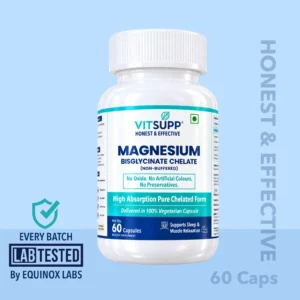
Indian women, who often deal with nutritional deficiencies and face bone health issues in menopausal years, need specific attention to their nutritional intake. Apart from eating vitamin D- and calcium-rich foods, using a vitamin D supplement for women can be beneficial. A vegan supplement from VitSupp that combines vitamins D3 and K2, with carrier oils, may be a good choice.
How Does Vitamin D3 Support Women’s Bone Health through Different Life Phases?
There are two forms of vitamin D found in foods and supplements. Both Vitamin D2 and D3 can raise serum 25(OH)D levels. However, studies suggest that vitamin D3 usually helps improve and maintain levels more effectively than D2.
Adequate vitamin D intake supports calcium absorption in the intestine. Vitamin K contributes to the normal function of proteins involved in bone metabolism and mineralization. Vitamin D supports calcium absorption, while vitamin K supports the activity of proteins involved in normal bone metabolism. This is among the major vitamin D benefits for women. As women tend to experience bone density loss in older years, they should focus on getting the required dosage.
| Life Stage | Vitamin D’s Role in Bone Health |
|---|---|
| Adolescence | Vitamin D supports calcium absorption and normal bone mineralization during a period of significant bone growth. Adequate vitamin D intake supports healthy bone mass development. |
| Young Adulthood | After peak bone mass development, getting adequate vitamin D helps ongoing bone maintenance and calcium utilization. |
| 30s–40s | During adulthood, vitamin D continues to support normal bone remodeling. It supports bone health as part of a balanced diet and healthy lifestyle. |
| Perimenopause | As hormonal changes begin at menopause, women must maintain adequate vitamin D and calcium intake to support bone health. |
| Postmenopause | Declining estrogen levels can add to bone loss. Adequate vitamin D intake supports calcium absorption and normal bone mineralization during this stage. |
Women not getting enough vitamin D through available sources can try taking vitamin D and K2 supplements to support bone health. VitSupp Vegan D3 + K2 MK-7 may be an option for adults looking for a vegan Vitamin D3 + K2 supplement.
Why Can’t Women Get Vitamin D through Sunlight?
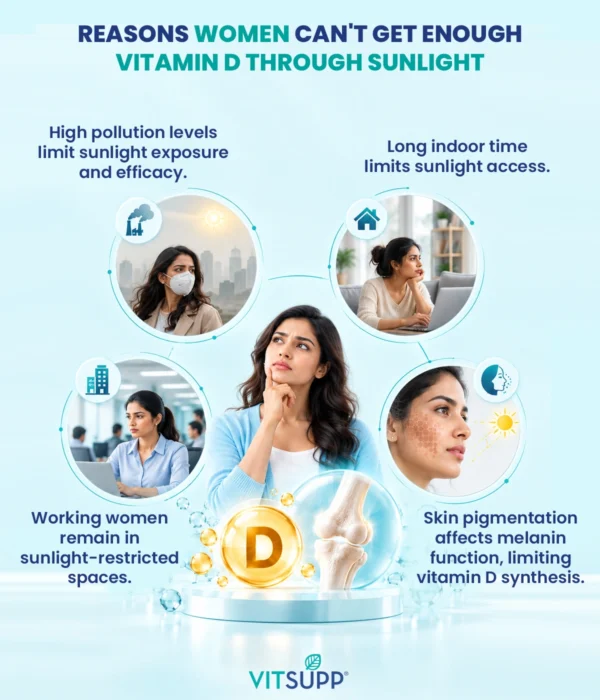
While human skin naturally synthesizes vitamin D when exposed to sunlight, there are underlying factors that can interfere with the process. These are:
- High levels of pollution, smog, etc affect sunlight strength and availability.
- Women often spend a significant amount of time indoors, limiting sunlight exposure.
- Working women also spend a long time in workspaces with limited or no sunlight access.
- Even skin pigmentation affects the way vitamin D synthesis takes place through sunlight exposure.
So, Indian women often do not get adequate vitamin D for bone development, and there are lifestyle and dietary factors. Foods like fatty fish, egg yolks, and cheese contain this vitamin naturally. Those sticking mostly to vegetarian diets find it tough to get enough vitamin D, and this can affect their bone health in the long run. Taking a vegan vitamin D supplement from VitSupp that meets RDA standards can be useful for them.
Want to understand the common causes of vitamin D deficiency? Read our guide on urban lifestyle factors and causes of vitamin D deficiency.
The Role of Vitamin K2 in Bone Health
Vitamin K is required for the activation of vitamin K-dependent proteins involved in bone metabolism, including osteocalcin. It functions as a cofactor for an enzyme that is responsible for certain protein activities. One example is osteocalcin, which is involved in bone mineralization. The notable thing is that vitamin K supports activation of bone-related proteins.
There are different forms of vitamin K, and K2 MK-7 is said to be effective for human consumption. A 3-year randomized Study showed that usage of the MK-7 form helped reduce aging-related bone loss in women.
So, while vitamin D3 supports calcium absorption, vitamin K2 supports activation of proteins known for roles in bone metabolism. Biologically, these roles are complementary. So, a vitamin D3 supplement with the required amount of Vitamin K2 MK7 may help women deal with bone density issues.
VitSupp’s research-backed formulation is based on this strategy, and the absence of any filler or unnecessary ingredients helps it work well.
Want to learn more about the connection between vitamin D and vitamin K? Read our guide on Why Vitamin D Needs Vitamin K to understand how these nutrients work together.
How Indian Women Can Support Bone Health Through Vitamin D-Rich Diet, Supplementation and Testing
For women’s bone health, a suitable vitamin D supplement can be useful. However, it can only support your lifestyle.
Following a balanced diet with calcium- and vitamin D-rich foods, and staying active are necessary. WHO mentions the importance of daily workouts to maintain bone strength and reduce fracture risk.
Also, limiting smoking and alcohol consumption can support bone health.
For enough calcium through foods, women can try consuming milk-based products like curd, paneer, and cottage cheese. Eating ragi and leafy green vegetables can also be useful. However, getting adequate vitamin D through foods alone can be tough. They should use fortified milk and edible oils.
Getting the Right Dosage of Vitamin D
Vitamin D recommended dosages vary by age, health status, and guidelines. As per ICMR-NIN recommendations, adult women require approx 600 IU of vitamin D a day. Individual requirements may vary depending on vitamin D status, diet, sunlight exposure, and health conditions. Those coping with severe vitamin D deficiency symptoms may need higher doses.
What to Analyze Before Using Vitamin D3 + K2 Supplements?
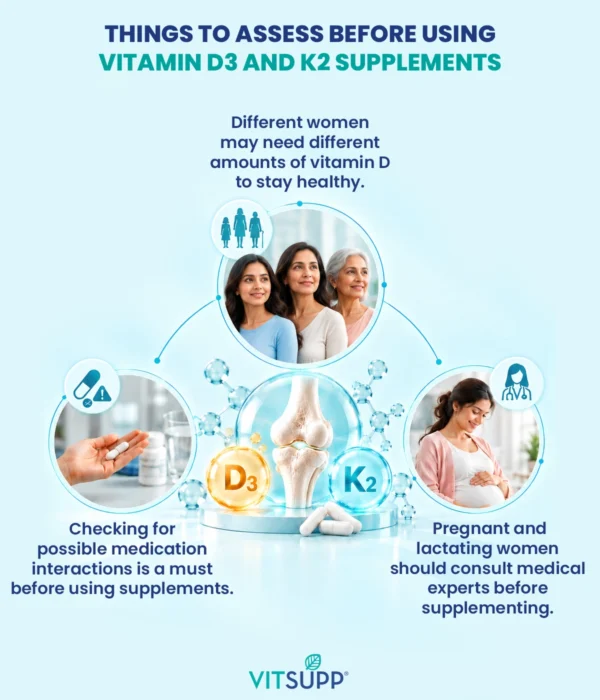
For women not getting the recommended amount of vitamin D through foods and sunlight, taking a balanced Vitamin D supplement can be helpful. This can support their efforts to deal with age-caused bone density loss. However, daily supplementation is not the same as using a therapeutic regimen to address severe vitamin D deficiency symptoms in females.
Here are a few pointers to keep in mind:
- The amount required can vary from one woman to another. Individual health factors also come into the picture. Keep in mind that consuming vitamin D in excess amounts, without medical supervision, can add to the risk of developing vitamin D toxicity,
- Before taking a vitamin D and K2 supplement, checking medication history is important. Vitamin K can interact with warfarin and anticoagulants. So, women who are using such medicines should discuss vitamin K intake- including supplements- with their physicians.
- Pregnant and lactating women should seek expert medical advice before starting such supplementation.
A Closer Look at the Role of Nutrients for Women’s Bone Health
| Nutrient | Main role | Importance for women |
|---|---|---|
| Vitamin D3 | Helps the body absorb calcium and supports the normal bone mineralization process | Supports bone health throughout stages of life, especially when adequate calcium intake is there |
| Vitamin K2 (MK-7) | Supports activation of proteins required for calcium utilization and bone metabolism | Helps support normal calcium handling and bone health as part of a balanced nutrient intake |
| Calcium | Key mineral for bone structure and maintenance | Offers the building block needed for maintaining healthy bones |
Why Use VitSupp Vitamin D3+ K2 Supplement to Support Women’s Bone Health Supplementation?
For Indian women seeking a balanced vitamin D and K2 supplement, VitSupp’s offering is suitable. Let us see why:
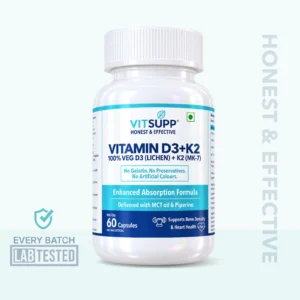
- This is a vegan-origin, highly bioavailable supplement containing lichen-derived Vitamin D3, without any animal extract. This makes it suited for vegan users.
- The presence of 45 mcg of Vitamin K2 as MK-7 complements the vitamin D3 in it, supporting physiological processes.
- MCT oil as a carrier and 95% piperine extract in these vegetarian HPMC capsules support the absorption process in the body.
- This gelatin-free vitamin D capsule for women does not contain traces of allergens, soy, GMO, gluten o, or any toxic ingredients.
- VitSupp Vitamin D3 + K2 is manufactured in an FSSAI-licensed, GMP-compliant facility., and it is made in a GMP-class facility, too.
You get a study-backed formulation with a vitamin D3 and K2 combination, and the assurance of third-party testing of every batch.
Conclusion
Women’s bone health needs attention much before menopause sets in. While the younger years help strengthen the skeletal foundation, adulthood develops on it. As menopause gets near, the focus should be on bone preservation as estrogen levels decline.
Since vitamin D has a solid role in calcium absorption and bone health, women should prioritize getting these nutrients through food and other means. Also, the presence of vitamin K2 supports proteins involved in bone metabolism. These nutrients do not work in isolation, and in the body, they complement each other’s functions.
So, women must focus on getting vitamin D3 and K2 and regular physical activity to augment bone health. To support a vitamin D intake gap, taking a clean-label supplement from VitSupp can be useful.
FAQs
1. What are the common signs of Vitamin D deficiency in women?
Finding vitamin D deficiency symptoms in females can be tough. Several women may have no obvious symptoms. However, as deficiency persists, women may experience recurring symptoms like bone pain, muscle weakness, and muscle aches. Vitamin D deficiency may be associated with symptoms such as muscle weakness and bone pain; many people may have no obvious symptoms. In extreme deficiency cases, women may develop osteomalacia and bone-related conditions. Since fatigue, aches, or weakness overlap with other conditions, the best way to ascertain vitamin D levels is a blood test for serum 25-hydroxyvitamin D.
2. How does Vitamin D support bone health in women?
Vitamin D supports bone health in women. It helps the intestine absorb calcium. Vitamin K is required for activation of proteins such as osteocalcin that are involved in normal bone metabolism. The process is necessary for normal bone growth and remodeling. When vitamin D intake is lower, calcium absorption may be affected. That can disrupt normal mineralization. Prolonged vitamin D deficiency in women adds to the possibility of developing bone-related conditions, including osteoporosis. Vitamin D plays a key role in women’s bone health starting from youth, and its importance grows over the years, especially after menopause.
3. Why is Vitamin D important for women from youth to menopause?
Vitamin D plays a key role throughout a woman’s life. This nutrient helps the body absorb calcium and supports normal bone mineralization. During the years of adolescence and early adulthood, adequate vitamin D consumption helps develop bone mass. Bone maintenance continues in adulthood, too. At menopause, bone health becomes vital. Reducing estrogen can speed up bone loss. This, coupled with low vitamin D intake, can add to the risk of osteoporosis. Vitamin D itself does not prevent hormonal bone loss. However, consuming enough vitamin D and calcium is necessary for bone care before and after menopause.
4. How can women maintain healthy bones after the age of 30?
After 30, women should focus on maintaining bone strength. They should try to get enough vitamin D through food and, if necessary, proper supplementation. Apart from following a vitamin D- and calcium-rich diet, they should engage in regular physical activities and exercise to maintain bone health. Avoiding smoking and reducing alcohol consumption also helps in this regard. These habits are crucial as they approach menopause. Women with additional risk factors, or past cases of bone damage, should seek screening and professional bone health management. Supplementation can be useful, but they should seek medical supervision for that.
5. What are the key benefits of Vitamin D for women’s bone density?
Vitamin D supports bone density as it helps the intestine absorb calcium. It also helps maintain calcium and phosphate levels for regular bone mineralization. Women need adequate vitamin D to preserve healthy bones throughout adulthood. Vitamin D for women becomes even more important as they approach menopause. In these years, estrogen-related bone loss speeds up. Vitamin D is not a stand-alone means to increase bone density in women, but it, in alliance with vitamin K2, supports bone mineralization.
6. How much Vitamin D do Indian women need daily to support bone health?
The ICMR-NIN RDA for Vitamin D for adult Indian women is 600 IU (15 mcg) per day. However, this is a population-level nutritional recommendation meant for healthy users. It may not be ideal for those with severe vitamin D deficiency. Individual user needs can change according to vitamin D status, diet, sunlight exposure, age, and health conditions. Women with confirmed vitamin D deficiency symptoms and specific bone-health issues may need a specific regimen guided by healthcare professionals.
7. Can Vitamin D help support bone health during menopause?
Vitamin D remains important during menopause as it continues to help the intestine absorb calcium and supports normal bone mineralization. Estrogen levels go down during menopause, and that can affect bone loss. To maintain bone health, menopausal women can focus on taking protein, calcium, and vitamin D-rich foods. Regular physical activity also plays a key role here. However, only relying on vitamin D may not be enough to address menopausal bone loss. Trials indicate that taking vitamin D with calcium may support bone mineral density in some postmenopausal women. However, the results can vary according to baseline nutritional status.
8. Why is Vitamin D important for bone health during adolescence?
Vitamin D is particularly important for bone health during adolescence. During these years, bone growth and mineral accumulation increase. Women develop a major part of their bone mass during the teenage years. Adequate intake of Vitamin D in this phase helps their bone mass grow. Vitamin D helps the body absorb calcium from food and supports bone development. Inadequate vitamin D intake, coupled with insufficient calcium levels, may affect normal bone mineralization.
9. How does Vitamin D support bone health in older women?
Vitamin D supports bone health in older women. It helps the intestine absorb calcium and supports calcium and phosphate levels for regular bone mineralization. This is important after menopause, as women can lose bone mass faster due to hormonal factors. Older adults also face issues in natural vitamin D generation through sunlight exposure. Their skin becomes less efficient at producing the vitamin. Therefore, older women need vitamin D for bones, along with calcium, protein, and professional medical assistance.
10. What factors increase the risk of Vitamin D deficiency in women?
Several factors can add to a woman’s risk of developing vitamin D deficiency. The main reasons are low dietary vitamin D intake, reduced sunlight exposure, darker skin pigmentation, and specific digestive health conditions like Crohn’s disease and celiac disease. Excess body weight and gastric bypass surgery may also add to it. However, these risks do not confirm deficiency. To assess vitamin D status, they should undergo a serum 25-hydroxyvitamin D test.