While buying a supplement, you check the ingredients and labeling for clarity, but a label only shows you the ingredients and their amounts – a partial view. How do you know if the ingredients were verified, tested for purity, and the formulation met industry-standard norms? That is where a certificate of analysis comes in.
What is it? The COA full form in pharma is Certificate of Analysis. It is a documented record of laboratory testing that offers credible information about a specific ingredient or entire product batch. It includes details on the tests and the results obtained. For a dietary supplement, it holds immense value as the quality, strength, and purity of the ingredients in the formulation are vital.
Understanding a certificate of analysis for supplements helps you get better insight into the supplement quality and formulation efficacy. Supplements offering accessible COA information can help consumers better understand product quality checks, and they can make more informed decisions.
At VitSupp, this focus on transparency is pivotal to how we approach supplementation. VitSupp makes batch-specific laboratory testing information accessible to consumers, including through QR-linked information on its products, and consumers get good clarity about the products they order.
What Is a Certificate of Analysis (COA) for Supplements?
A Certificate of Analysis (COA) is a document containing detailed information about the testing performed on a supplement ingredient or finished product batch. It records whether the tested material meets predefined criteria for traits like identity, purity, strength, and composition. A COA is a document or laboratory report. Some supplement brands make batch-specific testing information accessible through a QR code on the product packaging.
In the supplement sector, a COA in pharmaceutical quality systems is generally created after a sample or product clears laboratory tests. It connects the testing results to important details, including the product name, batch number, test parameters, analytical methods, and the results of testing.
The International Alliance of Dietary/Food Supplement Associations (IADSA) describes COAs as documents used in the supplement supply chain to communicate analytical information and indicate whether tested materials meet defined specifications.
However, do not think of a COA as a supplement label. A label merely shows what the product contains, including ingredients and serving information. A COA offers additional analytical evidence on testing and laboratory findings for that specific product or batch.
Notably, a COA is one part of a broader quality checking system. While it offers vital testing information, supplement quality also depends on factors like manufacturing practices, responsible sourcing, and overall quality controls. VitSupp is a supplement brand that is keen on including a COA with its offerings, and it uses GMP-certified facilities.
COAs for dietary supplements offer users additional information beyond product labels, helping them understand documented quality assessments.
Why Does a COA Matter for Dietary Supplements?
As supplement users become more aware of quality and efficacy, quality verification becomes important. A certificate of analysis for nutraceuticals helps show the results of specified laboratory tests and whether the tested parameters met their defined specifications. This is especially important for people taking supplements to support issues like bone and cardiac health.
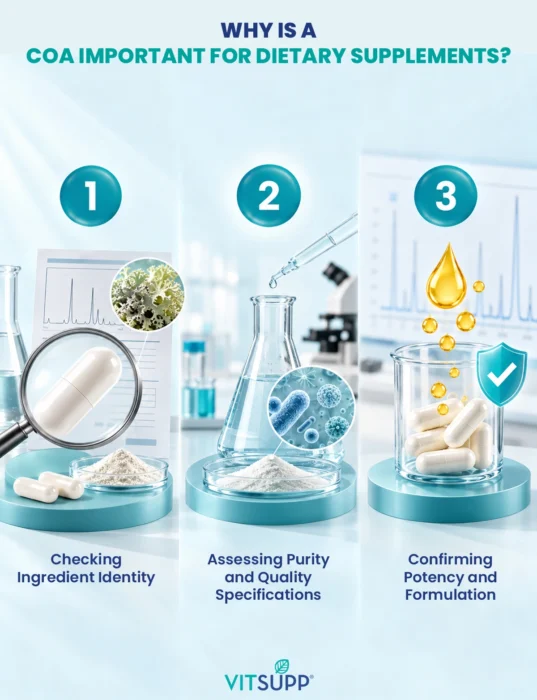
For dietary supplements, a COA offers evidence related to key aspects like ingredient identity, purity, and potency.
Verifying Ingredient Identity
For supplement quality testing, confirming ingredient authenticity is vital. As supplements may contain nutrients that exist in multiple forms, using the specific form can affect formulation efficacy. Some supplement brands use vegan vitamin D3 in their supplements, a form that may be more effective than D2, according to credible study findings.
Checking Purity and Quality Specifications
Depending on the testing scope, laboratory analysis may measure active ingredients and assess specified contaminants such as heavy metals or microorganisms against applicable limits. Laboratory analysis may check parameters like the presence of impurities such as heavy metals and microbial contaminants.
Confirming Potency and Composition
A COA can also provide information about the quantity of an active ingredient or nutrient in the sample tested. Potency testing can determine whether the measured amount of a nutrient falls within the defined specification for the product. In a vitamin D supplement, for example, testing can help confirm that the measured vitamin level is within the ideal range.
While a COA offers consumers better visibility into supplement quality, purity, and standards, it may not mean a product is entirely free from all side effects. It offers documented testing results for specific parameters, tested under preset conditions.
What Information Does a Supplement COA Include?
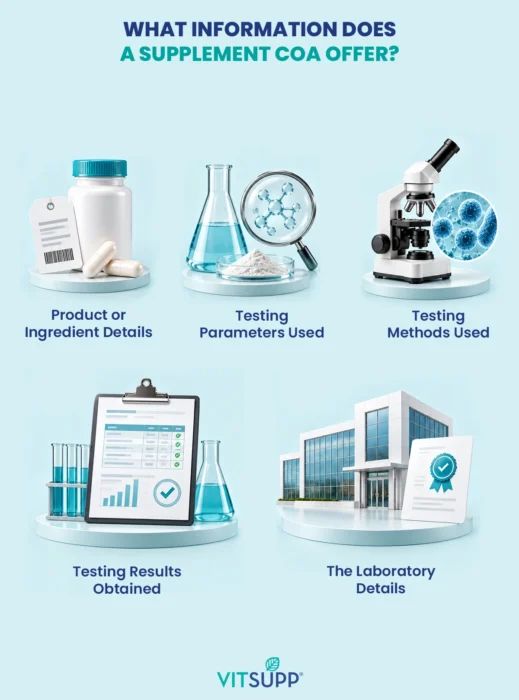
A Certificate of Analysis offers details on the tested products, the evaluation methods, and the test results for a specific ingredient or product batch. The exact format of a COA can vary based on the ingredient, manufacturer, and testing. Let’s have a detailed look at it:
Product or Ingredient Identification
A COA should clearly identify the tested material. It may include: ingredient name, product specification or reference, batch number, and other manufacturing data. The batch number is especially important since testing results point to a specific production lot.
Testing Parameters
A COA explains the parameters tested during the analysis. The testing parameters may include purity, potency, contaminant analysis, and microbiological quality checking.
Testing Method
A COA certificate should mention the testing method used. Lab results are useful when they are done through appropriate analytical procedures. The IADSA notes that a certificate of analysis for supplements should offer relevant analytical information to support testing of supplement ingredients.
Testing Results
The testing results are a major part of a COA. This section includes the parameter tested, measured result, the required specification, and whether the result meets the defined criteria. Understanding acceptance criteria is crucial, as a result holds value when compared against a defined standard.
Laboratory Information
Sometimes, a certificate of analysis may contain details about the laboratory running the tests. The details may include lab name, date of testing, analyst, or approval information. Testing can be done by an internal quality laboratory or third-party labs. VitSupp commissions independent laboratory testing, including testing through NABL-accredited laboratories, and makes relevant batch-level testing information available to consumers.
A COA is a collection of information connecting a specific supplement ingredient or finished product batch with documented laboratory assessments. The details in it help you better understand the quality checks behind dietary supplements.
Ingredient COA vs Finished-Product COA – The Differences
A Certificate of Analysis may apply to different stages of supplement production. Here, we will look into the nuances of 2 common types: ingredient COA and finished-product COA. While both offer laboratory testing information, they relate to different materials.
An ingredient COA helps supplement brands evaluate the quality of materials entering the production process. A finished-product COA offers information about the quality checks done on the final supplement batch.
| Ingredient COA | Finished-Product COA |
|---|---|
| Shows testing details for individual raw materials in a supplement formulation. | Offers testing details for the final supplement product post-manufacturing. |
| Helps analyze traits like ingredient identity, purity, and specifications before production. | Helps confirm that the finished batch meets established quality requirements. |
| Usually applies to nutrients, minerals, botanical extracts, or other formulation components. | Applies to the final product batch, like capsules or tablets, ready to be shipped. |
How Are Supplements Tested Before They Reach Consumers?
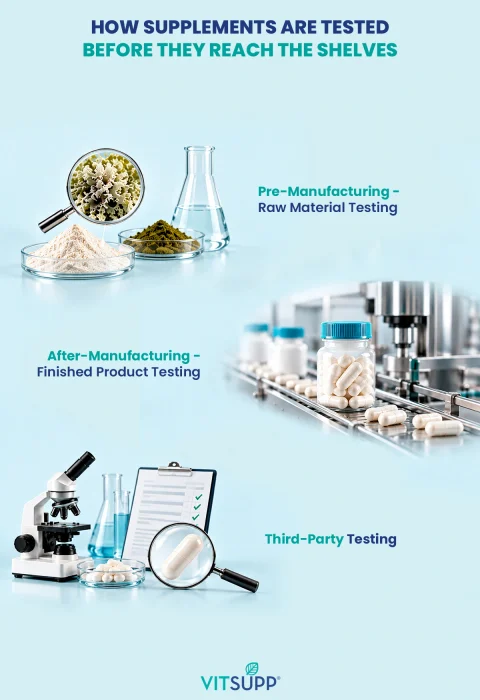
Supplement quality checks do not begin after a capsule or tablet is manufactured. Instead, testing can occur at several stages of the supply chain. Adopting this approach helps manufacturers evaluate whether materials and products meet predefined quality standards before reaching the pharmacy shelves.
Raw Material Testing – Before Manufacturing Begins
Raw materials in a supplement formulation are tested so that manufacturers can confirm that they meet required specifications. These checks involve parameters like:
- Identity – To confirm that the ingredient is the material it is meant to be.
- Purity – To check that the ingredient meets acceptable quality standards.
- Composition – To assess relevant characteristics based on the ingredient type.
This stage is important because the quality of the final supplement will depend partially on the quality and consistency of the ingredients.
Finished Product Testing – After Manufacturing
After manufacturing, finished products also undergo quality checks. This is necessary to find out whether the final supplement batch meets established standards. Finished product testing may evaluate factors like:
- Nutrient or active ingredient levels
- Product characteristics
- Microbiological quality
The main purpose is to confirm that the final product aligns with the specifications established for that formulation.
Third-Party Testing
Apart from in-house testing before and after manufacturing, Some brands additionally commission testing from independent third-party laboratories. Brands may also use independent third-party laboratories to test specified parameters, providing an additional source of verification separate from the manufacturer.
Why Does the Testing Method Matter in a COA?
A COA certificate shows you the final testing results and also offers information about how those results were obtained. The analytical method provides important context for interpreting the result. Appropriate methods, laboratory competence and proper testing procedures all contribute to the reliability of the analysis.
Different supplement ingredients may need different and specific analytical approaches. This is because nutrients, minerals, botanical extracts, and other compounds possess unique chemical traits. A suitable testing method helps measure specific parameters in the right way.
For consumers, the certificate of analysis is more than a quality-checking document. The testing method offers context about how the reported information was generated. It also adds to the credibility of the process.
Is a Certificate of Analysis Enough to Evaluate Supplement Quality?
A COA offers you important information about supplement quality. But it is a part of a larger quality framework. It does offer documented information about specific testing on a particular ingredient or batch of supplements. A COA reveals details on the formulation’s identity, purity, or potency.
However, supplement quality involves more than just laboratory test results. There are other important factors that contribute to overall quality.
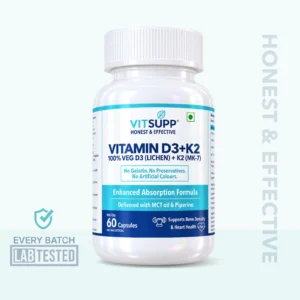
- Ingredient sourcing – Ingredient sourcing can influence characteristics such as identity, purity, consistency and traceability. VitSupp’s Vitamin D3 is sourced from lichen and provides cholecalciferol (vitamin D3), the exact same form your skin makes when exposed to sunlight.
- Manufacturing practices – The processes a brand follows during production, including packaging and handling, affect supplement quality.
- Quality control systems – The procedures used to monitor materials, processes, and finished products affect final quality. VitSupp products are manufactured in FSSAI-licensed facilities as part of the brand’s broader manufacturing and quality-control framework.
- Formulation – The ingredients in a supplement formulation affect the quality. Vitamin D is fat-soluble, which is one reason lipid-based carriers may be considered when formulating vitamin D supplements. VitSupp’s formulation contains MCT oil powder.
So, as a consumer, it is better not to think of a COA for dietary supplements as the sole guarantee of quality. It offers greater visibility into the testing performed, and you can understand the evidence available behind a supplement.
How Does VitSupp Use COA Transparency to Build Trust?
Consumers often look for the final product when shopping for supplements, checking the bottle, label, and ingredient list. However, the certificate of analysis for vitamins reveals the quality checks that happen behind the scenes.
We are keen on offering transparent information to consumers about our offerings. It helps you understand the formulation along with how they undergo quality tests. You can access batch-specific laboratory testing information through QR-linked information on VitSupp products and also on its website for products like Vitamin D3 + K2 and Magnesium Bisglycinate.
For VitSupp, a COA is not a marketing claim. It is not a replacement for responsible manufacturing practices either. It is a part of a broader effort to help users understand supplement quality easily. They no longer need to rely on assumptions when choosing supplements and can get clarity on everything- the formulation, testing process, and dosage.
Conclusion
Now you know what to expect when you check the QR code on a supplement label. A certificate of analysis for supplements offers a deeper look into the testing and verification behind that product, going much beyond the label. Details of the supplement quality testing, ingredient identity, and results offer better clarity on the formulation.
However, a COA remains one of the components of responsible supplement manufacturing. The final supplement quality and efficacy also depend on ingredients, ingredient sourcing, manufacturing practices, and consistent quality control processes.
VitSupp relies on transparency for its approach to supplementation. It uses thoughtfully developed formulations based on established nutritional science and carefully selected ingredients that are formulated without unnecessary fillers or unnecessary elements like soy or gluten for better safety and efficacy. Through batch-level purity and potency information, it aims to make quality verification more accessible and simpler.
FAQs
1. What is a Certificate of Analysis (COA) for supplements?
A Certificate of Analysis is a document that contains laboratory-based information about the testing performed on a specific supplement ingredient or an entire lot. In it, you get details like the materials tested, testing parameters, analytical methods used, and the outcome.
With this, you can understand whether a supplement ingredient or finished product meets predefined specifications for identity, purity, and strength. A COA provides laboratory information that is not normally available from the supplement label alone. The IADSA says COAs are used within the supplement supply chain to offer analytical information and assess whether materials meet established requirements.
2. Why is a Certificate of Analysis important for dietary supplements?
A Certificate of Analysis is important because it offers documented evidence of testing that shows a supplement’s quality specifications. It shows whether certain parameters, like ingredient identity, purity, or potency, have undergone assessments through laboratory tests.
For dietary supplements, the presence of a COA helps improve transparency and credibility for users. It clearly links in-depth laboratory test results to a specific ingredient or a product batch. From the user’s perspective, A COA can help consumers understand the results for the specific quality parameters tested, such as identity, potency or contaminants where applicable.
3. What information is included in a supplement Certificate of Analysis?
A certificate of analysis for supplements usually includes details that help viewers identify the tested material and understand the laboratory tests performed. The exact format can vary, but a COA contains the following:
- Product or ingredient name
- Testing method used
- Testing parameters like identity, purity, or potency
- Batch or lot number
- Testing results with specifications for acceptance
These details offer users enough information on the testing and results and add to product credibility. Then they can decide whether to buy the product.
4. How do you read a Certificate of Analysis (COA)?
To read and understand a certificate of analysis, you have to understand the link between the tested material, the lab analysis, and the final test results.
Begin by checking the basic identification details. Look for metrics like product or ingredient name and batch number. Then, check the testing parameters to understand what was evaluated and proceed to the test results. The vital part is comparing the reported testing results with the mentioned acceptance criteria.
A COA is a quality assessment document offering information about specific testing performed on a batch. Do not take it as the sole measure of overall supplement effectiveness.
5. What is the difference between a Certificate of Analysis and third-party testing?
A Certificate of Analysis and third-party testing are related. But they denote different aspects of supplement quality assessment.
A COA is a document showing the results of laboratory testing performed on a specific ingredient or product batch with complete details. It contains details on supplement potency testing, along with quality parameters and the methods used.
Third-party testing refers to assessments carried out by an independent laboratory. It offers an additional level of verification since an external organization checks key quality parameters. Incidentally, an internal quality testing team or a third-party lab can conduct it.
6. How does a COA help ensure the quality and purity of supplements?
A Certificate of Analysis (COA) helps determine whether a supplement ingredient or product batch has met the required quality specifications. It contains details about testing, including nuances like ingredient identity, purity, potency, and other applicable parameters.
The lab may check if the ingredient contains any contaminants. It also checks the amount of the ingredient in the formulation. However, a COA alone does not assure that a supplement is effective. Supplement quality also depends on aspects like ingredient sourcing, manufacturing controls, and quality management practices. Nevertheless, a COA offers users documented testing data about a specific batch, supporting transparency.
7. How can you verify a supplement’s Certificate of Analysis?
To verify a supplement’s certificate of analysis, check if the document is linked to a specific product or batch. Look for the following attributes in it:
- Product or ingredient name
- Batch or lot number & testing date
- Laboratory details
- Parameters tested
- Testing method used
- Reported results and specifications
The information on the COA should match the supplement product and contain details to understand the evaluation. Some supplement brands may offer batch-specific testing information through their customer support channels, websites, QR codes, and apps.
8. Does a Certificate of Analysis guarantee the quality and safety of a supplement?
No, you cannot take a COA as an assurance of the overall quality, safety, or effectiveness of a supplement.
The document contains documented results for specific tests performed on a specific ingredient or batch of supplements. It may show tested parameters like identity, purity, or potency and whether the supplement formulation adheres to the established specifications.
However, the overall quality of a supplement also depends on some other factors. These include quality control systems, ingredient sourcing details, and manufacturing practices. Think of a COA as a key transparency tool and a component of a broader approach to supplement quality checks.
9. Why is transparency in COA important when buying supplements online in India?
When buying supplements online, consumers do not always have proper visibility into the processes behind a product. A certificate of analysis adds transparency with documented information about the testing performed on a specific ingredient or batch.
After checking the COA-related information, you can understand:
- The quality parameters put under test
- The material evaluated
- The testing methods
- Whether the results matched defined specifications
- The details of the lab
This is more relevant in the online supplement market, where buyers rely mainly on product pages and labels when placing orders. Transparent quality information helps them make more informed supplement choices. A focus on transparency and disclosing details like batch purity and potency information on products is advisable.
10. What tests are typically included in a supplement Certificate of Analysis?
A COA for vitamins may include various tests for supplement quality. The exact tests will vary from one supplement brand to another. For example, a mineral ingredient and a botanical extract may require different analytical assessments.
However, they mostly cover aspects like the ingredient, product type, and quality specifications. Common COA tests are:
- Identity testing to confirm that the ingredient is authentic.
- The amount of the specific nutrient or active component.
- Purity of the ingredient.
- The presence of any contaminants in the formulation.
A COA records the methods of testing, specific test details, and the results for a specific sample or batch.