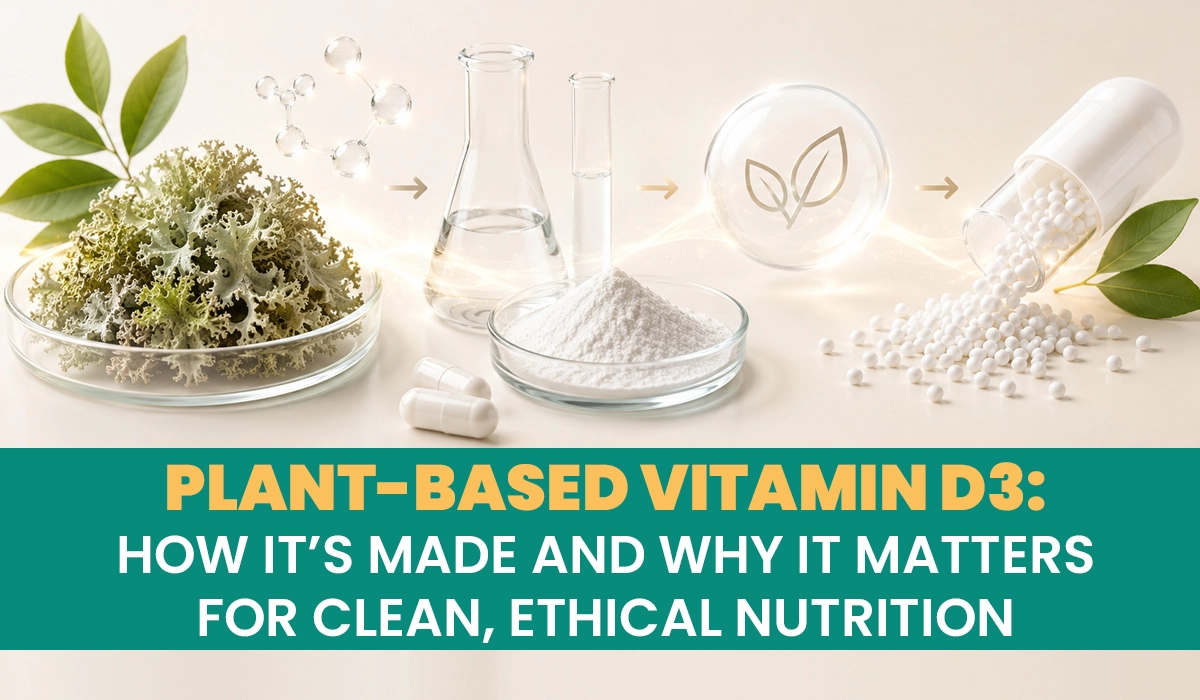
Plant-based Vitamin D3 is basically extracted from Lichen through a manufacturing process. Health experts mostly use this because it is vegan-friendly and ethically produced in alignment with supplement standards.
In the modern world, as awareness around healthy nutrition continues to evolve, plant-based nutrition has become an important consideration for many consumers. People are increasingly interested in understanding not only what their supplements contain but also where their ingredients come from. This has created growing interest in vegan vitamin D3, a form of Vitamin D3 sourced from lichen rather than animal-derived materials.
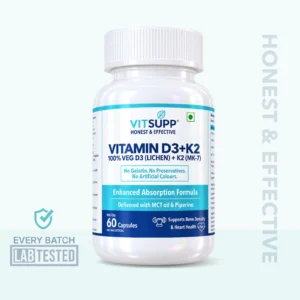
VitSupp’s Vitamin D3 + K2 formulation uses lichen-derived vitamin D3 as part of its plant-based approach. They focus on ingredient transparency and thoughtful formulation choices.
This article explores what lichen-derived vitamin D3 is, how plant-based vitamin D3 is made, and why the source of Vitamin D3 matters for consumers looking for clean-label supplements, ethical sourcing, and plant-based wellness options. Understanding the journey from ingredient source to final formulation can help consumers make more informed decisions about their nutrition choices.
What Is Lichen-Derived Vitamin D3?
To understand lichen-derived vitamin D3, it helps to start with the basics of vitamin D itself.
What Is Vitamin D3?
We also know Vitamin D3 as cholecalciferol. Health experts use this form of vitamin D mostly in supplements. It is the same form of vitamin D that human skin naturally produces after sunlight exposure. Because of this, manufacturers generally consider vitamin D3 the preferred form of vitamin D for most fortified foods and supplements, compared to vitamin D2.
Mushrooms and some fortified foods commonly contain vitamin D2, a plant-derived form of vitamin D. Most of the manufacturers, on the other hand, have traditionally sourced vitamin D3 from lanolin, a substance that comes from sheep’s wool.
What Is Lichen?
Lichen is a natural organism that forms through a relationship between a fungus and an algae or cyanobacterium. It grows slowly in a range of natural environments, and researchers have studied it for its unique biological compounds. Certain lichens naturally contain compounds that manufacturers can convert into vitamin D3 through a manufacturing process. This differs from how manufacturers traditionally obtain vitamin D3 from lanolin.
This is exactly where lichen-derived vitamin D3 becomes relevant. Unlike traditional vitamin D3 sources that usually rely on an animal by-product, vitamin D3 from lichen offers a plant-based alternative that fits within a vegetarian or vegan diet.
How Plant-Based Vitamin D3 Is Made
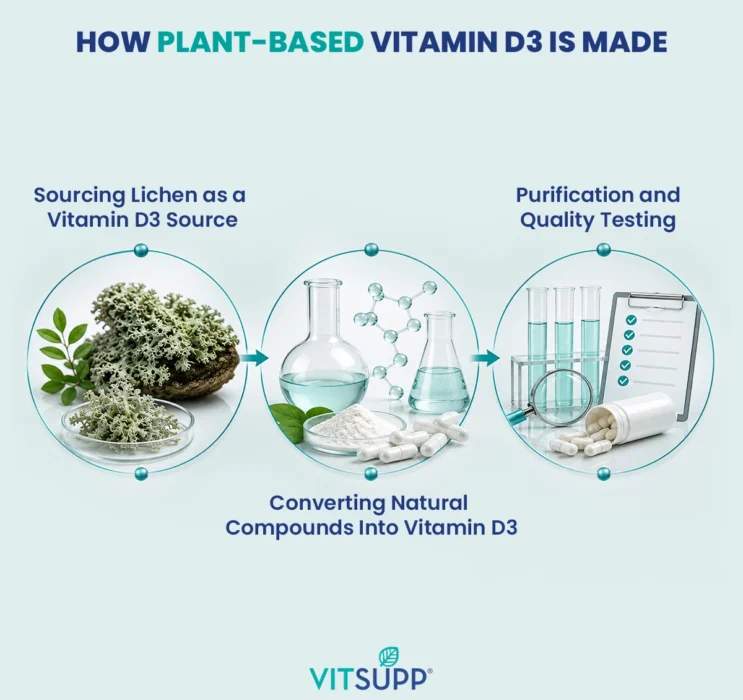
Understanding how plant-based vitamin D3 helps consumers see why many consider this process a cleaner, more transparent alternative to conventional sourcing methods.
Sourcing Lichen as a Vitamin D3 Source
Manufacturers begin the process by carefully selecting specific lichen species known to contain vitamin D precursor compounds. Because lichen grows in specific natural conditions and at a slow pace, manufacturers generally source it with attention to renewal and long-term availability, rather than relying on large-scale extraction that could affect natural lichen populations.
This sourcing stage is a key part of plant-based supplement manufacturing. That is because the quality of the final vitamin D3 depends heavily on the quality and consistency of the lichen material manufacturers collect at this early stage.
Converting Natural Compounds Into Vitamin D3
Once manufacturers source the lichen material, it goes through several steps to become usable vitamin D3 for supplements. In simple terms, the process generally involves:
- Collection and preparation of the lichen material
- Extraction of vitamin D-related precursor compounds from the lichen
- Controlled exposure to UV light to convert the precursor compounds
- Conversion of these compounds into vitamin D3 (cholecalciferol)
This process resembles what happens naturally in human skin. Similar to how sunlight triggers vitamin D production in human skin, controlled UV exposure in a manufacturing setting helps convert the precursor compounds that lichen contains into vitamin D3.
Purification and Quality Testing
After the conversion step, the resulting vitamin D3 typically goes through a purification process to remove unwanted material and concentrate the usable compound. Once purified, manufacturers test the vitamin D3 to confirm several factors, including:
- Identity of the compound
- Purity of the material
- Potency, meaning the concentration of vitamin D3 present
- Compliance with relevant safety standards
Many manufacturers also rely on third-party testing at this stage, along with batch-level documentation, so that independent testers can verify the source, purity, and potency of each batch rather than relying only on internal claims.
Benefits of Vegan and Plant-Based Vitamin D3
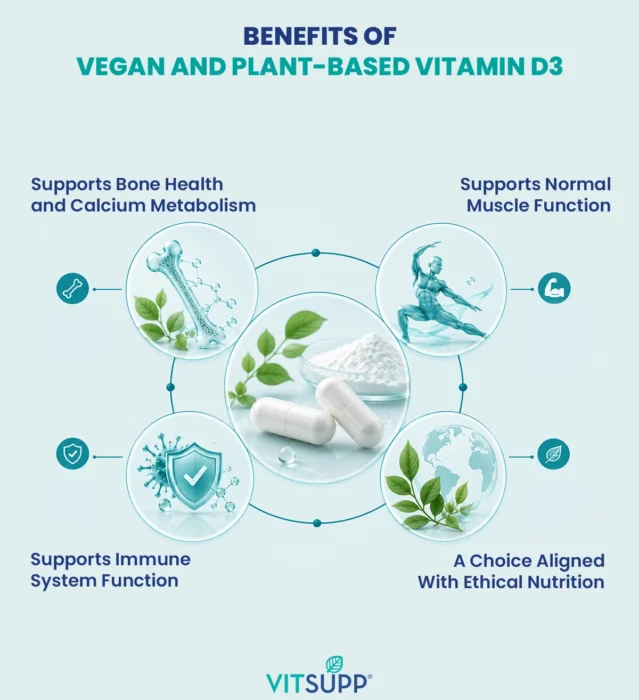
It is worth examining the nutritional roles that vitamin D3, in general, plays, while keeping in mind that these are nutritional roles rather than treatment claims.
Supports Bone Health and Calcium Metabolism
Vitamin D contributes to the normal absorption of calcium in the body. Calcium is an extremely important mineral for maintaining healthy bones in the human body. Vitamin D helps your body absorb calcium to support healthy bones.
Curious about how plant-based Vitamin D3 is absorbed? Learn how carrier oils can support Vitamin D absorption and bioavailability in our detailed guide.
Supports Normal Muscle Function
Vitamin D also plays a role in keeping muscle function normal. Some research associates low vitamin D levels with muscle weakness and links adequate levels to the maintenance of normal muscle strength as part of general physical wellbeing. Maintaining adequate nutrient levels, including vitamin D, is one part of supporting overall muscle function, alongside physical activity and a balanced diet.
Supports Immune System Function
Along with other positive effects, Vitamin D contributes to the normal function of the immune system. Adequate vitamin D intake plays one part in overall nutritional support for normal immune system function.
A Choice Aligned With Ethical Nutrition
Beyond its nutritional role, many consumers choose vegan vitamin D3 for reasons connected to their values and dietary preferences. Lichen-derived vitamin D3 offers:
- Sourcing that avoids the use of animal by-products
- Suitability for a vegan diet
- Alignment with clean-label preferences, since consumers can trace the source material more clearly
This combination of animal-free sourcing and dietary suitability explains why people increasingly discuss lichen-derived vitamin D3 alongside terms like cruelty-free vitamins, ethical vitamin production, and eco-friendly supplements.
Plant-Based Vitamin D3 vs Traditional Vitamin D3
It helps to look at plant-based vitamin D3 and traditional vitamin D3 side by side, since both ultimately provide the same form of vitamin.
| Feature | Traditional Vitamin D3 | Plant-Based Vitamin D3 |
| Source | Usually lanolin-derived | Lichen-derived |
| Suitable for vegans | No | Yes |
| Form of Vitamin | D3 (Cholecalciferol) | D3 (Cholecalciferol) |
| Consumer preference | Conventional option | Plant-based alternative |
| Sourcing focus | Animal-derived source | Renewable biological source |
As the table shows, both traditional and plant-based options provide vitamin D3 in the cholecalciferol form. The primary difference lies in the source material used to obtain that vitamin D3, not the form of the vitamin itself.
Purity and Clean Label Advantages of Plant-Based Vitamin D3
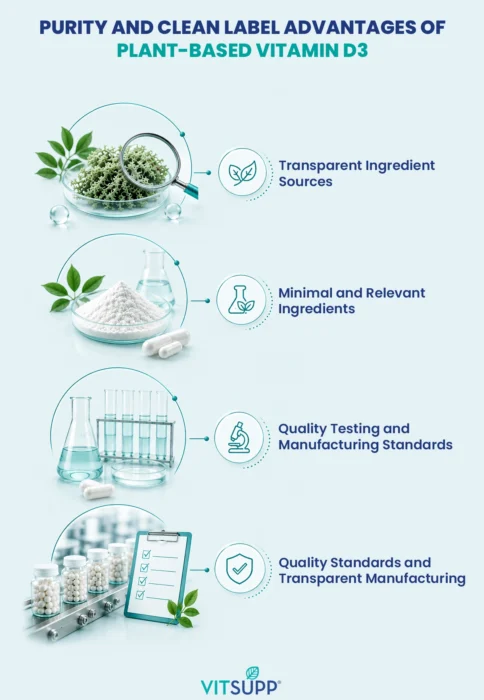
For consumers who pay close attention to labels, a few specific factors are worth understanding when it comes to the purity of plant-based vitamin D3.
Transparent Ingredient Sources
Supplements with clean labels usually list their vitamin D3 source clearly, rather than using vague terms. Look for:
- Named ingredients rather than generic descriptions
- A clearly stated vitamin D3 source, such as lichen
- No hidden or proprietary blends that obscure the actual source or dosage
Minimal and Relevant Ingredients
Clean label supplements tend to focus on a small number of necessary nutrients and a suitable delivery system, rather than including a long list of additives. This generally means avoiding unnecessary fillers, artificial colors, or ingredients added only for appearance, while keeping the formulation limited to what serves a clear purpose.
Quality Testing and Manufacturing Standards
Purity and clean label claims are only meaningful when testing and documentation support them. This typically includes:
- Need to initiate third-party testing of raw materials and finished products
- Manufacturing quality controls at each stage of production
- Batch-level transparency, so that manufacturers can trace and verify a specific batch
Together, these practices are what distinguish a genuinely clean vegan vitamin D3 supplement from one that only uses clean-label language without the testing to support it.
Quality Standards and Transparent Manufacturing
When choosing a clean-label Vitamin D3 supplement, consumers should consider manufacturing standards and ingredient transparency.
The Future of Sustainable Nutrition
The demand for vegan nutrition supplements and sustainable supplements continues to grow as consumers become more aware of ingredient sourcing.
Modern wellness choices are increasingly influenced by:
- Plant-based nutrition
- Clean-label supplements
- Ethical vitamin production
- Sustainable sourcing
- Transparent manufacturing
The future of nutrition is moving toward products that combine scientific understanding with responsible ingredient choices.
Consumers are not only asking what a supplement contains, but also where it comes from and how it is made.
Why VitSupp Uses Lichen-Derived Vitamin D3
VitSupp follows a simple formulation philosophy: choose relevant nutrient forms, document them clearly, and label them transparently, without unnecessary additions. In line with this approach, the VitSupp Vitamin D3 + K2 formulation uses lichen-derived vitamin D3 as its plant-based source of vitamin D.
This choice reflects a focus on specific priorities:
- A vegetarian formulation suitable for those avoiding animal-derived ingredients
- A clean label approach that avoids unnecessary fillers or additives
- Clear ingredient information on the label, including the source and form of vitamin D3 used
- Rigorous quality testing, including batch-specific third-party testing for potency, purity, and contaminants, ensuring every capsule meets VitSupp’s high standards
- Full regulatory compliance, with manufacturing in FSSAI-licensed facilities, batch COA (Certificate of Analysis) provided for each production lot, and labeling adhering to the latest FSSAI packaging rules. Assistance with FSSAI product approval is also available when using new ingredient sources.
Combination of a plant-based source with strict quality assurance and regulatory oversight, VitSupp provides a safe, effective, and fully transparent vitamin D3 supplement suitable for health-conscious and ethical consumers.
Conclusion
Plant-based Vitamin D3 offers a vegan-friendly source of D3 while emphasizing ingredient origin, transparency, and ethical sourcing. Lichen-derived Vitamin D3 is produced through a controlled process that preserves purity and quality. Understanding how vegan Vitamin D3 is made helps consumers evaluate sourcing, manufacturing, and formulation.
With growing interest in plant-based nutrition and clean-label supplements, VitSupp focuses on carefully sourced ingredients and simple, transparent formulations. Using lichen-derived D3 aligns with modern wellness preferences and supports those seeking ethical, plant-based supplements for daily health.
With growing awareness around sustainable nutrition, plant-based Vitamin D3 represents a shift toward more conscious supplement choices built on clarity, transparency, and informed decision-making.
Frequently Asked Questions
What is lichen-derived Vitamin D3?
Lichen-derived Vitamin D3 is a form of Vitamin D3 produced using lichen as a natural source material. Manufacturers extract Vitamin D precursors from selected lichen species and convert them into Vitamin D3 through controlled processes. Unlike traditional Vitamin D3 sources that commonly use lanolin, lichen-derived Vitamin D3 provides an option for consumers seeking vegan and plant-based nutrition choices.
How is plant-based Vitamin D3 made from lichen?
Manufacturers create plant-based Vitamin D3 by extracting natural Vitamin D precursors from lichen and exposing them to controlled UV light. This process converts the extracted compounds into Vitamin D3, similar to the way sunlight helps produce Vitamin D in human skin. After conversion, manufacturers purify and test the ingredient to ensure quality, consistency, and suitability for vegan supplements.
Is vegan Vitamin D3 as effective as regular Vitamin D3?
Vegan Vitamin D3 contains the same form of Vitamin D3, known as cholecalciferol, that many conventional Vitamin D3 supplements use. The main difference lies in the source material used during manufacturing. Lichen-derived Vitamin D3 offers a plant-based alternative for consumers who prefer vegan or vegetarian options while maintaining the same nutrient form found in other Vitamin D3 supplements.
What are the benefits of Vitamin D3 from lichen?
Vitamin D3 from lichen provides a plant-based source of Vitamin D3 that contributes to normal calcium absorption, bone health, muscle function, and immune system function. Consumers who follow vegan diets or prefer plant-based nutrition can choose lichen-derived Vitamin D3 as an alternative ingredient source. VitSupp uses lichen-derived Vitamin D3 to align with its focus on transparent sourcing and simple formulations.
Why is lichen used as a source for vegan Vitamin D3?
Manufacturers use lichen as a source for vegan Vitamin D3 because certain lichen species naturally contain compounds that can be converted into Vitamin D3. This allows manufacturers to create Vitamin D3 without relying on animal-derived materials such as lanolin. Lichen provides an option for consumers who prefer cruelty-free vitamins and plant-based supplements that match their dietary choices.
What makes plant-based Vitamin D3 a clean-label supplement?
A plant-based Vitamin D3 supplement becomes a clean-label choice when it provides clear information about ingredient sources, manufacturing practices, and formulation details. Consumers often look for supplements with transparent labels, minimal unnecessary additives, and verified quality standards. VitSupp follows this approach by focusing on clearly identified ingredients, plant-based sourcing, and a simple formulation philosophy.
What are the benefits of vegan Vitamin D3 for bone health and immunity?
Vegan Vitamin D3 contributes to normal calcium absorption, bone health, muscle function, and immune system function. The body uses Vitamin D as part of several important biological processes that help maintain normal health. Consumers can include vegan Vitamin D3 as part of a balanced nutritional approach alongside healthy dietary habits, regular movement, and appropriate lifestyle choices.
How do I choose the best plant-based Vitamin D3 supplement?
When choosing a plant-based Vitamin D3 supplement, consumers should evaluate the Vitamin D3 source, ingredient transparency, capsule material, testing standards, and overall formulation. A good supplement should clearly mention whether it uses lichen-derived Vitamin D3 and provide information about quality practices. VitSupp focuses on these factors by using a vegetarian capsule format and transparent ingredient communication.
How is the purity of plant-based Vitamin D3 ensured during manufacturing?
Manufacturers maintain the purity of plant-based Vitamin D3 through multiple quality control steps, including ingredient verification, controlled processing, purification, and laboratory testing. These steps help confirm ingredient identity, potency, and consistency. Brands that prioritize transparency may also provide batch information and quality documentation. VitSupp emphasizes clear sourcing and quality-focused manufacturing practices to support consumer confidence.
Are lichen-derived Vitamin D3 supplements sustainable and eco-friendly?
Lichen-derived Vitamin D3 supports the growing interest in sustainable and plant-based nutrition options. Manufacturers select lichen as an alternative source because it avoids animal-derived materials and aligns with vegan supplement preferences. However, sustainability also depends on responsible sourcing, manufacturing methods, and supply chain practices. Consumers can evaluate these factors when choosing ethical health supplements and eco-friendly nutrition products.