You may spend time outdoors, eat eggs regularly and drink milk every day, yet still be unsure whether you are getting enough vitamin D. It is easy to assume that a sunny climate and a reasonably balanced diet are enough. But vitamin D is a little different from many other nutrients.
Your skin can make vitamin D when exposed to sunlight, but only a limited number of foods naturally contain meaningful amounts. Even then, how much vitamin D you get depends on your routine, the foods you eat and several individual factors.
The main benefit of vitamin D is to help your body absorb calcium and support normal bone health. It also plays a role in muscle function and other processes that help your body function normally.
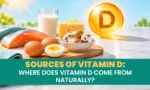
So, what are the main sources of vitamin D? Understanding the natural sources of vitamin D, including sunlight and food, can help you make more informed choices about your daily intake. And if you follow a vegetarian diet, what options are available to you? We will discuss all of these in this article.
Sunlight: How Does Your Body Make Vitamin D?
Sunlight is a major source of vitamin D because UVB rays help your skin produce vitamin D3 when it is exposed to the sun. However, the amount produced varies from person to person. Spending time indoors, covering most of your skin or having other risk factors can affect your vitamin D status.
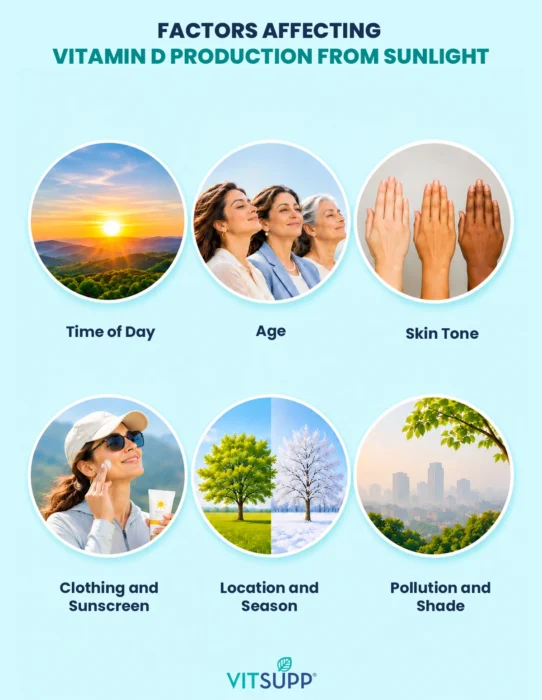
There are several factors that influence how much vitamin D your skin produces:
- Time of day: UVB availability changes throughout the day.
- Skin tone: Higher levels of melanin can reduce vitamin D production from the same amount of UVB exposure.
- Age: The skin generally becomes less efficient at producing vitamin D as you get older.
- Clothing and sunscreen: Covering exposed skin reduces the amount of UVB reaching it.
- Location and season: Latitude, season, cloud cover and atmospheric conditions influence UVB exposure.
- Pollution and shade: These can reduce the UVB radiation available to your skin.
Food-Based Sources of Vitamin D
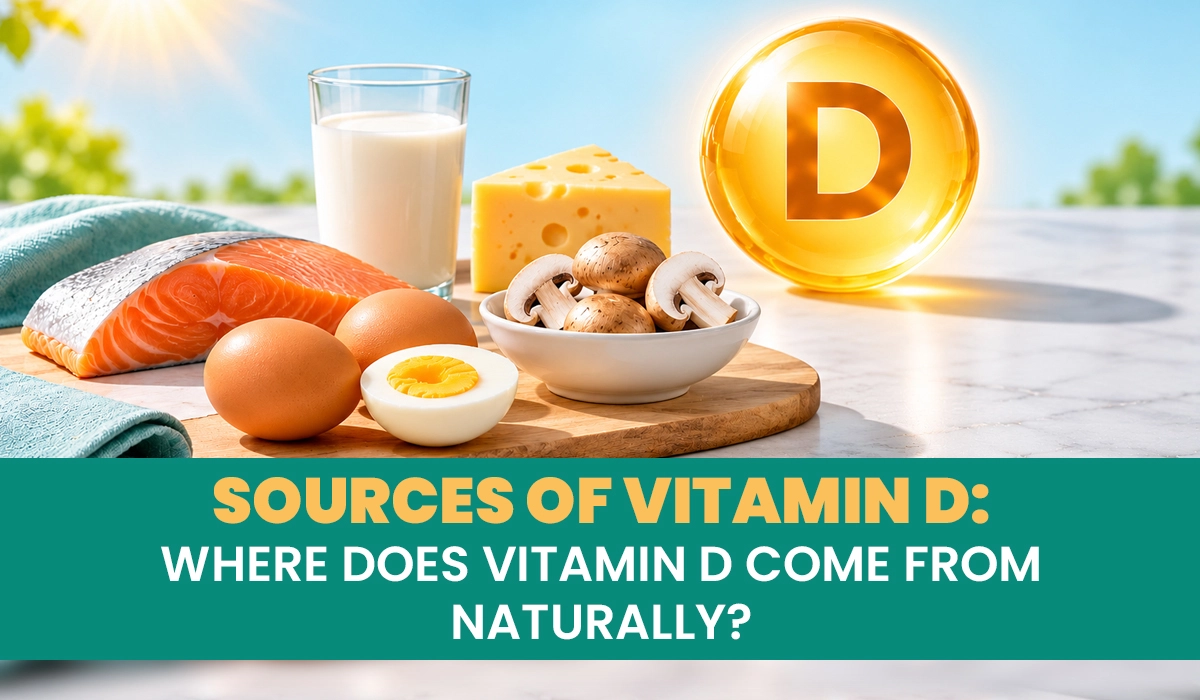
Only a few foods naturally contain substantial amounts of vitamin D. We can divide vitamin D sources into two categories: animal-based sources and vegetarian sources.
Animal foods that contain vitamin D
The amount of vitamin D in animal foods varies with the food itself, serving size and, in some cases, the animal’s diet.
| Food | How it contributes | What to keep in mind |
| Salmon, sardines and trout | Oily fish can provide meaningful amounts of vitamin D | Content varies by species and serving |
| Cod liver oil | Can provide concentrated vitamin D | Check vitamin A and vitamin D amounts before regular use |
| Egg yolks | Provide smaller amounts of vitamin D | Useful as part of a varied diet |
| Liver | Contains some vitamin D | Not as consistently rich a source as oily fish |
Vegetarian Sources of Vitamin D
Getting vitamin D from a vegetarian diet can require a little more planning because many everyday plant foods contain very little of it.
UV-exposed mushrooms: Some mushrooms produce vitamin D2 when exposed to ultraviolet light. The amount depends on the type of mushroom and how it has been grown or treated. Ordinary mushrooms should not automatically be assumed to provide the same amount as UV-exposed varieties.
Fortified milk and plant-based drinks: Some dairy products as well as plant-based drinks have vitamin D added during production. Fortification varies by brand and product, so check the nutrition panel rather than assuming your usual drink contains it.
Lichen-derived vitamin D3: Vitamin D3 can also be sourced from lichen. As per The British Lichen Society, “Lichen is a composite organism formed from a symbiotic relationship between a fungus (the mycobiont) and a photosynthetic partner such as green algae or cyanobacteria (the photobiont).” Lichen-derived vitamin D3 provides a non-animal alternative for people who prefer vegetarian or vegan supplements.
These options can help you plan a vegetarian diet, but the amount you obtain will depend on which foods you eat and how much vitamin D each serving provides.
How Much Vitamin D Do Common Foods Provide?
Comparing the vitamin D content of common foods with the recommended daily intake can help put these figures into perspective. According to the US National Institutes of Health (NIH) Office of Dietary Supplements, the amounts in a typical serving vary considerably:
| Food | Approximate serving size | Vitamin D per serving |
| Rainbow trout, cooked | 3 oz (85 g) | 645 IU (16.2 mcg) |
| Sockeye salmon, cooked | 3 oz (85 g) | 570 IU (14.2 mcg) |
| UV-exposed white mushrooms | ½ cup | 366 IU (9.2 mcg) |
| Vitamin D-fortified cow’s milk | 1 cup | 120 IU (3 mcg) |
| Vitamin D-fortified plant-based milk | 1 cup | 100–144 IU (2.5–3.6 mcg) |
| One large egg | 1 egg | 44 IU (1.1 mcg) |
| Canned sardines | 2 sardines | 46 IU (1.2 mcg) |
For context, the NIH recommends a daily intake of 600 IU (15 mcg) for most people aged 1–70 years and 800 IU (20 mcg) for adults over 70. These figures are general US reference values, not individual treatment targets. Vitamin D content varies by food, preparation and product, while fortified foods differ by brand. Check product labels when comparing fortified options.
Vitamin D Supplements: What Should You Check?
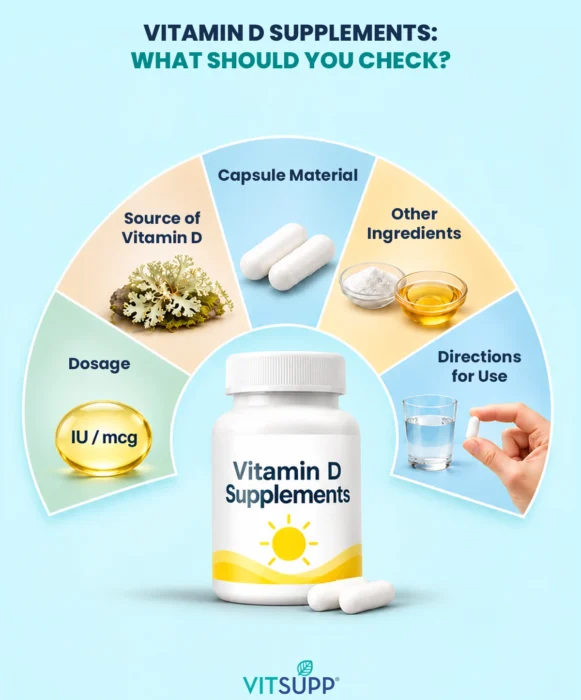
Food and sunlight may contribute to your vitamin D intake, but they do not provide a predictable amount for everyone. If supplementation is appropriate for you, the next step is to understand what a product actually contains.
Rather than choosing a supplement based only on the number displayed on the front of the bottle, check a few practical details.
- Dosage: How much vitamin D does each serving provide, in IU or micrograms?
- Source: Is the vitamin D derived from lanolin, lichen or another source?
- Capsule material: Does the product use gelatin or a vegetarian alternative?
- Other ingredients: Are the additional ingredients suitable for your dietary preferences and health needs?
- Directions: How much should you take, and how often?
Vitamin D is a fat-soluble nutrient; therefore, it dissolves in fat rather than water. Taking it with a meal that contains some fat may help your body absorb it.
Which Source of Vitamin D Is Best for You?
There is no single best source of vitamin D for everyone. Your diet, time outdoors, dietary preferences, and individual health needs all influence which options make sense.
Here is how the main sources compare.
| Source | Appropriate For | What it provides | What to consider |
| Sunlight | Most people, with appropriate sun-safety precautions. | Helps your skin produce vitamin D3 | Production varies with exposure and individual factors; protect your skin |
| Oily fish | Non-Vegetarians | Naturally occurring vitamin D | A useful food source for people who eat fish |
| Eggs | Non-Vegetarians | Smaller amounts of vitamin D | Can contribute, but are not usually a rich source |
| UV-exposed mushrooms | Vegetarians | Vitamin D2 | Check the variety and vitamin D content |
| Fortified foods | Vegetarians | Added vitamin D, depending on the product | Read the nutrition label |
| Lichen-derived supplements | Vegetarians | Vitamin D3 from a non-animal source | Consider the dose, other ingredients and whether supplementation is needed |
The useful starting point is to look at your actual routine rather than assume that living in a sunny climate, eating a particular food or taking a supplement automatically means you are getting enough.
How VitSupp Approaches Vitamin D3 and K2
Once you understand the different sources of vitamin D, choosing a supplement feels less complicated.
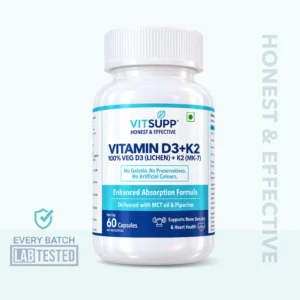
For people looking for a vegetarian option, VitSupp Vitamin D3 + K2 lists the following per serving:
- Vitamin D3: 600 IU from lichen
- Vitamin K2: 45 mcg as MK-7
- MCT oil: Listed as an additional ingredient
- Piperine extract: Listed as an additional ingredient
- Capsule: Vegetarian HPMC
The lichen-derived D3 provides a non-animal source of vitamin D3, while vitamin K2 is included as a separate nutrient with its own physiological roles. MCT oil is also relevant to the formulation because vitamin D is fat-soluble.
Conclusion
Your body gets vitamin D from sunlight, food and supplements, but the amount you get from each source will vary. Oily fish are among the better natural food sources, while eggs can contribute smaller amounts. Meanwhile, UV-exposed mushrooms and fortified foods can broaden the options available to vegetarians.
Start by looking at the foods you eat, checking the labels on fortified products and considering how much time you spend outdoors. If you are concerned about your vitamin D status, a healthcare professional can help you decide whether testing or supplementation makes sense.
VitSupp Vitamin D3 + K2 offers a lichen-derived vitamin D3 option. This formulation also includes vitamin K2 as MK-7. By reviewing its ingredients and dosage, you can decide whether it fits your needs, without assuming that everyone requires the same supplement.
Frequently Asked Questions
1. What is a good source of vitamin D?
Oily fish like salmon, sardines and trout are among the better natural food sources of vitamin D. Cod liver oil can also provide concentrated amounts, but it also contains vitamin A; therefore, it should be checked before regular use. Meanwhile, if you are vegetarian, fortified foods and UV-exposed mushrooms can contribute to your intake. Sunlight is another source because UVB rays help your skin produce vitamin D3. The amount you obtain varies across these options, so it is more useful to consider your overall routine than to rely on one food alone.
2. What is the main source of vitamin D?
Sunlight is one of the major sources of vitamin D. But sunlight exposure varies, and unprotected UV exposure can damage your skin; it is not safe to assume that everyone gets enough vitamin D from sunlight alone. On the other hand, relatively few foods naturally contain substantial amounts of vitamin D. These foods include oily fish, eggs, UV-exposed mushrooms, and fortified foods.
3. Which food is the richest source of vitamin D?
Oily fish, including trout and salmon, are among the richest commonly eaten natural food sources of vitamin D. Cod liver oil can provide concentrated amounts, but it also contains vitamin A, so check the label before taking it regularly. Egg yolks and liver contain smaller amounts. For vegetarians, UV-exposed mushrooms can provide vitamin D2, while fortified drinks and cereals may contain added vitamin D. Exact amounts vary with the food, serving size and preparation. When comparing products, use the nutrition information per serving rather than assuming every item in a food category provides the same amount.
4. Is sunlight a good source of vitamin D?
Yes, sunlight can be a good source of vitamin D. Your skin produces vitamin D3 when you are exposed to UVB radiation from sunlight. However, production varies with skin tone, age, location, season, clothing and time outdoors. Keep in mind that spending time outdoors does not guarantee adequate vitamin D, and increasing unprotected exposure can damage your skin. Prolonged sun exposure should not be treated as a substitute for assessment or appropriate supplementation when needed.
5. Are mushrooms a good source of vitamin D?
Some mushrooms can provide vitamin D2, particularly when they have been exposed to ultraviolet light. The amount varies by mushroom type and growing or treatment conditions, so ordinary mushrooms should not be assumed to contain the same amount as UV-exposed varieties. For vegetarians, mushrooms can be one useful food-based option, but their contribution depends on the product and serving size. If vitamin D content is stated on the packaging, use that information to judge how much you are getting. Mushrooms can contribute to a varied diet, but they may not provide enough vitamin D on their own.
6. What is the best source of calcium and vitamin D?
Natural sources of calcium and vitamin D vary, and some fortified milk and plant-based drinks provide both nutrients in the same serving. Other foods may supply one more than the other. Calcium-rich foods contribute to your calcium intake, while oily fish and fortified products can provide vitamin D. Check the nutrition information to compare amounts per serving. You do not need to assume that one food will cover both nutrients. If you are concerned about bone health, have dietary restrictions or suspect a deficiency, a healthcare professional can help assess your needs and discuss appropriate changes.
7. What are the sources of vitamin D and B12?
Vitamin D and vitamin B12 come from different food sources, so it is useful to consider them separately. Oily fish, egg yolks and fortified foods can contribute vitamin D, while your skin can also produce it through sunlight exposure. Vitamin B12 is naturally found mainly in animal foods such as fish, meat, eggs and dairy products. Some fortified foods provide B12 as well. People following vegetarian or vegan diets may need to pay particular attention to B12 intake, depending on the foods they consume. A food that provides one of these vitamins does not necessarily provide enough of the other, so check the nutritional information rather than treating them as interchangeable.
8. Why does VitSupp use vitamin D3 from lichen instead of lanolin?
Lichen-derived vitamin D3 provides a non-animal source of vitamin D3. Lanolin-derived D3 comes from a waxy substance found in sheep’s wool, whereas lichen offers an alternative for people who prefer to avoid animal-derived vitamin D. The source can therefore be an important consideration for vegetarians and vegans. It is also worth checking the rest of the product, including capsule materials and other ingredients, because the vitamin source alone does not determine whether a supplement meets your preferences. VitSupp‘s product information lists lichen-derived D3. Check the current label for the complete ingredient list and directions before use.
9. Can VitSupp Vitamin D3 + K2 help if I do not get enough vitamin D from sunlight and food?
A vitamin D supplement can add a measured amount to your intake when supplementation is appropriate. VitSupp Vitamin D3 + K2 lists 600 IU of lichen-derived vitamin D3 and 45 mcg of vitamin K2 as MK-7 per serving. Whether this product is suitable depends on your existing intake, health circumstances and the amount of vitamin D you may need. A supplement should not be treated as a diagnosis or as a guaranteed way to correct a deficiency. If you think your vitamin D may be low, consult a healthcare professional about whether testing or a specific dose is appropriate.
10. Is vitamin D3 suitable for vegetarians?
It can be, provided you check the source and the other ingredients. Vitamin D3 is often produced from lanolin, which comes from sheep’s wool, but lichen-derived D3 is available as a non-animal alternative. Capsule materials matter as well: some supplements use gelatin, while others use vegetarian materials such as HPMC. If you follow a vegetarian or vegan diet, review the full label rather than relying only on the product name or vitamin D source. VitSupp‘s product information lists lichen-derived D3 and vegetarian HPMC capsules. Check the current packaging to confirm the ingredients and directions before use.