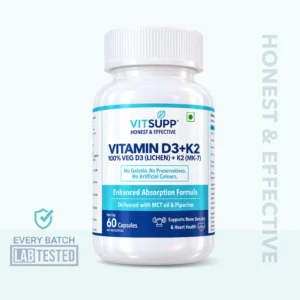

Many Indian men focus on their fitness and protein intake. However, that may lead to them being less mindful about other essential nutrients, like Vitamin D. This nutrient is crucial for maintaining bone health, supporting normal muscle function, and supporting immune system function, and deficiency may lead to long-term health problems.
Despite living in a country with abundant sunlight, men may still deal with vitamin D deficiency problems, according to credible sources. Diverse factors like limited sun exposure, an indoor-centric lifestyle and work culture, and pollution can affect natural vitamin D generation through the skin.
Proper supplementation, along with a proper diet and sunlight exposure, can help deal with Vitamin D deficiency symptoms in men. But you should focus on understanding its benefits. When you are aware of how supplementation nuances affect absorption and physiological processes, you can make informed choices.
A vitamin D supplement for men that comes with a balanced mix of vitamin D3 and K2 may help men deal with the nutritional gap and meet RDA requirements.
What Is Vitamin D and Why Is It Important for Men?
Vitamin D is a nutrient that supports several biological processes in your body. It is obtained through both food and sunlight. Your skin generates the vitamin when exposed to UVB rays of sunlight. As it is a fat-soluble vitamin, it is stored in body tissues and is better absorbed alongside dietary fats.
How Does the Body Get Vitamin D?
The body gets vitamin D through three primary sources.
- Sunlight – Sunlight is the primary natural source of vitamin D. The UVB rays from sunlight reach the skin and trigger the production of vitamin D. However, the amount of vitamin D generated through sunlight depends on factors like time spent outdoors, location, skin pigmentation, time of day, etc.
- Food – Your body gets vitamin D from certain foods like egg yolks, fatty fish, fortified mushrooms, etc. For many men, food alone may not provide enough vitamin D to maintain required levels.
- Vitamin D Supplements – Taking vitamin D supplements can help address vitamin D deficiency in men. However, the formulation and type of vitamin D used in such supplements matter a lot. Vitamin D3 is fat-soluble, and consuming it with dietary fat can enhance its absorption. An oil-based formulation such as MCT oil provides vitamin D in a lipid vehicle.
Why Vitamin D Matters for Men?
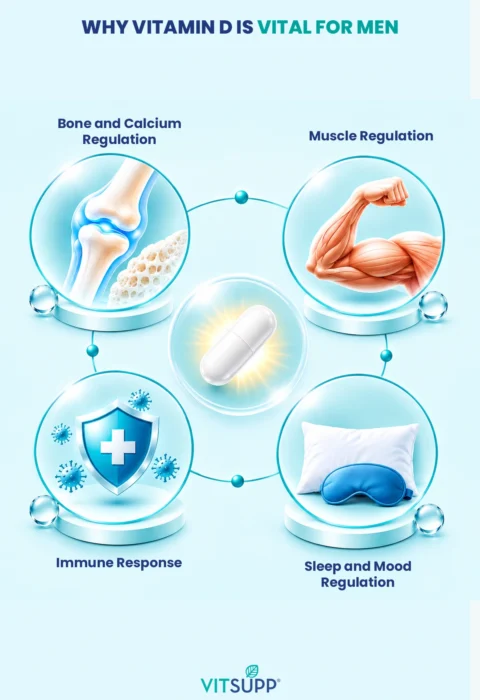
For men, vitamin D is important because the body needs it for multiple physiological processes. These include calcium regulation, muscle function, and maintaining normal physiological functions. Rather than thinking about the amount of vitamin D consumed, you should focus on how the body produces, processes, and uses this nutrient.
Here’s why Vitamin D for men is crucial:
- Bone and Calcium Metabolism – Vitamin D helps the body absorb calcium, a mineral required for maintaining normal bone structure and density. Without sufficient vitamin D consumption, the body finds it hard to absorb and utilize calcium properly.
- Muscle Function – Vitamin D plays a role in normal muscle functioning, and a deficiency may affect muscle health.
- Immune System Function – Vitamin D also contributes to normal immune system functioning, according to research. While further research strengthens the relationship between vitamin D status and the immune system, adequate vitamin D supports immune responses.
- Mood and Sleep Regulation – Existing research shows a link between vitamin D consumption and mood and sleep regulation. Low vitamin D status has been associated with mood and sleep disturbances in observational studies, but it is not established that vitamin D deficiency directly causes these problems or that supplementation will correct them
Why May Men Develop Vitamin D Deficiency?

Vitamin D deficiency is widespread among Indian adults, including men, and leading studies corroborate this fact.
Limited Sun Exposure
For millions of Indian men, getting enough sunlight exposure can be tough. They typically commute to work on public transport, which restricts sunlight exposure. Those working in offices get little chance to get UVB rays.
Darker Skin Tone
Research shows that skin pigmentation plays a role in sunlight-based vitamin D synthesis. Melanin reduces the skin’s production of vitamin D in response to UVB exposure. So, men with darker skin tones may not get adequate vitamin D, even if they get sunlight exposure.
Urban Environment Issues
The rising level of pollution in urban regions can affect the functioning of UVB rays. Studies have shown that excess dust and airborne particles can block and scatter ultraviolet B (UVB) rays before they reach the ground. This is another contributor to lower vitamin D levels in men in cities.
Sunscreen and Protective Attire
Nowadays, men also use sunscreen products to safeguard skin from prolonged sun exposure. Sunscreen can reduce UVB-driven vitamin D synthesis in the skin, although its effect on vitamin D status in real-world use varies, according to study findings. Those using body-covering attire face the same issue.
Dietary Limitations
Some men do not get their daily requirement of vitamin D through foods easily. This is especially the case with vegetarians and vegans, who find it tough to get foods with enough vitamin D. This also contributes to low vitamin D in men.
| Factor | Why it can affect vitamin D status |
|---|---|
| Limited outdoor time | Reduces UVB ray exposure |
| Indoor work setup | Limits direct sunlight exposure |
| Darker skin tone | Melanin reduces vitamin D synthesis from UVB |
| High air pollution | Can reduce UVB reaching the skin |
| Clothing & sunscreen usage | Can reduce skin exposure to UVB |
| Low dietary intake | Reduces vitamin D intake from food |
With a proper diet, lifestyle, and a balanced vitamin D3 supplement containing carefully chosen ingredients for better absorption, you can manage vitamin D deficiency issues better.
How Can Men Check Their Vitamin D Levels?
If you experience common vitamin D deficiency symptoms like fatigue, bone pain, muscle weakness, and irritability, it may be useful to seek a proper medical diagnosis. A vitamin D test can reveal the truth.
Now, vitamin D levels vary between individuals based on different dietary, genetic, and lifestyle factors. A serum 25(OH)D level of 20 ng/mL (50 nmol/L) or above is considered adequate for most people by the U.S. National Academies. Levels below 12 ng/mL (30 nmol/L) are associated with vitamin D deficiency, while 12 to below 20 ng/mL is generally considered inadequate or vitamin D deficiency in men.
Doctors commonly recommend a simple blood test called the 25-hydroxyvitamin D [25(OH)D] test to assess vitamin D levels in the body. They can find out whether an individual’s vitamin D status falls within an appropriate range.
How Much Vitamin D Do Men Need Daily?
Vitamin D requirements are usually measured in International Units (IU). The daily vitamin D requirements of a man will depend on factors like his age, existing vitamin D status, sun exposure, dietary intake, and overall health.
According to the National Institutes of Health (NIH) data, the recommended dietary allowance (RDA) for adults aged between 19 and 70 years is 600 IU. For adults over 70 years, the RDA is 800 IU per day.
People with fat-malabsorption conditions, including Crohn’s disease and some other gastrointestinal disorders, are at greater risk of inadequate vitamin D status and may require individualized assessment and supplementation under medical guidance.
While using a Vitamin D supplement for men can help those dealing with deficiency, supplementation should follow a proper medical diagnosis and consultation. Taking clean-label vitamin D3 supplements that adhere to the RDA of 600 IU per capsule and undergo stringent third-party testing can be useful.
Choosing a Vitamin D Supplement for Men: Why VitSupp’s Formulation Stands Out
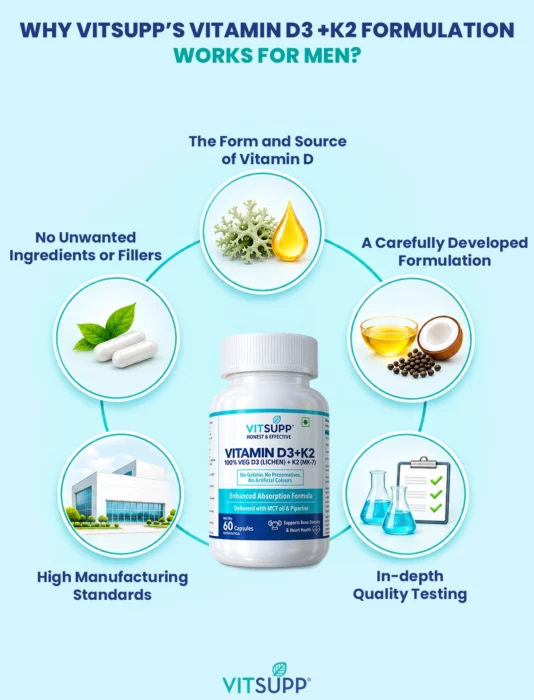
Many men tend to choose vitamin D supplements with megadoses, thinking it will fetch them better results. While the dosage is important, factors like the form of vitamin D and added co-factors also matter.
The Source and Form of Vitamin D
Vitamin D supplements commonly use the forms vitamin D2 or D3. Vitamin D3, or cholecalciferol, is the variant your skin naturally generates when it is exposed to sunlight. A Surrey University study hinted at vitamin D3 supplements being more beneficial for most individuals than D2.
Carefully Chosen Supporting Ingredients
It is not only the vitamin D in the supplement that matters. You also need to check the other ingredients used. Vitamin D and vitamin K have complementary roles in calcium and bone metabolism: vitamin D supports calcium absorption, while vitamin K is required for the activation of vitamin K-dependent proteins involved in bone metabolism. Because vitamin D is fat-soluble, the presence of dietary fat can enhance its absorption. VitSupp’s formulation includes Vitamin K2 MK-7, along with MCT oil and 95% piperine black pepper extract to support bioavailability.
Free from Unnecessary Ingredients
Check if the formulation contains any unnecessary ingredients. Artificial colors, preservatives, or soy and gluten may cause side effects, according to study results. In VitSupp’s offering, you get what is promised on the labels: a clean, vegan formulation, developed after extensive research.
Thorough Quality Testing
Opt for supplements with batch-level purity and potency reporting. With VitSupp, you get access to third-party trusted lab (NABL) test results. Additionally, all supplements are tested intensively in-house before and after manufacturing for potency, microbial safety, and other issues.
Manufacturing Standards
The quality of a supplement also depends on where and how it is manufactured. The manufacturing process and standards can affect the formulation’s safety and efficacy. Ideally, look for a vitamin D3 supplement made in a GMP-compliant manufacturing facility licensed by FSSAI. For consumers, such certifications and regulated manufacturing practices add to confidence.
VitSupp offers a clean-label vitamin D3 supplement, blended with useful, tested co-factors, with an effective dosage, and undergoes stringent quality checks. Being a vegan offering in HPMC capsules, it suits men who do not consume animal sources of vitamin D. The Vitashine Vegan D3 + BioEssence K2 MK-7 contains UK-sourced lichen-based D3 and US-sourced K2 to support absorption.
Conclusion
When you cope with Vitamin D deficiency problems, it is necessary to make dietary and lifestyle changes. Using supplementation can help, but be careful to check the formulation, testing results, and safety measures, etc. Seek a proper medical consultation for diagnosis and make the right supplementation choice accordingly.
VitSupp adopts a science-backed and transparency-focused approach to vitamin D supplementation. It offers a clean-label supplement without unnecessary ingredients and intensive testing for safety and efficacy. The supplement can help provide the recommended daily intake of vitamin D as part of an appropriate diet and supplementation plan.
FAQs
1. What are common symptoms of vitamin D deficiency specific to men?
Vitamin D deficiency may not always show up in noticeable symptoms. When you get low vitamin D levels, you may experience symptoms like muscle weakness, bone pain, fatigue, or reduced immunity. However, these symptoms may be caused by several other health conditions, too. To be sure, you should opt for the standard 25-hydroxyvitamin D test. A healthcare professional can offer appropriate guidance.
2. What are the benefits of vitamin D for men?
Vitamin D plays a role in several normal body functions that are important for men’s overall health. It supports calcium absorption from food, playing a major role in bone health. It also supports normal muscle function and immune system function, according to credible sources. Men need this vitamin to stay active and fit overall.
3. Can vitamin D deficiency affect men’s immune system?
Vitamin D has important roles in normal immune function. Low vitamin D status has been associated with some infections and immune-related outcomes, but this does not establish that vitamin D deficiency directly causes increased susceptibility to viral or bacterial infections in otherwise healthy men, a study shows. Other research findings indicate that essential immune components in your body need adequate levels of vitamin D. Otherwise, they find it tough to regulate the immune response. Then you may become more vulnerable to developing respiratory illnesses and common pathogens.
4. How does vitamin D support bone density and muscle function in men?
Your body needs calcium for maintaining normal bone structure and strength. Vitamin D helps the body absorb calcium from food sources in the intestine. Vitamin K is required for the activation of proteins such as osteocalcin that are involved in normal bone metabolism. With adequate calcium, specialized cells break down old bones and rebuild bone tissue. Your muscles have vitamin D receptors, which react with active vitamin D to regulate muscle cell growth.
5. Does a lack of vitamin D cause hair loss in men?
Credible research findings show that Vitamin D plays a role in normal hair follicle function. There can be a link between low vitamin D levels and certain hair loss conditions, including alopecia areata. However, men do not experience hair loss only due to a deficiency in this nutrient, and factors like genetics, hormonal changes, aging, stress, and overall nutrition can also influence hair health. While trying to get adequate vitamin D through food, sunlight, and supplementation may help, you should try to analyze the root cause through proper diagnosis.
6. Can vitamin D supplements help with mood in men?
Research findings show vitamin D having an effect on several biological processes related to brain function and mood. However, the evidence on vitamin D and mood is still not strong enough to conclude that using vitamin D supplements will help you improve mood. Mood swings are caused by several factors, and not only a deficiency of this nutrient. Along with considering a balanced Vitamin D supplement with high bioavailability, you can resort to healthy lifestyle habits like a balanced diet, regular physical activity, and sufficient sleep.
7. How much vitamin D do adult men need each day?
The daily vitamin D requirement for men depends on age, health status, sunlight exposure, and individual needs. According to the National Institutes of Health (NIH), adult men aged 19–70 years typically need 600 IU (15 mcg) of vitamin D/day. For men above 70, the daily intake limit is set at 800 IU (20 mcg) per day.
However, vitamin D needs may vary from one person to another. Typically, those coping with limited sun exposure, dietary gaps, or certain gut health issues may need different amounts of vitamin D, according to study findings.
8. What are the benefits of vitamin D supplements for men’s muscle health?
Vitamin D plays an important role in normal muscle function as it supports processes involved in muscle strength, movement, and coordination. In men with low vitamin D, this may be more noticeable. Research suggests that vitamin D deficiency may add to reduced muscle function. While supplementation may help, remember that it is not a replacement for a balanced lifestyle, other sources of the nutrient, and regular exercise.
9. What causes a man’s vitamin D to be low?
Adults, including men, can experience low vitamin D levels for a number of factors:
- limited sunlight exposure
- inadequate dietary consumption
- Skin pigment factors
- Certain lifestyle issues
- Conditions like Crohn’s disease or celiac disease
Sunlight is the natural source for vitamin D generation, and using protective clothes and sunscreen can affect the process. Gut health conditions may affect vitamin D absorption in the digestive tract.
10. How quickly does vitamin D work for fatigue in men?
Men may not always experience the same when it comes to fatigue recovery after using Vitamin D. The timing also varies based on your vitamin D status, dosage, consistency, and other health factors. For fatigue related to low vitamin D levels, improvement may not be immediate. However, you may experience fatigue from other sources like inadequate sleep, stress, nutritional gaps, low iron or vitamin B12 levels. If fatigue is related to vitamin D deficiency, correcting the deficiency may help; vitamin D supplementation should not be expected to treat fatigue from unrelated causes, but follow proper medical consultation.