Calcium and Vitamin D have become famous for strong bones, especially after so many of us discovered how low our vitamin D levels were.
Then there is vitamin K2.
Most people have never even heard of it. Even those taking calcium or vitamin D every day may have little idea about what K2 does.
Vitamin D helps the body absorb calcium. Vitamin K supports the activation of proteins involved in using calcium within bones and controlling calcium deposition in soft tissues. This is why vitamin D and K2 are often discussed together.
In this article, we will explain what vitamin K2 does, where we get it from, how it works with vitamin D3, which foods contain it, what current research tells us, and when a D3 + K2 supplement may be useful.
What is Vitamin K2, and Why Does Your Body Need It?
Vitamin K occurs mainly as K1 and K2:
- Vitamin K1, found largely in green leafy vegetables, supports normal blood clotting.
- Vitamin K2 activates proteins involved in calcium metabolism.
- Osteocalcin is a protein made naturally by your body and works mainly in the bones. It helps your bones use calcium to build a strong bone structure.
- Matrix Gla protein (MGP) is also a protein made naturally by your body and works mainly in blood vessels and other soft tissues. It helps regulate calcium buildup in blood vessels and other soft tissues. MGP supports healthy arteries.
Without enough vitamin K, these proteins may remain underactivated.
In simple words, vitamin D supports calcium absorption, while vitamin K2 helps your body use calcium appropriately.
Who May Consider a Vitamin K2 Supplement?
Many people may receive limited vitamin K2 through their regular diet. Some of the richest sources include fermented foods such as natto, along with egg yolks, certain meats, and aged cheeses.
These foods are eaten occasionally—or rarely—in many Indian homes2. A vitamin K2 supplement can offer a simple and consistent way to include this nutrient in your daily routine, especially alongside vitamin D3.
A vitamin K2 supplement may be useful for people who:
- Take vitamin D3 but want more complete support for calcium metabolism
- Want to support strong bones & healthy bone mineralisation
- Are thinking about long-term heart & vascular health
- Eat very few K2-rich foods such as natto, egg yolks, aged cheese, and fermented foods
- Follow a vegetarian or vegan diet with limited natural sources of K2
- Want a simple & consistent daily source of vitamin D3 + K2
Vitamin D3 supports calcium absorption, while vitamin K2 supports the proteins involved in calcium metabolism and bone mineralisation.
VitSupp uses K2 in the MK-7 form, which remains available in the body for longer than other shorter-acting K2 forms. Together, they provide convenient daily support for your bones, calcium metabolism, and vascular health.
Vitamin K2 Dosage and Daily Requirement
There is no separate RDA for vitamin K2. The recommended intake is for total vitamin K, which includes vitamins K1 and K2.
According to the U.S. National Institutes of Health, for adults, the adequate intake for total vitamin K is 120 mcg per day for men and 90 mcg per day for women. These figures apply to total vitamin K, not K2 alone.
The amount of K2 you may need from a supplement basically depends on your diet, the form of K2, and your individual needs. Therefore, consult a healthcare professional before taking Vitamin K2.
How Vitamin K2 Is Connected to Heart & Vascular Health
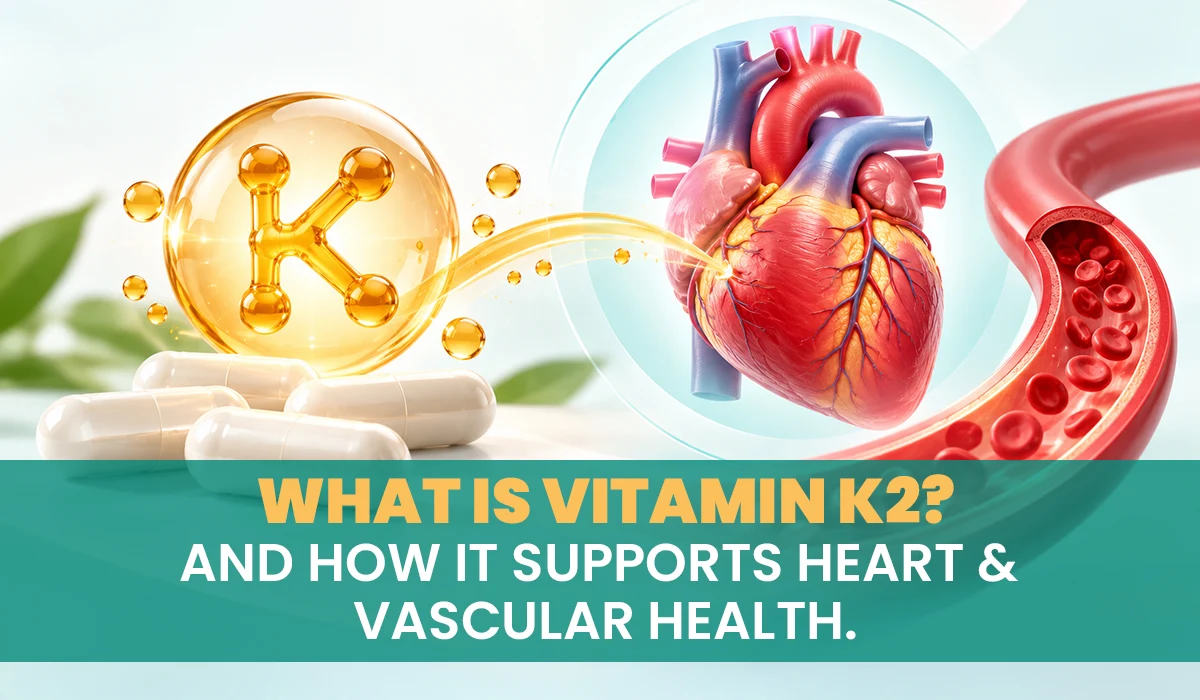
Arterial calcification occurs when calcium accumulates within artery walls, making them less flexible over time. Although vitamin K2 cannot be described as a treatment for this condition, it supports proteins involved in regulating where calcium is deposited.
K2 Activates Matrix Gla Protein (MGP):
Vitamin K2 acts as a cofactor that helps activate Matrix Gla protein (MGP), which contributes to limiting inappropriate mineral deposition in vascular tissues.
K2 Supports Calcium Regulation:
Vitamin D supports calcium absorption, while vitamin K helps activate proteins involved in calcium metabolism. They perform complementary roles but work through different biological pathways.
K2 Shows promising associations with Cardiovascular Health:
In the Rotterdam Study with 4,807 adults aged 55 years and above, people with the highest dietary intake (above 32.7 mcg per day) of vitamin K2 (menaquinone) had 57% lower odds of severe aortic calcification than those with the lowest intake (odds ratio 0.48). They also had a 57% lower risk of death from coronary heart disease during follow-up (relative risk 0.43).
In simple words, the Rotterdam Study gives a valuable clue about vitamin K2 and heart health. It showed that people who ate more vitamin K2-rich foods had lower odds of severe aortic calcification and a lower risk of death from coronary heart disease during the study period.
These findings show a strong association between higher K2 intake and vascular health, especially because vitamin K2 supports proteins involved in healthy calcium use.
However, please note the study looked at dietary patterns and not supplements.
Requires special care in kidney disease:
People with chronic kidney disease often have an imbalance in minerals like calcium and phosphorus. Over time, this can make calcium more likely to collect in blood vessels.
Vitamin K2 may be relevant because it activates MGP, a protein that helps manage calcium in blood vessels. Researchers are studying whether vitamin K2 can help this group.
However, kidney disease involves individual medicines, blood reports, dialysis status, and mineral levels. So a person with CKD (chronic kidney disease) should ask their nephrologist before adding K2—especially if they use blood thinners.
Their calcium, phosphorus, vitamin D levels, and medicines may need personalized management.
Vitamin K2 Deficiency: Signs, Risks, and Who Needs Supplementation
Vitamin K2 deficiency can be difficult to spot. There is usually no clear moment when your body tells you, “You need more K2.” You may feel ok even when your daily diet provides very little of it.
K2 is considered a supporting nutrient alongside vitamin D3. Vitamin D3 helps the body absorb calcium, while K2 helps activate proteins involved in normal blood clotting, bone mineralisation and healthy calcium use. Researchers are also studying how low vitamin K2 intake may affect bone and vascular health over time.
So, the practical question is: could your diet be leaving a K2 gap?
A small Indian study found low vitamin K2 levels among the people it tested. It also found very little K2 in several commonly eaten Indian foods. This suggests that many Indians may receive limited K2 through their daily diet.
Can You Recognise Vitamin K2 Insufficiency from Symptoms?
There is really no widely accepted list of vitamin K2 deficiency symptoms. Severe deficiency of vitamin K can affect normal blood clotting and may cause:
- Easy or unusual bruising
- Bleeding that takes longer to stop
- Bleeding gums
- Heavy menstrual bleeding
However, these symptoms can have many possible causes. A doctor can help identify the actual reason for them
Changes related to bone strength or calcium deposition usually develop gradually and may remain unnoticed for years. Weak bones, fractures, dental problems, and heart-related findings are not proof of vitamin K2 deficiency, but may be a factor that helps.
- Your diet often gives a more useful clue. K2 is mainly found in natto, egg yolks, aged cheeses, organ meats, and certain fermented foods. People who rarely eat these foods may get limited K2 through their regular meals.
Who May Be at A Greater Risk of Vitamin K Deficiency?
Certain groups may need increased vitamin K supplementation. Some of them are as follows:
- Vegetarians and Vegans: They miss many of the vitamin K2-rich foods available to people who eat animal products and those that consume fermented foods.
- Long-term antibiotic takers: Medications can kill the gut bacteria that produce a small amount of K2
- Digestive conditions: Crohn’s disease and celiac disease block absorption of fat-soluble vitamins
- High-dose vitamin D users: Need extra K2 to handle increased calcium absorption
- Elderly individuals: Reduced ability to absorb and activate vitamin K2
- Postmenopausal women: Higher calcium needs and increased cardiovascular disease risk
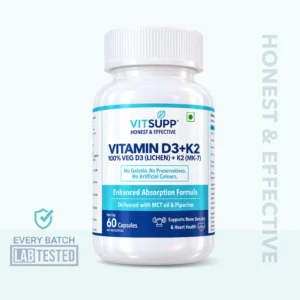
VitSupp Vitamin D3 + K2 combines vegan vitamin D3 from lichen with vitamin K2 as MK-7. Together, they provide convenient daily support for calcium absorption, calcium use, bone health, and vascular health.
Once again, people taking warfarin or similar blood-thinning medicines should consult their doctor before using a vitamin K2 supplement.
Health Risks of Low Vitamin K2
Low vitamin K2 status may affect the activation of proteins that support bone and vascular health.
Researchers are studying its connection with:
- Weaker bones: K2 activates osteocalcin, a protein that helps bind calcium within the bones. Lower K2 availability may leave more osteocalcin in its under-activated form.
- Poor bone mineralisation: Calcium and vitamin D are important for bone strength. Vitamin K2 supports the proteins involved in using calcium within the bone structure.
- Calcium buildup in arteries: K2 supports proteins that may help control calcium deposition in blood vessels.
- Reduced flexibility of blood vessels: Healthy calcium regulation helps your arteries stay flexible as you age; vitamin K may help.
- Long-term bone and heart concerns: Years of low K2 intake may affect both bone strength and vascular health.
These changes develop gradually and may remain unnoticed for years. Maintaining an adequate vitamin K intake supports the normal processes involved in bone mineralisation and healthy calcium regulation.
Vitamin K2 Side Effects and Safety
Vitamin K2 is generally well tolerated when taken in the recommended amount. A little extra care is important if you take certain medicines or have an existing health condition.
If You Take Blood-Thinning Medicine
Vitamin K may affect how medicines such as warfarin and Coumadin work.
- Speak with your doctor before taking a vitamin K2 supplement
- Keep your daily vitamin K intake consistent
- Follow your doctor’s advice about INR testing
- Let your doctor decide whether any change in medication is needed
If You Have Kidney Disease
People with kidney disease often have different nutritional and medical needs. Speak with your doctor or nephrologist before adding vitamin K2, especially if you are receiving treatment for vascular calcification or taking several medicines.
During Pregnancy and Breastfeeding
Pregnant and breastfeeding women should consult their healthcare professional before starting any supplement, including vitamin K2. Share the complete ingredient list and serving size during your consultation.
If You Take Other Medicines
Some medicines can affect vitamin K absorption or activity.
- Long-term use of certain antibiotics may reduce vitamin K status
- Medicines that reduce fat absorption may also affect the absorption of vitamin K
- Share your supplement routine with your doctor or pharmacist if you take regular medication
Simple Tips for Safe Use
- Follow the serving suggested on the product label
- Take vitamin K2 with a meal, preferably one containing some healthy fat
- Take it regularly at around the same time each day
- Store the bottle in a cool, dry place
- Keep the bottle properly closed and check the expiry date before use
When Should You Speak with a Doctor?
Seek medical advice if you:
- Take warfarin or a similar blood-thinning medicine
- Have kidney, liver, pancreatic or digestive health conditions
- Are preparing for surgery or a medical procedure
- Experience unusual bleeding or bruising
- Take several medicines or supplements together
- Are pregnant or breastfeeding
Food Sources of Vitamin K2 and Why Supplementation Can Help
Understanding vitamin K2 food sources can help you evaluate whether your diet provides this nutrient consistently. However, obtaining meaningful amounts of vitamin K2 may be difficult because many K2-rich foods are uncommon in a typical Indian diet.
Which Foods Contain Vitamin K2?
Vitamin K2 is primarily found in fermented foods and certain animal-derived products.
- Natto: This Japanese fermented soybean dish is one of the richest dietary sources of vitamin K2 as MK-7. However, its strong smell, sticky texture, and limited availability mean it is not commonly consumed in India.
- Egg yolks: Eggs provide smaller amounts of vitamin K2, although the exact quantity can vary depending on the hens’ feed and farming practices.
- Aged cheeses: Gouda, Brie, and certain other fermented cheeses may contain vitamin K2, but they may not suit vegan diets, lactose-sensitive individuals, or everyday Indian eating patterns.
- Organ meats: Chicken liver and other organ meats can provide vitamin K2, but many people avoid them because of taste, availability, or dietary preferences.
- Traditional dairy foods: Paneer, butter, and ghee may contain some vitamin K2, but their levels are variable and should not be assumed to meet your complete nutritional needs.
Approximate Vitamin K2 Content in Foods
Values are per 100 g. They refer to total K2 forms, including MK-4, MK-7, MK-8 and MK-9.
| Food | Approx. K2 | Main K2 form(s) |
|---|---|---|
| Natto (Japanese fermented soybeans) | ~1,000 mcg | Mainly MK-7 |
| Goose liver pâté | ~369 mcg | MK-4 |
| Aged hard cheeses | ~50–80 mcg | Mainly MK-8 and MK-9 |
| Camembert | ~68 mcg | Mainly MK-8 and MK-9 |
| Eel fish | 63 mcg | |
| Soft cheeses | ~50–60 mcg | Mainly MK-8 and MK-9 |
| Egg yolk | ~15–32 mcg | Mainly MK-4 |
| Cheddar cheese | ~24 mcg | Mainly MK-9, with smaller amounts of MK-4, MK-7 and MK-8 |
| Butter | ~15 mcg | MK-4 |
| Chicken liver | ~13 mcg | MK-4 |
| Chicken meat | ~8–9 mcg | MK-4 |
| Ground beef | ~8 mcg | MK-4 |
| Sauerkraut | ~5 mcg | Small mixed amounts |
Natto is the best-known natural source of vitamin K2 as MK-7. Some fermented soybean foods and aged cheeses may also contain MK-7, although their amounts vary widely and are usually much lower than natto.
Some hard cheeses with K2 are Cheddar, Gouda, Edam, Emmental / Swiss, Gruyère, Parmesan & Jarlsberg. They can contain K2 because of bacterial fermentation and ripening. The dominant forms are usually MK-8 and MK-9, rather than MK-7. Their actual K2 content varies by starter culture, aging process, origin, and brand.
Why Vegetarians and Vegans May Find It Difficult
For vegetarians, aged cheese and butter can provide small amounts of vitamin K2. For vegans, natto is the standout natural source of MK-7. Other fermented plant foods may contain K2, although their levels vary widely with the bacterial culture and production method.
Some Indians follow vegetarian diets and may avoid eggs, organ meats, and aged cheeses. Vegan diets exclude most conventional K2 sources altogether. Although certain fermented foods may provide K2, their nutrient content can differ significantly depending on the microorganisms and preparation method used.
This inconsistency makes it difficult to know exactly how much vitamin K2 you receive from food each day.
Why Supplementation Can Help
Supplementation is not automatically necessary for everyone. Your needs depend on your diet, health status, medications, and overall nutrient intake. However, a supplement may provide a more consistent option when K2-rich foods are limited or unsuitable for your lifestyle.
Vitamin D and vitamin K2 perform complementary roles. Vitamin D supports calcium absorption, while vitamin K helps activate proteins involved in calcium metabolism and bone mineralisation.
Why Consider VitSupp Vitamin D3 + K2?
VitSupp Vitamin D3 + K2 Smart Absorb combines complementary nutrients in one thoughtfully designed formulation:
- Vitashine® Vitamin D3† (as Cholecalciferol from Lichen) 600IU — from UK
- BioEssence® Vitamin K2 (as MK-7) 45 mcg— from USA.
- BioPepper95® — 95% piperine black pepper extract as a bioavailability enhancer.
- MCT oil — fat-based carrier for D3 & K2, as an absorption enhancer.
- Vegetarian HPMC capsules.
†Vitashine® D3, from Lichen, is certified vegan by The Vegan Society, UK.
Manufacturing aligned with FSSAI requirements and GMP quality standards
Rather than relying on unpredictable food quantities, this formulation provides a clearly labelled and consistent source of vitamin D3 and K2. Speak with a qualified healthcare professional before any supplementation, especially if you use blood-thinning medication or have an existing medical condition.
Conclusion
Calcium and vitamin D have always received plenty of attention. Vitamin K2 is the quieter partner that deserves a place in the conversation.
Vitamin D3 helps your body absorb calcium. Vitamin K2 helps activate proteins that support bone mineralisation and healthy calcium use. Together, they offer more complete support for your bones, calcium metabolism and vascular health.
Getting K2 regularly through food can be difficult, especially when foods such as natto, aged cheese, egg yolks and organ meats rarely appear in your daily meals. A D3 + K2 supplement offers a simple and consistent way to include both nutrients in your routine.
Frequently Asked Questions
1. What exactly does vitamin K2 do?
Vitamin K2 helps activate proteins that support healthy calcium use in the body. Two important ones are osteocalcin and Matrix Gla protein.
Osteocalcin helps bind calcium within the bone matrix, supporting bone mineralisation and strength. Matrix Gla protein helps regulate calcium deposition in blood vessels and other soft tissues1.
This is why vitamin K2 is often paired with vitamin D3. Vitamin D3 helps your body absorb calcium, while K2 supports the processes that help your body use it wisely.
VitSupp Vitamin D3 + K2 Smart Absorb combines 600 IU vegan Vitamin D3 from lichen with 45 mcg Vitamin K2 as MK-7. The formula also contains MCT oil and 2.5 mg piperine in a vegetarian capsule.
2. Can vitamin K2 help clear arteries?
Vitamin K2 supports the activation of Matrix Gla protein, which helps regulate calcium deposition in blood vessels. This has created interest in K2 for vascular health.
The Rotterdam Study linked higher dietary K2 intake with lower coronary heart disease risk and less severe aortic calcification. A clinical trial4,5 also found that three years of MK-7 supplementation supported arterial flexibility in healthy postmenopausal women, especially those who began with stiffer arteries.
Current research supports K2 as a nutrient for healthy calcium metabolism and long-term vascular health. Its ability to clear existing calcium deposits from arteries is not yet confirmed.
3. How long does it take for K2 to clean arteries?
Research has yet to establish a fixed timeline for vitamin K2 to clean arteries. K2 provides nutritional support for calcium regulation rather than working as a quick artery-cleaning treatment.
Studies4,5 examining vascular health have generally used vitamin K for several months or years. Results can vary according to age, diet, existing health conditions, medicines, and the level of arterial calcification.
For everyday nutritional support, regular intake matters more than expecting a result within a few weeks.
Anyone diagnosed with arterial calcification should follow the treatment advised by their doctor.
4. What happens if you take vitamin K2 every day?
Taking vitamin K2 in MK-7 form every day provides a consistent supply of this nutrient to support osteocalcin and Matrix Gla protein. These proteins are involved in bone mineralisation and healthy calcium regulation.
Daily K2 can support:
- Strong bones and healthy bone mineralisation
- Normal calcium use
- Healthy blood vessels
- Long-term bone and vascular health
VitSupp Vitamin D3 + K2 Smart Absorb provides 45 mcg of K2 as MK-7 along with 600 IU vegan Vitamin D3. MK-7 remains available in the body for longer than MK-4, making it suitable for once-daily supplementation.
Follow the serving suggested on the product label. People taking warfarin or similar blood-thinning medicines should consult their doctor before using K2.
5. Do cardiologists recommend K2?
Some cardiologists and healthcare professionals may suggest vitamin K2 based on a person’s diet, medicines, and health needs. Vitamin K2 is currently outside standard cardiology recommendations for preventing or treating cardiovascular disease.
Research into K2 and vascular health is encouraging, especially its role in activating Matrix Gla protein and supporting healthy calcium regulation. Studies have produced mixed results, and further research will help clarify its effect on cardiovascular outcomes.
K2 is best viewed as nutritional support alongside a balanced diet, regular activity, and appropriate medical care. People taking warfarin need medical guidance before adding K2.
6. What are the symptoms of K2 deficiency?
Vitamin K2 insufficiency usually stays silent, making it difficult to recognise through symptoms alone.
Severe overall vitamin K deficiency can affect normal blood clotting and may lead to easy bruising, bleeding gums, or bleeding that takes longer to stop. These signs can have several possible causes and should be discussed with a doctor.
Low K2 intake may also affect proteins involved in bone mineralisation and calcium regulation over time. Your diet can provide a useful clue. People who rarely eat K2-rich foods may receive limited amounts through their regular meals.
Specialised tests can measure vitamin K or markers linked with vitamin K activity. Routine health check-ups rarely include these tests, and there is currently no widely accepted blood level that clearly defines K2 deficiency.
7. What food has the highest K2?
Natto, a traditional Japanese food made from fermented soybeans, is one of the richest natural sources of Vitamin K2 as MK-7. Its strong smell, sticky texture, and limited availability make it an uncommon choice in most Indian homes.
Other sources of K2 include:
- Egg yolks
- Aged cheeses such as Gouda
- Chicken liver and other organ meats
- Butter, ghee and some dairy products
- Certain fermented foods
The amount of K2 in these foods can vary according to how they are produced, fermented, or sourced.
For people who eat very few K2-rich foods, VitSupp Vitamin D3 + K2 Smart Absorb offers a consistent daily source of 45 mcg Vitamin K2 as MK-7, along with 600 IU vegan Vitamin D3 for complete bone and calcium support.