For millions of Indians, vitamin D deficiency is common. Factors like rising urban pollution, spending long hours indoors, and dietary vitamin D shortfall add to the deficiency. Supplementing with the right form of vitamin D can help, but maintaining the proper Vitamin D dosage is also vital.
Vitamin D-deficient people often overlook how much vitamin D is needed per day. Excess vitamin D consumption has its drawbacks and, in rare cases, can add to the risk of Vitamin D toxicity.
Vitamin D is necessary for calcium absorption, bone health, and overall wellness. But excessive supplementation can have serious side effects. Being aware of the daily requirement of Vitamin D helps you avoid overdosing and related effects.
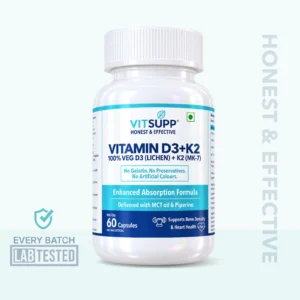
You should select the right vitamin D supplement that contains the RDA-level dosage, comes with necessary co-nutrients, and has the backing of extensive research for safety. VitSupp Vegan Vitamin D3+K2 MK-7 supplement comes with a study-backed formulation, tested for safety.
What is Vitamin D Toxicity and How Does it Affect the Body?
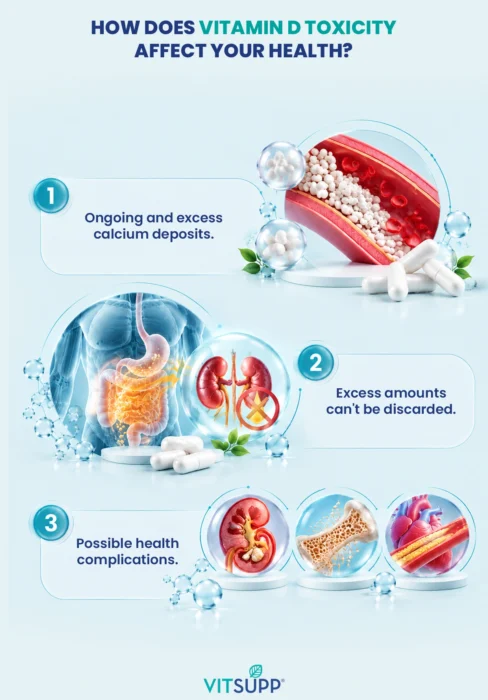
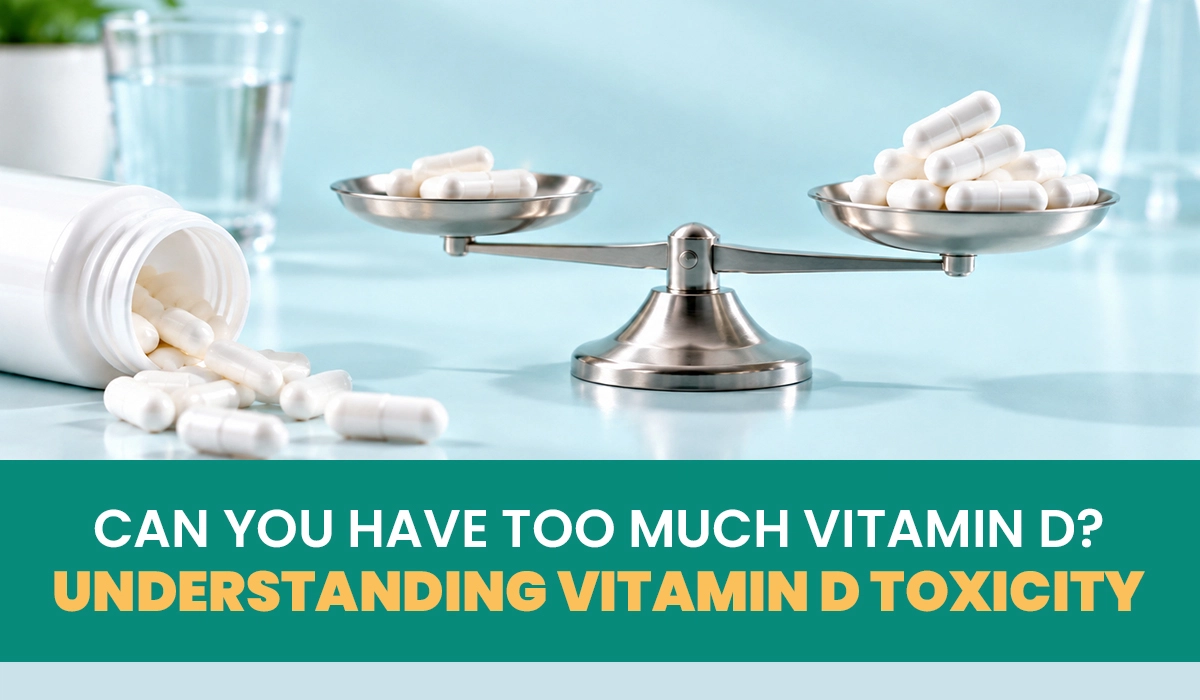
Vitamin D toxicity, while not very common, can occur when one consumes an excessive amount of Vitamin D regularly. According to the scientific evidence, your main concern should not be how Vitamin D itself can cause damage. But you should be more concerned about a rise in calcium levels in the blood. Over time, it can contribute to the onset of a condition called hypercalcemia. Here’s how:
1. Prolonged and excess calcium deposits – Vitamin D helps your body absorb calcium from the digestive tract. This is a prerequisite for normal bone mineralization and calcium-related processes. Prolonged consumption of Vitamin D in high doses may make the body absorb more calcium than it needs. That adds to calcium buildup in the bloodstream and health issues.
2. Discarding is not possible – While regular Vitamin D supplementation is not unsafe, excess consumption without medical supervision adds to the risk of vitamin D overdose. It doesn’t dissolve in water, so your body can’t discard it through urine.
3. Possible health complications – The excess amount gets accumulated in the body, and in rare cases, adds to the risk of developing kidney stones, according to HHP. It may also add to a condition called hypercalcemia, where excess calcium chokes arteries and soft tissues.
The supplement dose is not usually the contributing factor for Vitamin D toxicity. The duration of use, overall Vitamin D intake, and existing health conditions also matter.
How Much Vitamin D Is Too Much?
One common question related to Vitamin D daily requirement is what the required amount is and when it becomes an overdose. The answer is not a fixed number. Vitamin D requirements can differ based on aspects like age, health status, existing deficiency, sunlight exposure, and health conditions.
To understand the normal range, you must look into three different concepts: recommended intake, upper intake limits, and toxic doses. For most adults aged 19–70 years, the Recommended Dietary Allowance is 600 IU (15 mcg) per day, according to the NIH data.
However, some people with lower-than-usual vitamin D levels may require higher doses. But they should consume the higher Vitamin D daily dose under proper medical supervision. The NIH says 4,000 IU is the maximum tolerable upper limit for adult users.
But that does not mean 4,000 IU is the ideal daily dose for everyone. Someone being treated for confirmed vitamin D deficiency may need a higher dose temporarily under supervision. Continued consumption of high-dose vitamin D supplements adds to the risk of developing Vitamin D toxicity.
To deal with confirmed Vitamin D deficiency, using supplementation can be useful. However, you should choose a supplement with RDA-level vitamin D per dose. VitSupp Vitamin D3+K2 Supplement, for example, comes with an RDA-level dosage per capsule. This vegan, clean-label Vitamin D3 supplement does not contain anything in excess and has a study-backed formulation.
Vitamin D deficiency can be influenced by several lifestyle and environmental factors, particularly in urban settings. Understanding these factors can help you make more informed decisions about supplementation.
Learn more about the urban lifestyle factors that can contribute to vitamin D deficiency.
What Contributes to a Vitamin D Overdose and What Does Not?
The common perception behind vitamin D overdose is that people get it from either spending too much time in the sun or consuming too many Vitamin D-rich foods. But that is not exactly how overdosing takes place.
According to credible sources, the risk of vitamin D toxicity goes up when someone takes excessive amounts of vitamin D supplements for long periods without proper medical supervision.
1. One common reason is people self-adjusting supplement doses. In some cases, people with a previous vitamin D deficiency may carry on with a high-dose supplement even when Vitamin D levels have improved. They feel that maintaining a higher intake may offer them additional benefits.
2. Also, in some other instances, people combine multiple supplements that contain Vitamin D. When you choose a single, clean-label supplement, that may help avoid overdosing.
Now, let us look at factors that are unlikely to contribute to Vitamin D overdose.
1. Unlike supplements, sunlight does not add to the risk of Vitamin D toxicity. The human body’s natural regulatory mechanisms limit Vitamin D production from sunlight.
2. Eating vitamin D-rich foods is unlikely to add to toxicity risks.
Certain situations may require taking higher than usual doses of vitamin D, especially when coping with a case of severe deficiency. However, these approaches are for a limited period and done under medical observation. The goal of Vitamin D supplementation is not to take the highest possible dose. The aim is to maintain an appropriate intake according to individual needs.
What Are the Symptoms and Implications of Vitamin D Toxicity?
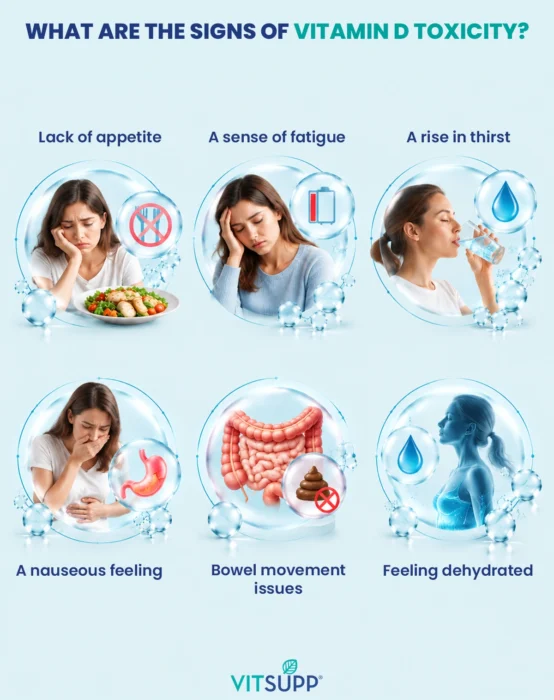
Vitamin D itself does not contribute to the toxicity symptoms. The majority of effects occur when uncontrolled Vitamin D intake adds to uncontrolled calcium absorption. This contributes to hypercalcemia, a condition in which unusually high levels of calcium in the blood are detected.
The main side effects of Vitamin D toxicity are:
- Loss of appetite
- Fatigue and weakness
- Increased thirst
- Nausea and vomiting
- Constipation
- Dehydration
Some may experience additional symptoms, owing to elevated calcium levels affecting multiple body systems, like confusion, difficulty concentrating, muscle weakness, etc.
In severe cases of Vitamin D toxicity, excessive calcium levels can affect the kidneys and other organs. Kidney function may slow down, and the risk of forming kidney stones is there, too. Since these symptoms can occur due to many different reasons, proper diagnosis by a certified healthcare professional is necessary.
How Can You Take Vitamin D In a Safe Way?
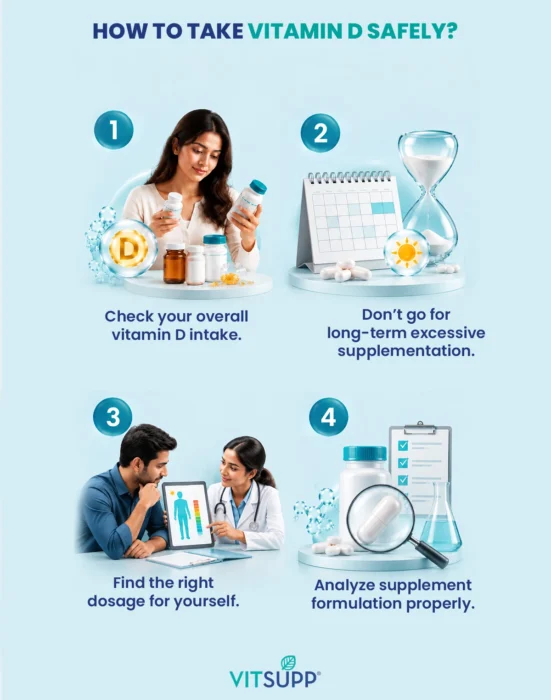
Vitamin D plays major roles in supporting calcium absorption, bone health, and normal body functions. However, for supplementing safely, your focus should not be on getting the highest possible dose. The priority should be understanding your individual needs and getting the matching dosage.
Check Your Total Vitamin D Intake
Before starting supplementation, check your total Vitamin D intake level. You may unknowingly combine multiple products containing Vitamin D, exceeding the daily vitamin D requirement.
Avoid Unmonitored Long-Term High-Dose Supplementation
Sometimes higher than usual Vitamin D dosage may be necessary for people coping with really low vitamin D levels. However, they are generally meant for a limited period. Excess vitamin D consumption for extended periods without guidance may contribute to elevated calcium levels and related complications.
Learn Your Apt Dosage
Not everyone with vitamin D deficiency needs the same amount of dosage per day. The Vitamin D daily dose may vary by age, life stage, health status, and individual situations. So, discuss your specific Vitamin D requirements with a healthcare professional before supplementing.
Check Supplement Formulation Carefully
To avoid the possibility of vitamin D overdose and resultant health issues, check supplement formulation before starting use. Does it adhere to recommended limits of vitamin D3 dosage? VitSupp’s vitamin D3 supplement adheres to RDA-level (600 IU lichen-based Vitamin D3 per capsule). It also undergoes extensive third-party lab testing for safety.
Why is VitSupp’s Vitamin D3 & K2 Supplement Ideal for Balanced Supplementation?
A balanced Vitamin D supplement will come with a well-researched formulation and adhere to recommended dosages. It should offer users an appropriate amount of Vitamin D3 while supporting absorption and nutritional needs. Let’s find out how VitSupp’s offering does the balancing.
- It comes with 600 IU of lichen-based Vitamin D3 (From Vitashine(r) per capsule, aligning with the RDA-level dosage for adults.
- The formulation also contains MCT oil and Piperine Extract 95% to support absorption.
- Vitamin K2 (MK-7) from BioEssence(r) is there to support calcium utilization by vitamin D3.
- It does not contain any unnecessary ingredients, preservatives, or fillers that can affect nutrient absorption or processing.
The supplement comes with an appropriate dosage of vitamin D3 and supports users in getting balanced nutrition. It fits the needs of users seeking Vitamin D supplementation without overconsumption and related health issues.
Want to learn more about vitamin D3 and K2? Read our guide to Vitamin D3 with K2 and understand how these two essential nutrients work together.
Conclusion
The importance of Vitamin D for several physiological processes is undeniable. But be mindful about adhering to the daily requirement of Vitamin D, especially when you use any supplement. Overdosing the vitamin for extended periods adds to the risk of developing vitamin D toxicity.
The ideal vitamin D daily intake may vary from one person to another. To understand the appropriate Vitamin D daily dose for your needs, seek proper medical consultation. It is crucial to understand the differences between a recommended intake and the highest possible intake limit.
The goal is not to consume Vitamin D in the maximum amount, but to take it in an amount matching your specific health needs. Using a supplement can be useful. However, you should check its formulation and dosage carefully. VitSupp’s supplement offering combines RDA-level vitamin D3 with K2 for desired absorption, along with MCT oil and 95% piperine. The approval from FSAAI adds another level of assurance.
Understanding the right dosage and factors that influence vitamin D absorption can help you supplement more effectively. Learn more about vitamin D absorption, carrier oils, and proper dosage : https://www.vitsupp.com/blog/vitamin-d-absorption-role-of-carrier-oils-proper-dosage/
FAQs
1. What are 5 physical signs you’re taking too much vitamin D?
When you consume excess amounts of vitamin D for an extended period, it may add to calcium levels in the bloodstream. Over time, it becomes a precursor to a condition known as hypercalcemia. This is often linked to vitamin D toxicity. There are some major symptoms of too much Vitamin D, according to credible sources.
- Nausea or vomiting
- Excessive thirst and frequent urination
- Loss of appetite
- Constipation or digestive discomfort
- Fatigue and muscle weakness
These symptoms are not specific to Vitamin D toxicity, and there can be other underlying reasons, too. If you experience these symptoms after taking high-dose vitamin D supplements, seek a medical diagnosis.
2. How do high-dose vitamin D supplements cause toxicity?
High-dose Vitamin D supplements can contribute to toxicity when you take them for extended periods, in unusually high amounts. Overconsumption of vitamin D adds to calcium absorption beyond what the body needs. This may add to the possibility of developing hypercalcemia. The excess calcium then gets deposited in soft tissues and may affect kidney function. The risk is not usually associated with vitamin D-rich food consumption or getting sun exposure.
3. What are the initial symptoms of excessive vitamin D intake?
The initial symptoms of excessive Vitamin D consumption are linked to rising levels of calcium in the bloodstream. As the calcium level in the bloodstream goes up with high vitamin D intake, some symptoms crop up. The early ones are:
- A feeling of tiredness
- Nausea and vomiting
- A lack of appetite
- Increased thirst
- Frequent urination
- Bowel movement issues
The tricky thing is that the same symptoms can occur with other health conditions. So, you should not count on these symptoms alone to determine Vitamin D toxicity as the root cause. A detailed analysis by a healthcare professional can show the truth.
4. Can vitamin D toxicity be reversed?
Yes, it may be possible to reverse vitamin D toxicity, particularly if it gets identified early. The first thing is stopping excess vitamin D supplement usage – the root cause. It should be done under expert medical guidance.
A healthcare professional will monitor the levels of vitamin D and calcium in the bloodstream through specific tests and tools. For cases of severe hypercalcemia, they may recommend more specialized treatments. The recovery will depend on vitamin D and calcium levels in the person. If there is any organ damage, it may take longer.
5. Can you have too much vitamin D from supplements?
Yes. You can end up consuming too much vitamin D from supplementation. When you keep taking excessive doses of vitamin D through supplements for a long time, that adds to the possibility of vitamin D toxicity. Not all supplements adhere to the RDA limits. Choosing a vegan vitamin D supplement like VitSupp that adheres to the limit is ideal.
Some people with low levels of vitamin D may need higher than normal dosages. But that must be taken under expert medical guidance, and for a limited period.
6. How is vitamin D toxicity diagnosed?
Vitamin D toxicity diagnosis involves a mix of symptoms, supplement history, and tests. The symptoms overlap with symptoms of several different health conditions, so you cannot count on Vitamin D toxicity symptoms alone. Here is what a healthcare professional will analyze to ascertain the toxicity.
- The history of vitamin D consumption, through supplements and other means.
- A 25-hydroxyvitamin D blood level test.
- High calcium levels in the blood.
- Kidney health tests.
The diagnosis depends on assessing the overall scenario, rather than the supplement dose alone.
7. How is vitamin D toxicity treated?
To treat vitamin D toxicity, focus on addressing the root cause – Vitamin D overdose. First, stop or reduce excessive vitamin D supplementation under medical supervision. The treatment will depend on the levels of Vitamin D and calcium. The doctors will also look at any complications and the duration of the excess intake.
As several vitamin D toxicity symptoms are related to elevated calcium levels, the treatment focuses on bringing it back to normal levels.
- Excessive supplementation has to stop.
- There can be specific diagnostic tests for checking blood calcium, Vitamin D levels, and kidney function.
- In severe cases, specialized medical treatment may be necessary to protect organ function, especially kidney function.
8. How much vitamin D should I take daily?
The normal range for vitamin D is not the same for every person. The appropriate amount of vitamin D will vary based on aspects like existing vitamin D level, age, health conditions, and individual needs. The NIH recommends an RDA of 600 IU for adults aged between 19 and 70 years. For those above 71 years, the limit is 800 IU per day.
However, those with confirmed vitamin D deficiency may need higher than normal amounts of the vitamin for a limited period. It needs to be done under medical observation. The maximum daily dose of Vitamin D, as per the same NIH guidelines, is 4000 IU a day. Ultimately, your Vitamin D dosage will depend on present levels, health conditions, lifestyle, and other factors.
9. Who is at risk of vitamin D toxicity?
Vitamin D toxicity is not very common. It is mostly associated with taking excessive vitamin D through supplementation for a long period. People who do so without any monitoring or professional guidance face a high risk.
Also, those who combine several products containing Vitamin D can face this risk. At times, people carry on with high-dose supplementation even after their vitamin D levels are stabilized. Proper supplementation should focus on meeting individual nutritional needs rather than taking very high doses.
10. Can you get too much vitamin D from sunlight?
No. You are unlikely to get a vitamin D overdose from sunlight exposure. While sunlight does activate Vitamin D production in the skin, excess sun exposure will not continue increasing Vitamin D production excessively, according to credible sources. However, prolonged skin exposure to UVB rays can add to the risk of skin damage.