

A significant percentage of Indians in urban areas (approx. 70% or more) suffer from magnesium deficiency, but choosing the best magnesium supplement is tough. When you visit a pharmacy or scroll online for a supplement, you may feel baffled. With hundreds of brands selling supplements in different forms like magnesium glycinate, citrate, oxide, etc., what do you pick? The confusion over how to choose a magnesium supplement that works for your needs is real.
You need to cut through the clutter and find the right supplement with high magnesium bioavailability. What truly matters is how well your body absorbs magnesium, the type of magnesium used, and the details of the formulation.
Research shows that you need a chelated magnesium bisglycinate supplement for maximum absorption and desired results. In this form, magnesium binds with an amino acid, and the absorption rate improves. This makes it easy to avoid side effects as well.
VitSupp’s chelated magnesium bisglycinate supplement uses a highly bioavailable form, has no unwanted fillers or chemicals, and is also suited for vegan users.
Why Magnesium Matters for Your Health?
Magnesium doesn’t usually get the same attention as vitamins. But this mineral plays a foundational role in how your body functions. Studies show it is involved in more than 300 biochemical reactions that keep your body stable and healthy.
Let’s have a look at the roles played by magnesium in the human body:
- It helps regulate blood vessel function and supports normal blood pressure. That’s why individuals coping with blood pressure issues can benefit from its intake.
- Magnesium has a direct impact on regulating the muscles and the nervous system. It helps your muscles relax after contraction, reducing the likelihood of cramps and tension.
- It plays a role in energy generation, helping convert food into usable energy at the cellular level.
- Magnesium also plays a major role in calcium absorption in the body, a necessity for bone and teeth development.
In India, a majority of the population doesn’t get enough magnesium through food, and certain lifestyle factors also aggravate the deficit. You can buy magnesium supplements online to deal with the deficit, but choosing the right one can be tough. Look for a magnesium supplement without fillers, soy, or gluten, like the supplement by VitSupp with a highly absorbable magnesium type.
Are You Getting Enough Magnesium?
Why do you think a majority of urban Indians do not get enough magnesium daily? The reasons are numerous.
- People relying more on processed, refined diets consume fewer traditional whole foods and get less natural magnesium from food.
- Over the decades, Indian soil has lost mineral density, making even fresh fruits and vegetables lacking in nutrients like magnesium.
- Common medications like antacids, PPIs, and diuretics may affect magnesium absorption by the body.
- Those consuming excess amounts of alcohol find it hard to retain magnesium, and that adds to the deficiency.
- Additionally, people with specific conditions like celiac and Crohn’s disease find it hard to absorb this mineral from food optimally.
Common Signs of Magnesium Deficiency
You may find it tough to spot Magnesium deficiency, but your body will give away certain signals. These include:
- Increased stress, irritability, or anxiety
- Frequent muscle cramps or spasms
- Fatigue or low energy levels
- Headaches or tension
- Irregular heartbeat or palpitations
- Poor sleep or difficulty relaxing
However, these symptoms are easy to overlook and can also be caused by other health factors. Proper medical consultation and diagnosis can reveal the truth. If you are found to be magnesium deficient, using a gentle magnesium type-based supplement can be helpful.
Want a complete breakdown of magnesium types, benefits, and how it works in your body?
Explore our detailed magnesium guide for expert insights before you choose your supplement.
Why Most Magnesium Supplements Don’t Work as Expected?
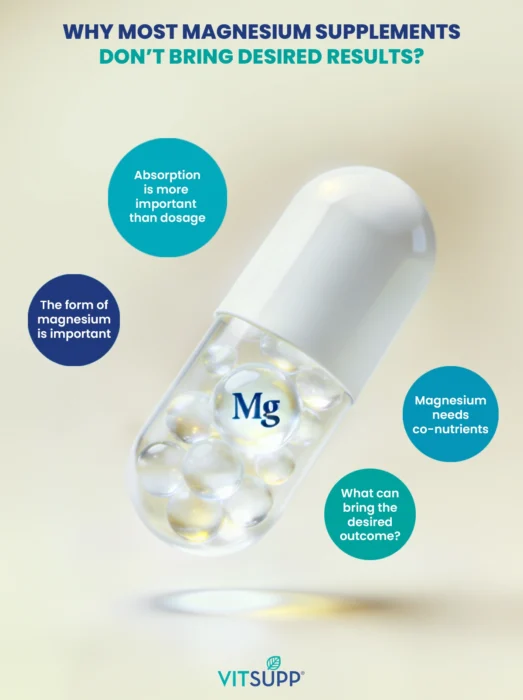
Did you think taking a magnesium supplement would be enough to resolve the deficit? That’s where most users get stuck. Thousands have tried taking magnesium consistently and following the dosage, yet have not felt any meaningful difference. The deficiency symptoms persist.
It is not about the effort; it’s more about using the right form of magnesium. Your body needs a supplement with high magnesium bioavailability, preferably gentle magnesium types.
The Right Form of Magnesium Matters
Magnesium isn’t a single, uniform ingredient. It comes in different forms, and the human body absorbs each one very differently.
You will find that a majority of magnesium supplements contain forms like magnesium oxide. The higher elemental magnesium content may look promising, but it has poor bioavailability. A major portion will pass through your digestive system without being utilized. The bottom line is that you will be taking magnesium, but your body won’t absorb much of it or retain it effectively.
Absorption Matters More Than Dosage
The effectiveness of magnesium doesn’t depend on how much you take; how much your body can absorb and use matters more. Forms like magnesium glycinate, citrate have better bioavailability than oxide. However, for optimal absorption, you should consume forms like chelated magnesium bisglycinate.
Magnesium Doesn’t Work Alone
Even if you take magnesium in a bioavailable form, it still needs specific nutrients to perform well in the body. The human body needs specific cofactors—like vitamin B6 and vitamin D with magnesium for physiological functions. So, ensure your body gets the intake of these nutrients for combined benefits.
What Brings the Desired Results?
You need highly absorbable magnesium in a formulation that aids the absorption process. The focus should not be on the percentage of magnesium in the supplement, but on how effective the formulation is. When your body can absorb the mineral easily, it can perform multiple functions more effectively.
A magnesium supplement without fillers and unnecessary additives, containing highly absorbable magnesium forms, is ideal for managing magnesium deficit. This is what you get from VitSupp: a clean-label, vegan magnesium supplement with a research-backed formulation and the added assurance of GMP and FSSAI.
How to Choose the Right Magnesium Type for Your Health Needs?
Taking magnesium supplements can help you manage specific health issues better, but only when you take the right form and at the appropriate dosage. Different forms interact with the body in different ways. Before looking for a magnesium supplement guide, think of your specific health needs, like sleep, stress, or muscle recovery.
Using forms like magnesium glycinate helps you deal with several health issues effectively. Here’s how:
1. Better Sleep – Magnesium helps regulate neurotransmitters involved in sleep, including GABA. That signals your brain to slow down and prepare for rest.
2. Stress – Chronic stress can deplete magnesium levels, while low magnesium can aggravate stress levels. It runs like a loop. The apt magnesium supplement helps regulate the nervous system and supports cortisol balance. Forms like glycinate have a calming effect on the nerves, and taking it may help reduce irritability and enhance mood stability.
3. Relief from Fatigue – Muscle cramps, stiffness, or post-workout fatigue can be a result of magnesium imbalance. This mineral helps in muscle contraction and relaxation, and a deficit may add to muscle cramps, twitching, or soreness.
Using highly absorbable magnesium forms may bring better results over other forms like Malate and Citrate, as the former is gentle on the gut and has higher bioavailability.
Before you choose a supplement, understand how it affects your digestion.
Explore our full guide on magnesium and digestive health.
How Much Magnesium Do You Actually Need?
Even after realizing they are magnesium-deficient, most people feel unsure about the amount of magnesium they need.
The Need to Look Beyond a Number
The general recommendation is to take around 300–400 mg of magnesium per day, but that looks good on paper alone. You have to think of factors like age and gender. Besides, aspects like chronic stress, processed diets, depleted soil quality, and even certain medications can lower your magnesium levels silently.
So, the safe dosage of magnesium for one may not be suited for another.
The Dosage Trap
Increasing the dosage will not help much if the mineral does not get absorbed well. Taking magnesium in excess may lead to discomfort, and eventually, your body can’t utilize it. You need a supplement with high magnesium bioavailability and must take it in the right dosage.
Why Does the Formulation Matter?
Several magnesium supplements highlight the amount of magnesium in their formulations, but you must look beyond that number or percentage. The number doesn’t reflect how much your body actually receives or processes. Forms like magnesium oxide look strong on paper but are poorly absorbed. However, magnesium bisglycinate is far more usable by the body. You need a more thoughtful approach to supplementation.
A highly absorbable form of magnesium, which you find in VitSupp’s offering, binds magnesium with glycine, and that helps improve absorption while also extending a calming effect on the nervous system. This makes a perceptible difference. It has 650 mg of magnesium bisglycinate per capsule, suited for safe, long-term usage by most users.
Just don’t add magnesium into your routine, but choose the form it can recognize, absorb, and actually use. Move away from “more” to “what actually works”.
When and How Should You Take Magnesium for Best Results?
Once you know how to choose a magnesium supplement and get the right one, learn when the best time to take it is. Also, think of what your primary need is for using the supplement.
- For better sleep, take it about an hour before bedtime. This aligns with the body’s biological wind-down phase. The supplement then supports relaxation, helping your body toward deeper sleep.
- For stress recovery, use the supplement consistently at the same time daily. Gradually, this supports a more balanced nervous system and stress regulation. The effect is cumulative here.
- For muscle recovery and fatigue, try using the supplement after physical activities. Then your body shifts to repair mode, and muscles begin to relax.
For desired results, take a highly absorbable magnesium form, offered in a non-buffered, vegan supplement. With optimal absorption and consistent timing, you may experience the desired benefits.
Choosing the Right Supplement for Bioavailability, Purity, and Safety – Why VitSupp Wins?
You need a clean magnesium supplementwith a highly absorbable magnesium form in the right amount to get the desired health benefits. The focus should be on what your body actually needs and can use, not the branding.
1. Bioavailability – It is about how efficiently magnesium is absorbed and utilized in your body. Supplements with forms like magnesium oxide score poorly here. A chelated magnesium bisglycinate supplement gets absorbed better, giving your body the mineral for proper usage. VitsUpp builds around this principle – Not maximum dosage but usability.
2. Purity – You must use a magnesium supplement without fillers. Products with formulations containing soy, gluten, or artificial additives can cause side effects and slow down the actual absorption process. VitsUpp offers a clean, oxide-free supplement with no animal extract.
3. Safety – To use a magnesium supplement for the long term, you must analyze the safety. Go for a vegan magnesium supplement with a research-backed formulation that undergoes extensive third-party testing. It must be gentle on the gut and contain no harsh ingredients or allergens.
VitsUpp brings you a supplement with high magnesium bioavailability and no unnecessary ingredients. You get one clean-label, vegan-friendly supplement, without any confusing variants to pick from.
Conclusion
Magnesium deficiency can be hard to detect, but your body feels it. It shows up in signs like restless sleep, constant stress, muscle fatigue, and difficulties in recovering energy. Over time, these small imbalances begin to affect your overall wellness and fitness, even your mood and energy levels.
You must know how to choose a magnesium supplement that helps address those issues without causing side effects. Regular supplements with forms like magnesium oxide do not get well-absorbed, and they can irritate your stomach. Go for a chelated magnesium bisglycinate supplement for better bioavailability and a reduced risk of side effects.
VitSupp offers a clean-label, vegan magnesium supplement without any harsh fillers or unnecessary additives, suitable for different health needs and safe for long-term use. The approval from FSSAI and GMP certification brings added peace of mind.
Using a highly bioavailable, pure, and safe formulation offers your body what it truly needs and can utilize, too.
FAQs
1. How do I choose the right magnesium supplement?
To choose the right magnesium supplement, you must focus on key aspects like absorption capacity, formulation quality, and purpose. Not all magnesium forms are equally effective. For example, magnesium oxide has poor bioavailability, so it is not absorbed well by the body. Other forms like malate and citrate fare better. However, chelated forms such as magnesium bisglycinate are more bioavailable, and so your body can absorb them better.
Also, check for supplements with a clean formulation,withoutunnecessary fillers, artificial additives, and gelatin, etc. Products with a study-backed formulation, adhering to GMP protocol, fit better.
2. What type of magnesium should I take?
You should take a type of magnesium that your body can easily absorb and one that does not cause many side effects. Among the available forms, magnesium bisglycinate is thought to be ideal for safe and long-term usage. It is a chelated form, meaning magnesium is bound to an amino acid, which improves absorption. Unlike Magnesium oxide, it does not irritate your digestive system or create strong laxative effects. The supplement may work better if the formulation does not contain unnecessary fillers and additives.
3. Which magnesium supplement is best for absorption?
Magnesium absorption depends largely on its chemical composition. One example of a highly absorbable magnesium type is magnesium bisglycinate, which is a chelated form. Here, magnesium is bound to amino acids that help the body recognize and utilize it efficiently. On the contrary, commonly used forms like magnesium oxide have much lower absorption rates. If you ingest these forms, a large portion will pass through the body unused. For consistent benefits, you should go for a highly absorbable magnesium type, presented in a clean formulation.
4. Is magnesium bisglycinate better than magnesium oxide?
Yes—magnesium bisglycinate is generally considered superior to magnesium oxide for daily supplementation needs. The difference lies in the absorption rate and tolerability. Magnesium bisglycinate is a chelated form, and so your body can absorb it easily and in higher amounts. It is gentle on the stomach. A form like magnesium oxide has low bioavailability and is known to produce strong laxative effects. It is often used for short-term issues like constipation relief. For long-term health needs like better sleep, stress support, and muscle recovery, Magnesium bisglycinate is thought to be more effective.
5. What is chelated magnesium, and why is it important?
Chelated magnesium refers to a form of the mineral bound to an organic compound. In the case of magnesium bisglycinate, the agent is an amino acid like glycine. This binding improves how your body absorbs and utilizes magnesium. Chelated magnesium passes through amino acid pathways, which may add to its efficacy. Forms like magnesium lactate or oxide have low absorption, while variants like L-Threonate and bisglycinate offer higher absorption rates. Chelation helps the supplement act more gently on the digestive system. Your body is able to use the chelated forms easily for various physiological functions.
6. What is the best magnesium for sleep?
Study results indicate the form of magnesium ideal for sleep is citrate, but it also has potential laxative effects. So, magnesium bisglycinate is considered to be more feasible for sleeping needs. The latter is also calm on the digestive tract, and so the possibility of stomach upset is minimal. Since it has a mix of magnesium with glycine, an amino acid with calming and relaxation-supporting properties, the effect on the body’s natural sleep cycle is better. It may help your body unwind gently rather than forcing sedation.
7. Which magnesium is best for muscle cramps?
Magnesium bisglycinate is thought to be an effective form of the mineral for muscle cramps. Its high absorption and muscle-relaxing properties make it more viable than other forms like magnesium malate and sulphate. Your body can easily absorb bisglycinate, and then it works on the cellular level. Since it is gentle on the stomach, you can reuse it without worries about laxative effects. Other forms do not score as high on bioavailability as bisglycinate, and so they may offer mild to moderate relief.
8. How much magnesium should I take daily?
The recommended daily intake of magnesium varies by age and gender. However, for most adults, the ideal range is 310–420 mg a day. Again, this can vary for people coping with conditions like Crohn’s disease or IBS, which may limit their nutrient absorption capacity from food. Those deficient in magnesium can benefit from using a magnesium supplement without fillers. However, the focus should be more on safe dosage of magnesium, not just higher amounts. Taking high doses—especially of poorly absorbed forms may cause digestive discomfort without desired benefits. Using a supplement with gentle magnesium types can be beneficial.
9. Which magnesium supplement is stomach-friendly?
Magnesium supplements can sometimes add to digestive discomfort, but it depends on which form is used. Those using poorly absorbed forms like magnesium oxide or citrate in higher doses usually face this. To reduce the impact on the stomach, you can use a highly absorbable magnesium form like magnesium bisglycinate. It is a chelated form, and so is less likely to draw water into the intestines. That helps lower the chances of bloating or a laxative effect. When you take a clean-label chelated magnesium bisglycinate supplement, it tends to be easier on the digestive system.
10. What are the benefits of magnesium bisglycinate?
Magnesium bisglycinate is a chelated form with a high absorption rate, and it is light on the gut, too. As the form contains glycine, your body can use it easily. When you consume a chelated magnesium bisglycinate supplement without fillers in the right dosage, the benefits may become noticeable. People using these supplements often report an improvement in sleep quality, better muscle recovery, and stress response. It also has a calming effect on nerves. Unlike some other magnesium forms, it typically does not cause digestive discomfort.






Magnesium deficiency is definitely an overlooked issue, especially in urban areas. It’s good to know that choosing a supplement with high bioavailability like magnesium bisglycinate can really make a difference in absorption and effectiveness.
Thanks for breaking down the importance of bioavailability when choosing a magnesium supplement—especially the role of chelated forms like magnesium bisglycinate. It’s easy to get caught up in brand names or price, but understanding how your body absorbs magnesium really makes a difference. This guide helps cut through the noise and focus on what actually matters for effectiveness.
Pretty! This has been an extremely wonderful post.
Thank you for supplying these details.
The bioavailability point really stood out, especially how chelated bisglycinate absorbs more reliably than plain magnesium oxide. It’s helpful to see the cost-vs-absorption trade-off laid out so clearly.