
Vitamin D deficiency is widespread in India, and it’s a reason behind the surge in Vitamin D supplement usage. Do you think taking a vitamin D supplement is enough to fulfill the deficit? That’s a mistake a majority of users make. They struggle to meet the required vitamin D intake despite using supplements because they are taking Vitamin D2 supplement and are unaware of the difference between vitamin D2 and D3.
Taking a vitamin D supplement with a high dosage of the vitamin would not work unless it is absorbed by your body. The lack of awareness of vitamin D2 vs D3 and their usefulness makes things more complicated. A study mentions vitamin D3 works better than D2 and can be ideal to manage the deficiency. They do not fare the same in raising and maintaining blood vitamin D levels, according to the findings.
In urban India, millions struggle to manage their vitamin D deficiency. With dietary factors, pollution, and genetic roots limiting your natural sources of vitamin D, you may benefit from using a vitamin D3 supplement. But the key thing is finding the right supplement with high-quality vitamin D3, taken at the optimal dosage, along with the necessary cofactors.
In this blog, we will learn the key differences between vitamin D2 and D3, the scientific findings on their benefits, and ways to choose the right vitamin D3 supplement. You will also learn why the VitSupp Vitamin D3+K2 supplement is the ideal solution for your needs.
What Is Vitamin D and How Does It Work in Your Body
Vitamin D is responsible for a number of physiological activities in your body.
- It helps your body absorb calcium, a prerequisite for building and maintaining bones and teeth.
- Besides, this vitamin also supports normal muscle function, nerve signaling, and immune function in your body.
- People with chronic low Vitamin D levels tend to develop osteomalacia and other bone problems, according to study findings.
Your body gets vitamin D from three main sources: foods, sun exposure, and vitamin D supplements. When your skin is exposed to sunlight, the body starts producing vitamin D naturally. You also get this vitamin from certain foods, including fatty fish, fish liver oils, cheese, egg yolks, etc.
Interestingly, the vitamin D you get from sunlight, food, or supplements gets converted by the liver into 25-hydroxyvitamin D, or 25(OH)D. This is the main marker doctors use to assess vitamin D status in blood tests. When they talk about improving vitamin D levels, they usually refer to 25(OH)D levels in the blood.
That is where the difference between vitamin D2 and D3 becomes clear. Both forms belong to the same vitamin family, but they differ in performance for supporting and maintaining healthy vitamin D levels.
Vitamin D2 vs D3: What are the Key Differences?
When talking about vitamin D supplements, many people assume there is only a single form. The reality is that most vitamin D supplements contain one of the 2 main forms: vitamin D2 or vitamin D3. The key differences are in their sources and how the body processes them.
Vitamin D2 or Ergocalciferol is found mostly in plant-based sources. You will find it in fortified foods such as cereals and some plant-based milk types. Vitamin D3 or Cholecalciferol is the type that your body naturally produces during sunlight exposure. You can eat foods that contain vitamin D3, including fatty fish, egg yolks, and liver. Notably, you can find vitamin D2 and D3 in several OTC supplements.
Both D2 and D3 ultimately serve similar purposes in your body. They help maintain healthy levels of vitamin D in the body. However, the difference in their composition affects how they are converted and utilized post-consumption. Both these forms can help you manage vitamin D deficiency, but a major study finding hints at their varied performance in raising vitamin D levels in the bloodstream.
Here is a detailed comparison that will clarify the difference between vitamin D2 and D3:
| Factor | Vitamin D2 (Ergocalciferol) | Vitamin D3 (Cholecalciferol) |
|---|---|---|
| Source of Vitamin | Plant-based (mushrooms, fortified foods) | Sun exposure + animal-based foods |
| Natural Production | Not produced in the body | Produced in the skin via sunlight |
| Common Use | Often used in prescription supplements | Common in daily vitamin D supplements |
| Effectiveness | Less effective in raising vitamin D levels | More effective than vitamin D2 |
| Stability in Body | Breaks down faster | Stays longer in the bloodstream |
| Bioavailability | Lower | Higher (better utilization) |
| Dietary Sources | Mostly in fortified foods | Fatty fish, egg yolks, liver, etc |
| Suitability | Vegetarian-friendly | Also available in vegan (lichen-based) form |
What Does Science Say on the Efficiency of Vitamin D2 vs D3
When the focus is on choosing between vitamin D2 and vitamin D3 for supplementation, you should check out the scientific study findings. This will give you a better and clearer idea compared to checking the brand claims.
A major study points out that vitamin D3 generally helps raise and maintain 25(OH)D levels better than vitamin D2. While both forms can help improve vitamin D status, vitamin D3 tends to show a greater increase in total 25(OH)D in healthy adults compared to vitamin D2.
While taking vitamin D2 can still be useful for raising vitamin D levels, using vitamin D3 tends to bring more sustained and effective outcomes. That is why people coping with Vitamin D deficiency symptoms should preferably go for a balanced vitamin D3 supplement.
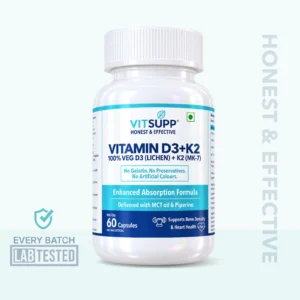
VitSupp’s Vitamin D3+K2 supplement, with 600 IU Vegan Vitamin D3 + 45 µg K2 MK-,7 eases absorption and comes without unwanted fillers or harsh additives.
Why Vitamin D Deficiency is So Commonplace?
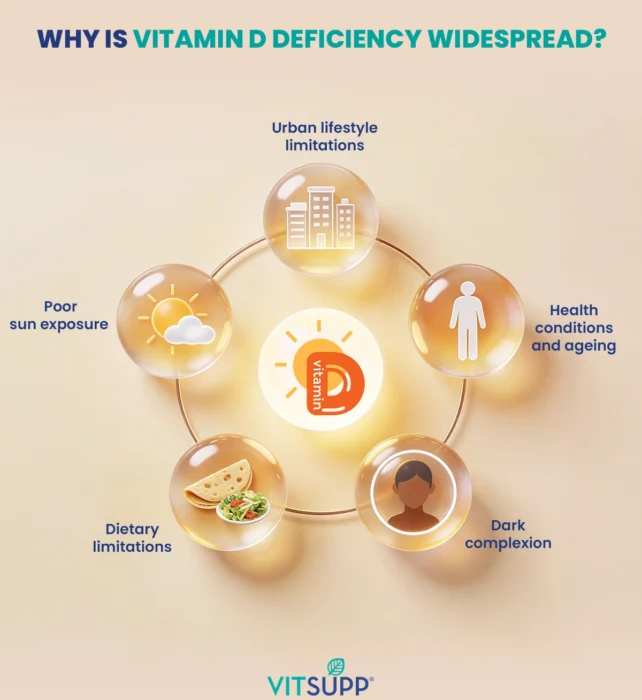
Vitamin D deficiency in India is widespread, and there are numerous reasons for that. Let’s look at the top causes of vitamin D3 deficiency:
Inadequate Sun Exposure
Millions of Indians cope with poor sun exposure, more so those living in urban regions. When you spend the majority of your time indoors, at home, or at the office, your skin does not get enough exposure to UVB rays. This, coupled with the growing use of sunscreen products, reduces the body’s ability to produce vitamin D naturally.
Urban Lifestyle Conditions
You may be unaware of how living in dense, polluted urban regions can affect your vitamin D intake, day by day. Those living in cities with high pollution levels get limited UVB exposure because pollutants in the air can partially block these rays.
Dark Skin Tone
Another top reason for vitamin D3 deficiency is skin tone and pigmentation. People with darker skin have more melanin, and it adds to the effect of sunscreen. This reduces the capacity to produce vitamin D naturally from sunlight exposure for such people.
Dietary Factors
Some foods contain vitamin D, but the amount may not be enough for your daily dietary limits. At the same time, eating foods that contain vitamin D3, likefatty fish and egg yolk, can be useful for vegetarians who do not have an option. Not everyone can manage to get enough fortified foods serving as vitamin D3 sources as well.
Aging and Health Conditions
As you age, the skin’s natural ability to synthesize vitamin D slows down. This, along with specific health conditions like celiac disease, Crohn’s disease, or kidney disorders, can adversely affect vitamin D absorption or metabolism.
All these factors can limit your vitamin D intake, adding to the possibility of developing vitamin D3 deficiency. You can start using a clean-label vitamin D3 supplement with vitamin K2, in MCT oil as a carrier, to better manage your situation. This is where using VitSupp’s vegan Vitamin D3 supplement fits in well.
Still wondering how low vitamin D can impact your health?
Explore our detailed guide on 14 diseases caused by vitamin D deficiency to understand the real risks and why choosing the right form of vitamin D matters.
Vitamin D2 vs D3: Which One Should You Choose for Supplementation?
To cope with vitamin D3 deficiency, you may start using a supplement, but the point is choosing between vitamin D2 and D3. For most people, Vitamin D3 comes across as the more feasible choice. Here’s why:
- Better Efficacy – Major studies have shown Vitamin D3 is more effective than D2 for raising and maintaining blood levels of vitamin D. It also stays in the bloodstream longer.
- Better Bioavailability – Your body tends to absorb and utilize Vitamin D3 better than D2. So, when you take quality vitamin D3 supplements, you may experience enhanced bioavailability.
- Consistent Effects – Research shows that vitamin D3, even when taken in lower doses, produces more consistent results over time than D2.
This makes vitamin D3 more suitable for supplementation needs. Stable vitamin D levels support immune function, bone health, and overall well-being, and taking a stable, bioavailable form is advisable.
How to Choose the Ideal Vitamin D Supplement
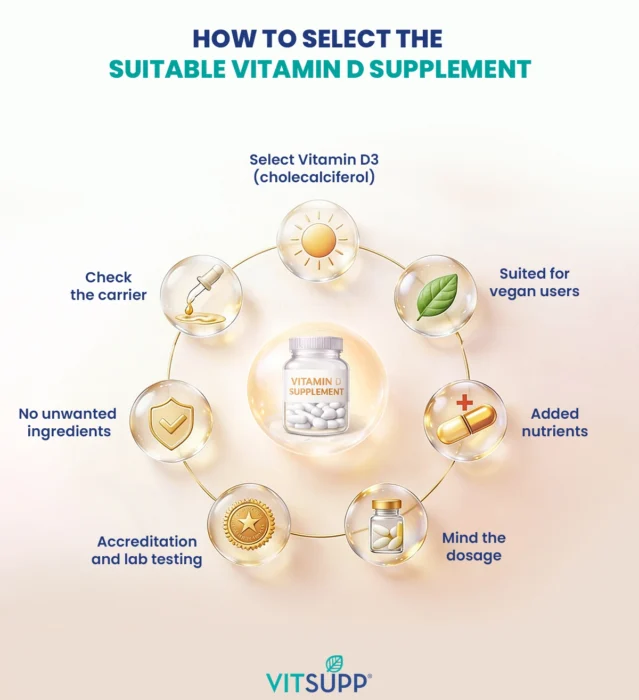
Once you understand the difference between vitamin D2 and D3, you may choose the latter for supplementation needs. Even picking the right supplement may not be easy. You must look at the core aspects to compare and choose a suitable supplement to manage vitamin D3 deficiency.
Choose Vitamin D3 (Cholecalciferol)
As pointed out earlier, vitamin D3 tends to be more effective than D2 for absorption and utilization purposes. It will be easier to support the required blood levels of vitamin D.
Look at the Form
Go for a Vitamin D3 supplement that comes with a suitable carrier. Since it is fat-soluble, you should ideally seek a supplement containing MCT oil as a carrier, such as the VitSupp Vitamin D3 + K2 MK-7 supplement.
Vegan Friendly Form
If cultural norms or dietary habits stop you from consuming animal sources of vitamin D, go for a supplement with vegetarian sources of vitamin D3. Those with plant-based D3 sourced from lichen, the same form the human body naturally uses, would be ideal.
Additional Nutrients
You should consider a vitamin D3 supplement containing Vitamin K2, as the latter supports calcium metabolism better. Supplements with Vitamin K2 MK-7 help direct calcium to the bones and teeth, and lower the risk of deposits in arteries and soft tissues.
No Unnecessary Fillers/Additives
Always look for supplements that do not contain unnecessary fillers, preservatives, or allergens. Check the formulation for any mention of substances like gelatin, soy, and artificial flavors.
Third-Party Testing and Accreditation
How do you choose the ideal vitamin D3 K2 supplement amidst hundreds of similar-looking products? Look for brands that are clear about getting their products tested by reputed third -party labs. Also, supplements coming with FSSAI and GMP certifications, like the VitSupp Vitamin D3 + K2 MK-7 supplement, get an extra edge here.
Check the Dosage
Before buying any vitamin D3 supplement,be aware of the ideal vitamin D3 dosage for adults. Most adults typically need 600 to 800 IU daily, though people dealing with severe deficiency may need an enhanced dosage.
While Vitamin D3 is the better choice over D2, its effectiveness improves even more when combined with the right nutrients.
Read our detailed guide on why vitamin D needs vitamin K to maximize your supplementation results.
What are the Mistakes to Avoid with Vitamin D Supplementation?
To manage vitamin D3 deficiency, just choosing a suitable supplement is not enough. You must be aware of the commonplace mistakes made by most users in this regard.
- Choosing a supplement containing vitamin D2 may make it hard to raise and maintain vitamin D blood levels. Vitamin D3 scores better in absorption and stays stable in the bloodstream.
- Vitamin D is fat-soluble, and taking the supplement on an empty stomach or without healthy fats can reduce its absorption. Taking meals with healthy fats like nuts or avocado helps.
- Vitamin D3 alone may not be enough to support your bone health or heart functions. For proper calcium usage, you should use a supplement that contains both vitamin D3 and K2.
- Don’t expect any overnight results after starting use of vitamin D3 supplements. It may need several weeks of consistent supplementation to experience a rise in vitamin D levels.
- Relying solely on a vitamin D supplement is not enough. You should complement it with eating vitamin D-rich foods naturally and getting exposure to sunlight when possible.
Conclusion
By now, you should have a clear understanding of the differences between vitamin D2 and D3 and the implications of vitamin D deficiency on your health. While both forms can be helpful to manage vitamin D deficiency issues, vitamin D3 is deemed the better choice for raising and maintaining healthy vitamin D levels in the bloodstream. This has been backed by key study findings, too.
While using a suitable vitamin D3 supplement can benefit you, complement it by eating foods that contain vitamin D and getting sun exposure when possible.
Remember, to address vitamin D3 deficiency, you must be careful when choosing a supplement. Check the formulation for additives, allergens, etc, and find out if the product meets FSSAI and GMP standards or not.
A clean-label Vitamin D3 supplement containing K2 MK-7 and an MCT oil base, like the offering of VitSupp, is ideal.
FAQs
1. What Happens if You Take the Wrong Vitamin D?
When you take a form of vitamin D that is not suitable for managing your health conditions or deficiency, the benefits will be limited. Both vitamin D2 and vitamin D3, for example, help improve your vitamin D levels. But studies reveal vitamin D3 is more effective and has better bioavailability. So, your body is able to absorb and use it more efficiently. Vitamin D2 is less stable in the bloodstream and breaks down faster. So, it may not be suited for long-term supplementation needs.
2. Which Vitamin D Is Best for Severe Deficiency?
For severe vitamin D deficiency, vitamin D3 (cholecalciferol) is what nutrition experts recommend. Several studies show that vitamin D3 is more effective than vitamin D2 at raising and maintaining blood levels of vitamin D. This is more applicable to people dealing with very low levels of vitamin D. Sometimes, doctors advise such people to take higher doses of vitamin D3 than usual. However, once the levels shot up, the dosage may have to be scaled down. You can take D3 supplements with a dosage of around 600 IU per capsule.
3. What Is the Difference Between Vitamin D2 and D3?
The main difference between vitamin D2 and D3 is in their source and biological effectiveness. You get Vitamin D2 mostly from plant-based sources, such as fungi and yeast, and fortified foods like some plant-based milks and cereals. Your body naturally generates Vitamin D3 during sunlight exposure. It is also found in foods like fatty fish, egg yolks, cheese, etc.
Vitamin D3 is more efficient at raising and maintaining blood levels of vitamin D, according to research data. While Vitamin D2 can also raise vitamin D levels, it is less stable in the body and breaks down faster than D3.
4. Is Vitamin D3 Better Than Vitamin D2?
Yes, vitamin D3 is generally thought to be better than vitamin D2 for raising and maintaining desired vitamin D levels in the body.
Your body can absorb and use it more efficiently compared to D2, as several study findings show. Besides, Vitamin D3 stays in the bloodstream longer and has more lasting effects on vitamin D levels. Healthcare professionals generally recommend vitamin D3 supplements to help patients cope with vitamin D deficiency. Some prescription cases may still pick Vitamin D2, but for general supplementation, it is usually not the first choice.
5. Why Is Vitamin D3 More Effective Than D2?
Vitamin D3 (cholecalciferol) is generally deemed as more effective than vitamin D2 (ergocalciferol). Here’s why:
Your body can absorb Vitamin D3 better than Vitamin D2. So, it gets converted into its active form (1,25-dihydroxyvitamin D) easily.
Vitamin D3 stays in the bloodstream for a longer time than D2. This may help reduce the need for frequent supplementation.
The liver can process Vitamin D3 more easily and converts it to 25-hydroxyvitamin D. That is the active form of vitamin D that your body uses.
6. Can Vitamin D2 Treat Deficiency Effectively?
Yes, vitamin D2 (ergocalciferol) can be useful for treating deficiency, but it is not as effective as vitamin D3 (cholecalciferol). Let us see why:
After taking vitamin D2, your serum 25(OH)D levels can increase. But this form is not very stable and breaks down more quickly in the body than D3. Then you may need higher doses or more frequent doses to achieve the desired results.
Clinically, experts recommend vitamin D3 over D2 for stable results.
It is an option when receipts adhere to plant-based diets.
7. Does Vitamin D3 Absorb Better Than D2?
Yes, the human body tends to absorb vitamin D3 better than D2. The former gets converted into the active form of vitamin D, 1,25-dihydroxyvitamin D, in the body easily. Now, it is important since your body uses the active form for calcium absorption and other physiological activities.
Research indicates that the body can absorb D3 better than D2. It can be helpful to maintain serum 25(OH)D levels. Also, Vitamin D3 stays in the bloodstream longer than D2 and supports different processes.
8. Why Do Doctors Prefer Vitamin D3?
Doctors generally prefer vitamin D3 (cholecalciferol) over vitamin D2 (ergocalciferol), and the reasons are
Vitamin D3 tends to be more effective at raising and maintaining blood levels of vitamin D. Its greater bioavailability means it can support physiological functions better.
D3 stays in your bloodstream longer, and so it helps maintain consistent and stable vitamin D levels. This makes it better suited for supplementation.
Doctors often choose vitamin D3 because it is more effective, long-lasting, and generally well-tolerated for deficiency cases.
9. How Long Does Vitamin D3 Take to Raise Levels?
The time it takes for vitamin D3 to raise your levels depends on several factors. These are your current vitamin D status, dosage, and the consistency of taking the supplement. Usually, people experience improvements in health metrics within 4-6 weeks of consistent supplementation. Also, the efficacy of the vitamin D3 supplement is important. Using clean-label supplements without unnecessary fillers and allergens, and with an optimal dosage of vitamin D3, may bring you results faster. If you adhere to a vitamin D-rich foods-based diet and get enough sunlight exposure, the results are likely to be better.
10. Can Vitamin D2 and D3 Be Taken Together?
Yes, you can theoretically take vitamin D2 and vitamin D3 together, but doctors do not usually advise it. Vitamin D2 and vitamin D3 both help increase serum 25(OH)D levels, but the former has better bioavailability. Taking both at the same time may not offer you additional benefits. It may also be a reason behind over-supplementation. Exceeding your daily vitamin D limit may add to the possibility of developing vitamin D toxicity. For most people, using vitamin D3 alone is considered sufficient for supplementation.